The boiled egg diet is a frequently discussed fad diet often combined with intermittent fasting, with its primary aim being weight loss through severe dietary restriction. Like other restrictive regimens such as the Keto diet, Carnivore diet, and Galveston diet, it is promoted as a strategy to combat obesity, accelerate fat loss, and break through weight loss plateaus just by consuming eggs. However, unlike a healthy diet that includes a variety of food groups and supports overall health, the egg diet is one of the most restrictive diets to do [1].
Important Note: Always consult with a healthcare professional or a registered dietitian before starting any diet.
Key Takeaways
- Eggs provide all nine essential amino acids and are rich in vitamins A, D, E, K, and the B-complex.
- Despite the egg’s health benefits, the “Boiled Egg Diet” carries the hallmarks of an unsustainable fad diet.
- Contrary to older medical advice, dietary cholesterol in eggs does not adversely affect blood lipids for most people.
- Severe restriction can lead to gallstone formation, hormonal imbalances, weakened immunity that may trigger disordered eating behaviors.
What Is the Egg Diet?
The boiled egg diet refers to a restrictive diet plan centred on the consumption of eggs, particularly hard boiled eggs, as the primary source of lean protein for weight loss.
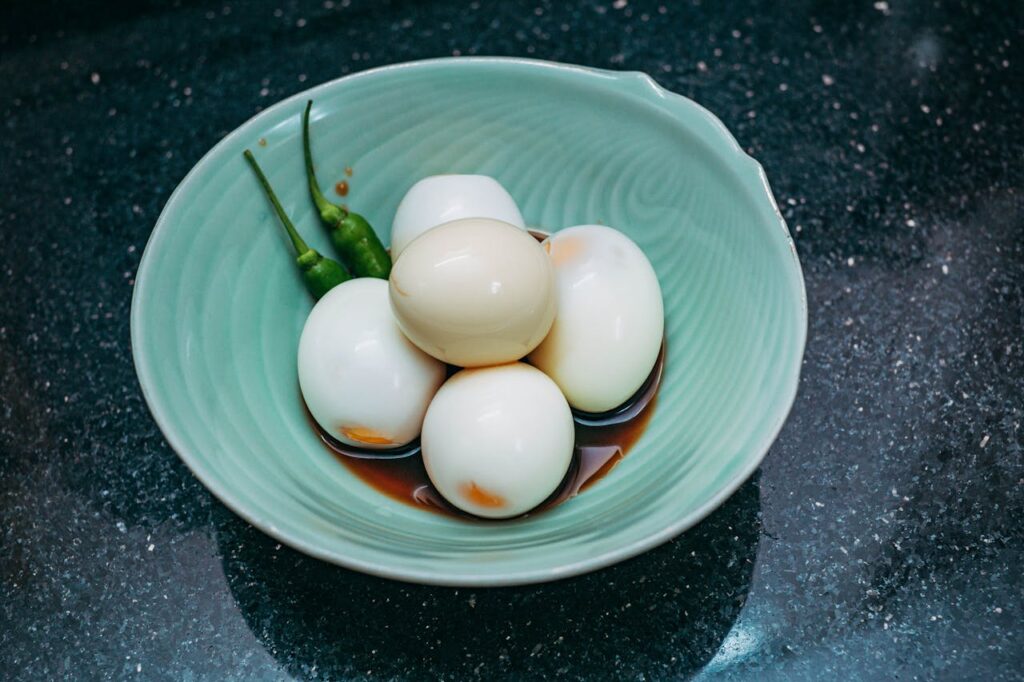
Variations of the egg diet plan exist online, including the only eggs diet, the hard boiled egg diet, and even unconventional versions such as the so-called egg and wine diet. These regimens promote reliance on boiled eggs as a staple food in place of balanced food groups.
What Is a Fad Diet?
FD can be easily differentiated from a healthy and balanced diet based on its characteristic features [1]:
(i) promotes rapid weight loss
(ii) absence of physical activity guidelines
(iii) promotes short-term changes or disordered eating rather than achieving lifelong sustainable goals
(iv) focuses on one type of food or eliminates any food group
(v) cannot be maintained for life long period (weight regain is likely to occur when going back to a regular diet plan)
(vi) nutritional adequacy is questionable
(vii) fails to provide health warnings for those with chronic diseases (insulin resistance etc.)
(viii) lacks scientific evidence to support the claims (no evidence from clinical nutrition trials, based on anecdotal health claims)

Weight Loss Has Never Been Easier
Get accurate nutrition info instantly. Keep track of your progress.
Download Eato For FreeEgg Nutrition
| Component | Primary Vitamin Content |
| Egg Yolk | Vitamins A, D, E, K, B1, B2, B5, B6, B9, and B12 |
| Egg White | High levels of B2, B3, B5; Significant levels of B1, B6, B8, B9, and B12 |
Eggs are a unique food source rich in dietary cholesterol but low in saturated fat, making them a healthy choice for a complete protein. Water constitutes the major part of egg, unlike other diet stables, do not contain any fibre. Although the relative content of egg minerals, vitamins (like vitamin d) and specific fatty acids may differ amongst different countries, the major constituents of the egg (water, protein, lipids and carbohydrates) remain the same. [2]
Egg white vs. yolk
The nutritional components are not uniformly distributed throughout the egg. While protein is divided almost equally between the egg white and the yolk, the lipids, vitamins, and minerals are primarily concentrated within the yolk [3].
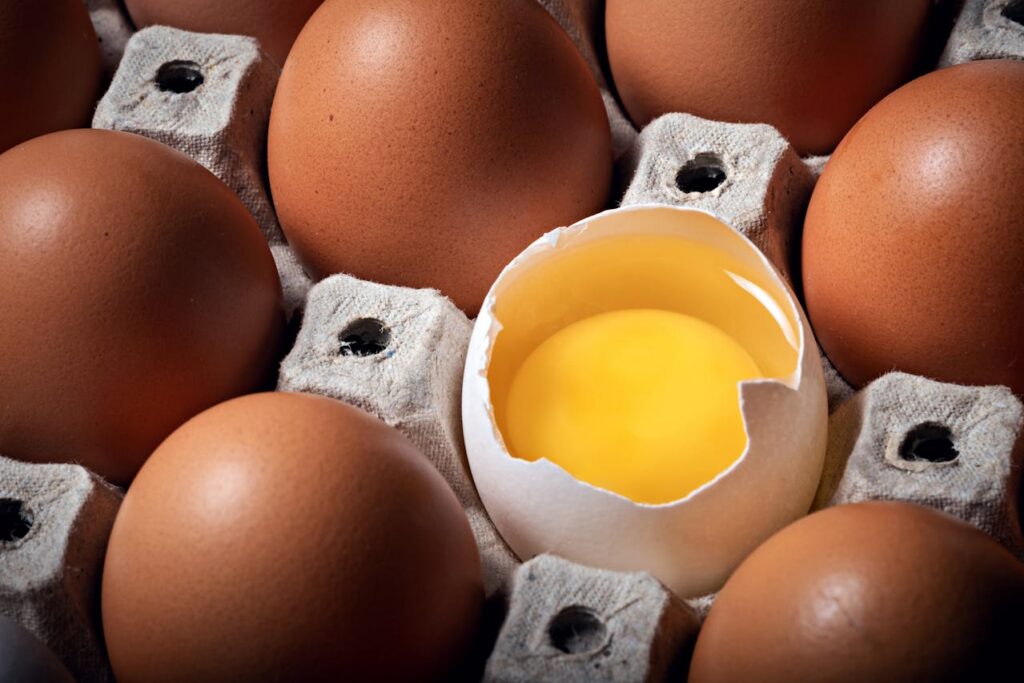
The egg yolk contains high amount of vitamin A, D, E, K, B1, B2, B5, B6, B9, and B12, while egg white possesses high amounts of vitamins B2, B3, and B5 but also significant amounts of vitamins B1, B6, B8, B9, and B12. Consuming two whole eggs per day covers 10% to 30% of the vitamin requirements for humans. [3]
How much protein is in an egg?
The average volume of egg white is estimated to be 30 mL (for an egg weighting 60 g, eggshell included) and protein concentration is about 110 mg/mL of egg white. For instance, a large egg contains 12.5 g of protein per 100 g of whole raw fresh egg [3]
Egg lipids
The total lipid content is relatively stable in the egg ranging from 8.7 to 11.2 per 100 g of whole egg. Yolk is also a rich source of essential fatty acids such as linoleic acid. [3]
Egg carbohydrates
its content in carbohydrates is low (0.7%) Glucose is the dominant free sugar in the egg (about 0.37 g per 100 g of whole egg) and is essentially present in egg white (0.34 g per 100 g of egg white versus 0.18 g per 100 g of egg yolk) [3]
Health Benefits of Eating Eggs
Building on their impressive vitamin profile, eggs are globally recognized for their superior protein quality. The efficacy of egg protein is measured through several clinical metrics, most notably the Protein Digestibility-Corrected Amino Acid Score (PDCAAS). Eggs consistently achieve the highest attainable scores on this scale, meaning they provide all essential amino acids in proportions that the human body can efficiently utilize [4].
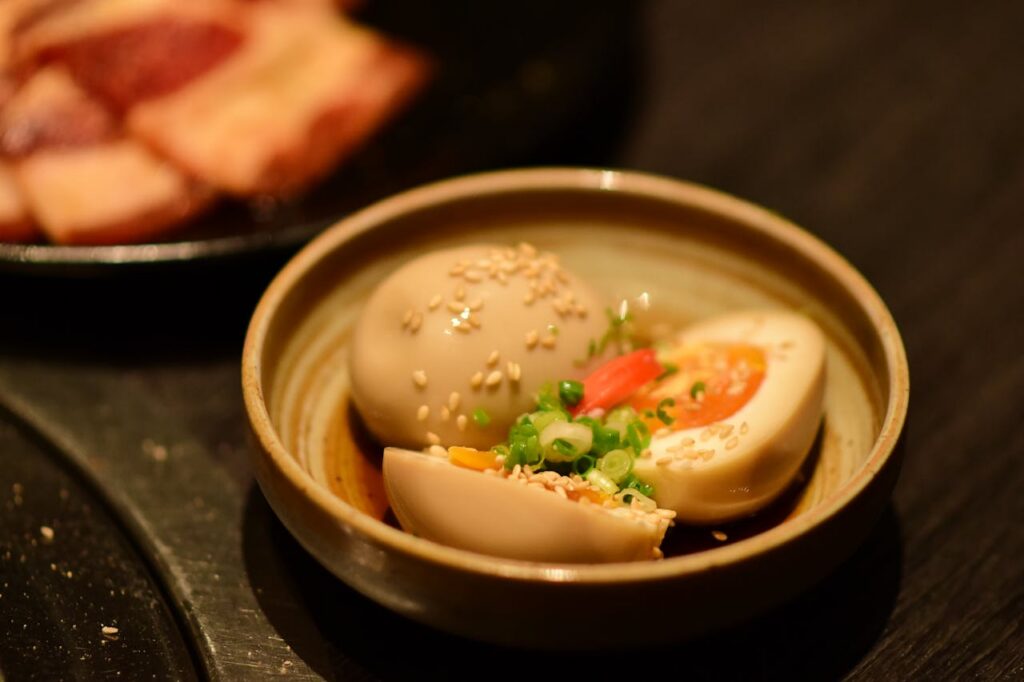
Eggs contain all nine essential amino acids that the body cannot synthesize on its own, making them a “complete” protein [5].
Reported satiety and satisfaction higher and reported hunger and prospective food intake score lower after high egg breakfasts vs. others.
Potential Risks of Egg Diet
While eggs are nutritionally dense, and are a good source of protein, the boiled egg diet may expose several risks, due to being practiced a restrictive fad diet.
Salmonella
Salmonella is one of the leading causes of foodborne disease worldwide, usually related to contaminated poultry or poultry products, such as eggs.

The safety of an egg-heavy diet depends heavily on the consumer’s knowledge of food safety, including proper refrigeration and thorough cooking (avoiding raw or undercooked yolks) [6].
Binge eating
Insufficient calorie intake, for instance, might deprive the body of vital nutrients, resulting in malnutrition and a weakened immune system. Constraints can lead to “disinhibition,” where the brain becomes hyper-responsive to food signals. This often triggers intense cravings, binge eating, and purging behaviors [9].
The pressure of maintaining a highly restrictive regimen can lead to long-term psychological distress and a damaged relationship with food, which in some cases can be fatal [8]. It’s important to exercise caution and knowledge when it comes to various diet regimens that are advertised on social media and online.
Physical health decline
Risk of gallstone forming may increase with fast weight loss [3], due to the loss of water weight.
Therefore, by being on the egg diet, is a higher chance of constipation, exhaustion and energy loss, hair loss, loss of bone strength and density, and low immunity to illness when calories are cut back when full food groups, such as dairy or carbs, are excluded.
What Can You Eat on the Egg Diet?
On this short term diet for weight loss, you consume, on average, two to three eggs a meal, coupled with low carb vegetables for other essential nutrients that the egg diet does not encompass.
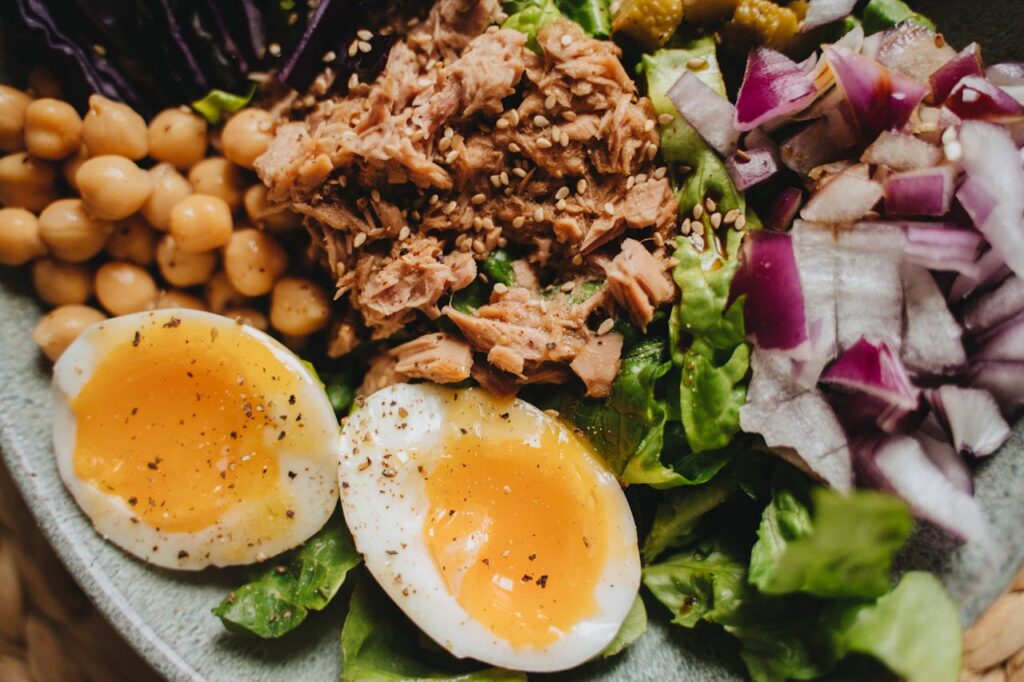
Additionally, you can incorporate lean protein and healthy fats into the diet plan, which promotes weight loss, especially with low-calorie foods, low-carb, and minimally processed foods. This diet plan is not meant to be followed, and consult a healthcare professional or registered dietitian before you follow any restrictive diet plans.
14 day egg diet menu
Day 1
- Breakfast: Japanese tamagoyaki (rolled omelet, sugar-free)
- Lunch: Egg drop soup with scallions
- Dinner: Thai basil chicken stir-fry topped with fried egg
Day 2
- Breakfast: Korean steamed eggs (gyeran jjim)
- Lunch: Spanish tortilla with olive oil, zucchini instead of potato
- Dinner: Western steak and eggs
Day 3
- Breakfast: Chinese tomato and egg stir-fry
- Lunch: Indonesian telur balado (chili eggs)
- Dinner: Keto ramen with poached egg (shirataki noodles)
Day 4
- Breakfast: Indian masala omelet
- Lunch: Greek egg salad with olives and lemon and olive oil dressing
- Dinner: Japanese sukiyaki with raw egg dip
Day 5
- Breakfast: Mediterranean spinach and feta frittata
- Lunch: Deviled eggs with herbs and mustard + leafy greens
- Dinner: Italian carbonara with shirataki noodles
Day 6
- Breakfast: Shakshuka (spiced tomato base, no bread)
- Lunch: Vietnamese bánh xèo (egg pancake, flour-free)
- Dinner: Egg curry laksa with zucchini noodles
Day 7
- Breakfast: French herb omelette (parsley, chives, tarragon) with olive oil and half a grapefruit
- Lunch: Cobb salad with boiled eggs, bacon, avocado
- Dinner: Chinese eggplant and egg stir-fry
Day 8
- Breakfast: Poached eggs with avocado and lemon
- Lunch: Egg foo young with low-carb sauce
- Dinner: Baked eggs Florentine (spinach and cream)
Day 9
- Breakfast: Keto egg muffins with bacon and spinach
- Lunch: Stir-fried bitter melon with eggs (Chinese style)
- Dinner: Middle Eastern shakshuka with eggplant
Day 10
- Breakfast: Chawanmushi (Japanese savory egg custard)
- Lunch: Indian egg curry (no rice, paired with greens)
- Dinner: Steamed fish with Cantonese egg custard topping
Day 11
- Breakfast: Century egg with silken tofu and soy sauce
- Lunch: Western Nicoise-style salad with eggs and tuna (no potatoes)
- Dinner: Bagheri-style whole egg + resistance-inspired dinner (egg with veggies and meat)
Day 12
- Breakfast: Vietnamese egg coffee (sugar-free keto version)
- Lunch: Western egg-stuffed bell peppers
- Dinner: Japanese oyakodon over cauliflower rice
Day 13
- Breakfast: Western scrambled eggs with smoked salmon
- Lunch: Pombo-Rodrigues style omelette lunch with veggies
- Dinner: Chinese hot pot with poached eggs in broth
Day 14
- Breakfast: Classic Western boiled eggs with herb butter
- Lunch: Bonnema-style egg + high fiber salad
- Dinner: Spanish baked eggs with chorizo, peppers, and onions
Food to avoid while on the egg diet
During the egg diet, there are some foods that should be avoided, and ensuring that you have minimal intake, namely, carbohydrates.
- Anything high in carbohydrates
- Bread, pastries and confectionaries
- Sugary foods like soda, juices (especially those with added sugar), ice cream, candies, and desserts.
- Potatoes, sweet potatoes, carrots, legumes
- Most fruits including bananas, apples and oranges
- Sauces that include hidden carbs
Are Eggs High in Cholesterol?
Contrary to belief, modern observational studies and randomized controlled trials (RCTs) have consistently reported that egg consumption does not adversely affect blood lipid profiles or increase overall cardiovascular risk for the majority of the population [2].
Rather than being a cardiovascular liability, eggs may offer protective benefits through several unique biological pathways [7]:
1. Increase HDL levels
Some studies suggest that egg consumption may improve the functionality and concentration of High-Density Lipoprotein (HDL), often referred to as “good” cholesterol, which helps remove other forms of cholesterol from the bloodstream [2].
2. Choline and lipid metabolism
Eggs are one of the richest dietary sources of choline. This essential nutrient plays a critical role in lipid metabolism and may exert beneficial effects by preventing fat accumulation in the liver and supporting healthy cell membranes [2].
3. Phospholipids and antioxidants
The presence of specific phospholipids and antioxidants like lutein and zeaxanthin in the egg yolk further contributes to a heart-healthy profile that offsets the potential impact of its dietary cholesterol [3].
Final Words on the Egg Diet
While eggs themselves are a “superfood” capable of supporting muscle maintenance, brain health, and satiety, they are not a biological substitute for a diverse, balanced diet. The weight loss seen on this plan is primarily a result of a drastic calorie deficit and the loss of water weight, rather than a sustainable shift in health. For most individuals, the transition from such a restrictive regimen back to a normal diet often results in rapid weight regain and potential metabolic slowing.
Therefore, to achieve lasting fat loss without compromising bone density, hormonal health, or psychological well-being, integrate eggs into a meal plan rich in fiber, complex carbohydrates, and varied micronutrients rather than the 14 day egg diet.
Track your calorie intake with the Eato app. Try it for free today!

Smarter Nutrition Tracking
Track calories and over 100 other nutrients all in one place.
Download Eato For Free