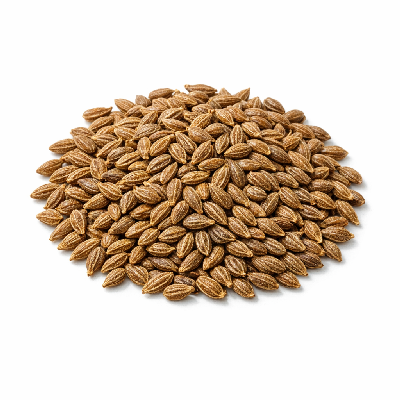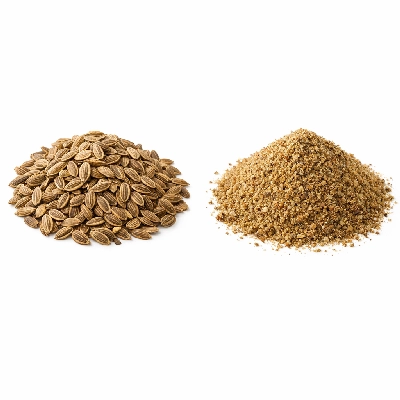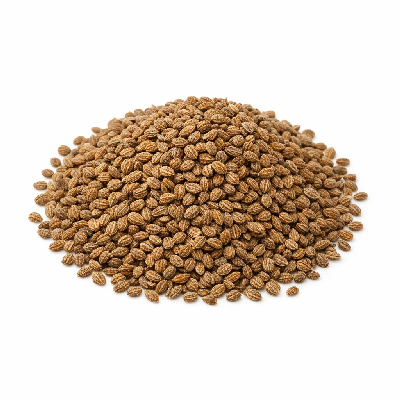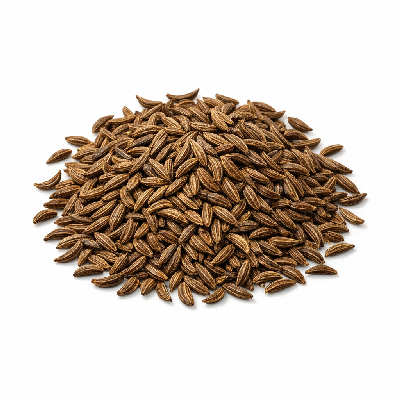
Caraway Seed
Source of Calories
Nutrition Facts
| Nutrient | Amount | % Daily Value |
|---|---|---|
| Total Carbohydrates | 3.34 g | 1% |
| Net Carbohydrates | 0.8 g | 0% |
| Sugars | 0.04 g | 0% |
| Added Sugars | 0 g | 0% |
| Dietary Fiber | 2.55 g | 9% |
| Protein | 1.32 g | 3% |
| Total Fat | 0.98 g | 1% |
| Saturated Fat | 0.04 g | 0% |
| Monounsaturated Fat | 0.48 g | - |
| Polyunsaturated Fat | 0.22 g | - |
| Trans Fat | No data | - |
| Cholesterol | 0 mg | 0% |
| Vitamins | ||
| Vitamin A | 1.22 mcg | 0% |
| Vitamin C | 1.41 mg | 2% |
| Vitamin D | 0 mcg | 0% |
| Minerals | ||
| Sodium | 1.14 mg | 0% |
| Potassium | 90.52 mg | 2% |
| Calcium | 46.16 mg | 4% |
| Magnesium | 17.29 mg | 4% |
| Iron | 1.09 mg | 6% |
| Zinc | 0.37 mg | 3% |
% DV refers to how much a single serving of an individually packaged food or supplement contributes nutritionally to your daily diet, based on a 2,000-calorie-a-day diet. Generally, having 5% DV or less of a nutrient per serving is considered low, and 20% DV or more of a nutrient per serving is considered high.
Fat Composition
The suggested total fat consumption should be limited to 30% of total energy intake or less. The type of fat consumed should primarily be unsaturated fatty acids, with no more than 10% of total energy intake coming from saturated fatty acids (about 200 calories on a 2000-calorie diet) and no more than 1% of total energy intake coming from trans-fatty acids.
Vitamin Coverage
Vitamin A
0.1%
Vitamin C
2%
Vitamin D
0%
Vitamin E
1%
Vitamin K
0%
Vitamin B1
2%
Vitamin B2
2%
Vitamin B3
2%
Vitamin B5
-
Vitamin B6
1%
Vitamin B7
-
Vitamin B9
0.2%
Vitamin B12
0%
There are 13 essential vitamins required for the body to work properly, which are categorised into two categories: fat-soluble and water-soluble vitamins. Vitamins have a Recommended Dietary Allowance (RDA), provided by the Dietary Reference Intakes (DRIs), which vary by age and sex. The %DV indicates how much one serving contributes to the average recommended daily intake.
Mineral Coverage
Calcium
4%
Iron
6%
Magnesium
4%
Phosphorus
3%
Potassium
2%
Sodium
0%
Zinc
3%
Copper
7%
Manganese
4%
Selenium
1%
Minerals are micronutrients, of which 13 of them are essential to the human body. The Recommended Dietary Allowance includes Calcium (1,300 mg/d), Phosphorus (1,250 mg/d), Potassium (4,700 mg/d), Sodium (2,300 mg/d), Chloride (1,500 mg/d), Magnesium (420 mg/d), Iron (18 mg/d), Zinc (11 mg/d), Copper (0.9 mg/d), Selenium (55 mcg/d), Molybdenum (45 mcg/d), Manganese (2.3 mg/d) and Iodine (150 mcg/d).
Protein Quality
Leucine
3%
Isoleucine
4%
Valine
4%
Lysine
3%
Tryptophan
5%
Threonine
4%
Phenylalanine
5%
Methionine
4%
Histidine
4%
Guidelines recommend a serving of protein with each meal and 1.2-1.6 g of protein per kg of body weight per day.
The data provided by eato.health is for informational purposes only and should not be considered medical advice. Please consult your physician before beginning any diet or nutrition plan.
About
How Long to Burn Off 22 Calories?
*Based on this person: 25-year-old female, 5'7", 144 lbs

Swimming
4 min

Jogging
3 min

Cycling
3 min

Walking
6 min
The data provided by eato.health is for informational purposes only and should not be considered medical advice. Please consult your physician before beginning any diet or nutrition plan.
📚 Health Research & Evidence About This Food
Spices caraway seed are recognized for their rich nutritional profile, including fiber and essential minerals such as iron, magnesium, copper, and calcium, and are a significant source of health-promoting antioxidants like limonene and carvone with anti-inflammatory activity, as indicated by animal studies on inflammatory bowel disease. Clinical evidence shows caraway seed oil can have a relaxing effect on the gall-bladder, similar to n-butylscopolamine, and it has been studied for its efficacy in treating functional dyspepsia and alleviating Irritable Bowel Syndrome symptoms, with some studies noting benefits when combined with peppermint oil.
1. Caraway: Are There Health Benefits? Pros and Cons, Nutrition Information, and More
Source: WebMD
Summary: Caraway seeds are a rich source of antioxidants and possess anti-inflammatory effects, which have been particularly studied in relation to irritable bowel syndrome and inflammatory bowel disease.
2. Bioactive Phytochemicals From Cumin (C. Cyminum) and Caraway (C. Carvi) Oil Processing By-Products
Source: SpringerLink
Summary: Press cakes from caraway seeds, typically discarded after oil extraction, have significant potential for valorization due to their rich nutritional profile and can be transformed into valuable products for various industries.
Read More: https://link.springer.com/rwe/10.1007/978-3-030-63961-7_23-1
3. Caraway: Nutrients, Benefits, and Uses
Source: Healthline
Summary: Caraway, often mistaken for a seed but actually the dried fruit of the Carum carvi L. plant, is recognized for its rich nutritional profile, including fiber and essential minerals such as iron, magnesium, copper, and calcium, and a significant supply of health-promoting antioxidants like limonene and carvone.
Read More: https://www.healthline.com/nutrition/caraway
4. Detailed Phytochemical Composition, Cyto-/Hepatotoxicity, and Antioxidant/Anti-Inflammatory Profile of Moroccan Spices: A Study on Coriander, Caraway, and Mystical Cumin.
Source: PubMed
Summary: Caraway seeds demonstrated the highest antioxidant profile and anti-inflammatory activity among the tested spices, suggesting superior bioactive properties.
Read More: https://pubmed.ncbi.nlm.nih.gov/39124890/
5. Caraway as Important Medicinal Plants in Management of Diseases
Source: SpringerLink
Summary: Caraway has been traditionally utilized for a range of ailments including indigestion, pneumonia, and as an appetizer, galactagogue, and carminative, with modern clinical trials corroborating its efficacy as a component in anti-obesity drugs and its oil being employed for treating functional dyspepsia and alleviating Irritable Bowel Syndrome symptoms.
Read More: https://link.springer.com/article/10.1007/s13659-018-0190-x