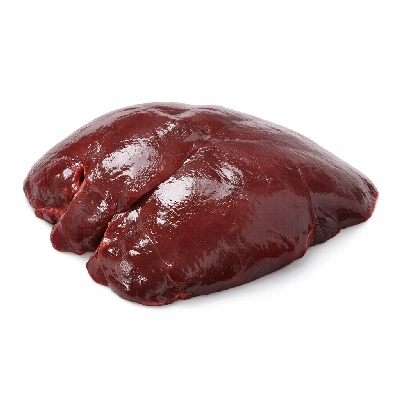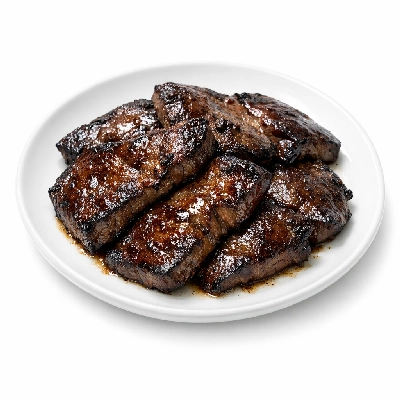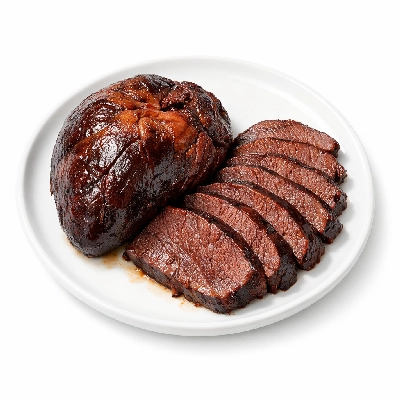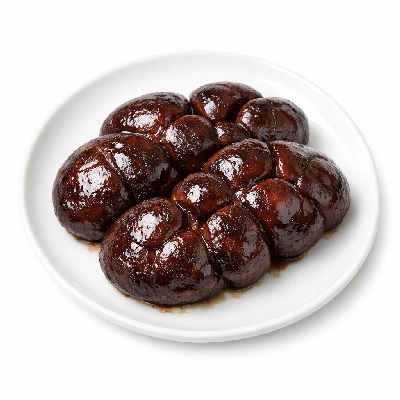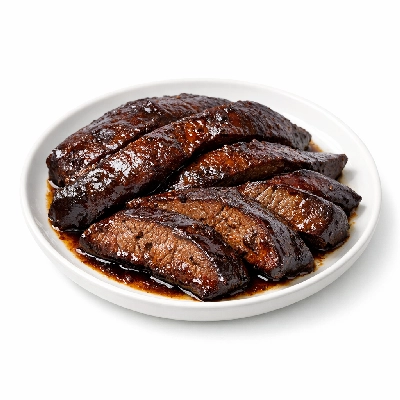
Braised Beef Variety Meats and By-products Liver
Source of Calories
Nutrition Facts
| Nutrient | Amount | % Daily Value |
|---|---|---|
| Total Carbohydrates | 3.49 g | 1% |
| Net Carbohydrates | 3.49 g | 1% |
| Sugars | 0 g | 0% |
| Added Sugars | No data | - |
| Dietary Fiber | 0 g | 0% |
| Protein | 19.77 g | 40% |
| Total Fat | 3.58 g | 5% |
| Saturated Fat | 2 g | 10% |
| Monounsaturated Fat | 0.76 g | - |
| Polyunsaturated Fat | 0.75 g | - |
| Trans Fat | 0.25 g | 100% |
| Cholesterol | 269.28 mg | 90% |
| Vitamins | ||
| Vitamin A | 6469.66 mcg | 719% |
| Vitamin C | 1.29 mg | 1% |
| Vitamin D | 0.83 mcg | 4% |
| Minerals | ||
| Sodium | 53.72 mg | 2% |
| Potassium | 239.36 mg | 5% |
| Calcium | 4.08 mg | 0% |
| Magnesium | 14.28 mg | 3% |
| Iron | 4.45 mg | 25% |
| Zinc | 3.6 mg | 33% |
% DV refers to how much a single serving of an individually packaged food or supplement contributes nutritionally to your daily diet, based on a 2,000-calorie-a-day diet. Generally, having 5% DV or less of a nutrient per serving is considered low, and 20% DV or more of a nutrient per serving is considered high.
Fat Composition
The suggested total fat consumption should be limited to 30% of total energy intake or less. The type of fat consumed should primarily be unsaturated fatty acids, with no more than 10% of total energy intake coming from saturated fatty acids (about 200 calories on a 2000-calorie diet) and no more than 1% of total energy intake coming from trans-fatty acids.
Vitamin Coverage
Vitamin A
719%
Vitamin C
1%
Vitamin D
4%
Vitamin E
2%
Vitamin K
2%
Vitamin B1
11%
Vitamin B2
179%
Vitamin B3
74%
Vitamin B5
97%
Vitamin B6
41%
Vitamin B7
-
Vitamin B9
43%
Vitamin B12
2,000%
There are 13 essential vitamins required for the body to work properly, which are categorised into two categories: fat-soluble and water-soluble vitamins. Vitamins have a Recommended Dietary Allowance (RDA), provided by the Dietary Reference Intakes (DRIs), which vary by age and sex. The %DV indicates how much one serving contributes to the average recommended daily intake.
Mineral Coverage
Calcium
0.3%
Iron
25%
Magnesium
3%
Phosphorus
27%
Potassium
5%
Sodium
2%
Zinc
33%
Copper
1,079%
Manganese
11%
Selenium
45%
Minerals are micronutrients, of which 13 of them are essential to the human body. The Recommended Dietary Allowance includes Calcium (1,300 mg/d), Phosphorus (1,250 mg/d), Potassium (4,700 mg/d), Sodium (2,300 mg/d), Chloride (1,500 mg/d), Magnesium (420 mg/d), Iron (18 mg/d), Zinc (11 mg/d), Copper (0.9 mg/d), Selenium (55 mcg/d), Molybdenum (45 mcg/d), Manganese (2.3 mg/d) and Iodine (150 mcg/d).
Protein Quality
Leucine
62%
Isoleucine
69%
Valine
71%
Lysine
57%
Tryptophan
71%
Threonine
59%
Phenylalanine
89%
Methionine
78%
Histidine
61%
Guidelines recommend a serving of protein with each meal and 1.2-1.6 g of protein per kg of body weight per day.
The data provided by eato.health is for informational purposes only and should not be considered medical advice. Please consult your physician before beginning any diet or nutrition plan.
About
How Long to Burn Off 130 Calories?
*Based on this person: 25-year-old female, 5'7", 144 lbs

Swimming
19 min

Jogging
17 min

Cycling
17 min

Walking
31 min
The data provided by eato.health is for informational purposes only and should not be considered medical advice. Please consult your physician before beginning any diet or nutrition plan.
📚 Health Research & Evidence About This Food
Beef liver is a highly nutrient-dense food, rich in protein, iron, and essential vitamins, particularly vitamin A and B vitamins, which support various bodily functions. While it provides significant nutritional benefits, including high levels of preformed vitamin A, excessive consumption may lead to vitamin A toxicity, as noted by Medical News Today and WebMD. Additionally, like other cooked meats, beef liver can form heterocyclic amines during high-temperature cooking, which are identified as potential human carcinogens by NCBI.
1. Beef Liver: Nutrition, Benefits, and Risks
Source: Medical News Today, 2021
Summary: Beef liver is a nutrient-dense superfood rich in protein, vitamins, and minerals that supports immune function, tissue repair, and energy production, but requires moderate consumption due to potential risks of vitamin A and copper toxicity, especially for pregnant individuals or those with gout.
Read More: https://www.medicalnewstoday.com/articles/beef-liver-nutrition
2. Heterocyclic Amines (Selected) - 15th Report on Carcinogens - Ncbi Bookshelf
Source: NCBI
Summary: Beef liver, as a muscle-derived food, may form heterocyclic amines (HCAs) during cooking, which are classified as reasonably anticipated human carcinogens based on animal studies, and their formation is influenced by cooking temperature and time.
3. 20 Foods That Are High in Vitamin a
Source: Healthline
Summary: Beef liver is highlighted as an exceptionally rich source of preformed vitamin A (retinol), providing a significant amount of the daily requirement in a small serving, alongside other animal and plant-based foods that contribute to vitamin A intake.
Read More: https://www.healthline.com/nutrition/foods-high-in-vitamin-a
4. 4 Health Benefits of Beef Liver
Source: Cleveland Clinic
Summary: Beef liver is a nutrient-dense superfood rich in iron, protein, and preformed vitamin A, supporting oxygen transport, muscle gains, and overall health, but requires moderation due to the risk of vitamin A toxicity and potential bacterial contamination if consumed raw.
Read More: https://health.clevelandclinic.org/beef-liver-benefits
5. Eating Liver: Benefits and Nutrition
Source: WebMD
Summary: Beef liver is an exceptionally nutrient-dense food, rich in protein, iron, B vitamins, and vitamin A, offering significant health benefits for preventing deficiencies, supporting blood, bone, and nervous system health, but requires moderation due to risks of vitamin A and copper toxicity, high cholesterol, and potential antibiotic accumulation.