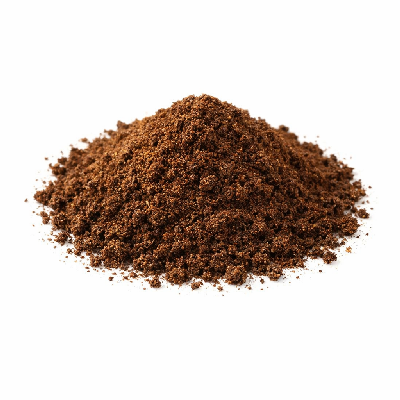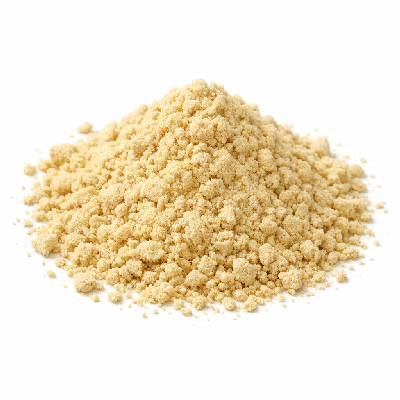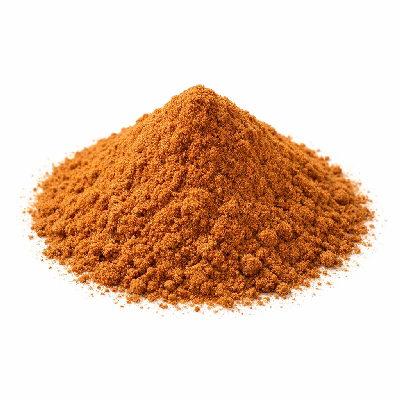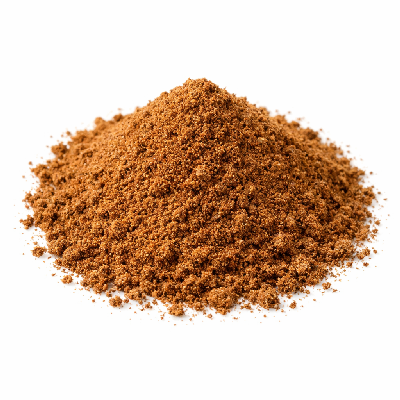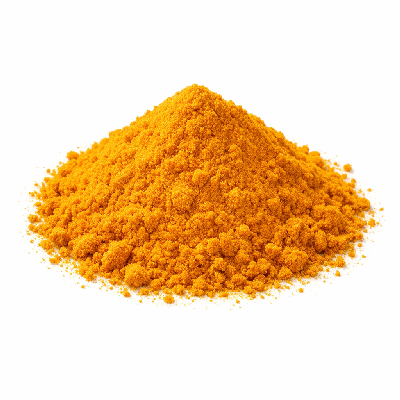
Turmeric Ground
Source of Calories
Nutrition Facts
| Nutrient | Amount | % Daily Value |
|---|---|---|
| Total Carbohydrates | 4.57 g | 2% |
| Net Carbohydrates | 3.02 g | 1% |
| Sugars | 0.22 g | 1% |
| Added Sugars | 0 g | 0% |
| Dietary Fiber | 1.54 g | 6% |
| Protein | 0.66 g | 1% |
| Total Fat | 0.22 g | 0% |
| Saturated Fat | 0.12 g | 1% |
| Monounsaturated Fat | 0.03 g | - |
| Polyunsaturated Fat | 0.05 g | - |
| Trans Fat | 0 g | 0% |
| Cholesterol | 0 mg | 0% |
| Vitamins | ||
| Vitamin A | 0 mcg | 0% |
| Vitamin C | 0.05 mg | 0% |
| Vitamin D | 0 mcg | 0% |
| Minerals | ||
| Sodium | 1.84 mg | 0% |
| Potassium | 141.44 mg | 3% |
| Calcium | 11.42 mg | 1% |
| Magnesium | 14.14 mg | 3% |
| Iron | 3.74 mg | 21% |
| Zinc | 0.31 mg | 3% |
% DV refers to how much a single serving of an individually packaged food or supplement contributes nutritionally to your daily diet, based on a 2,000-calorie-a-day diet. Generally, having 5% DV or less of a nutrient per serving is considered low, and 20% DV or more of a nutrient per serving is considered high.
Fat Composition
The suggested total fat consumption should be limited to 30% of total energy intake or less. The type of fat consumed should primarily be unsaturated fatty acids, with no more than 10% of total energy intake coming from saturated fatty acids (about 200 calories on a 2000-calorie diet) and no more than 1% of total energy intake coming from trans-fatty acids.
Vitamin Coverage
Vitamin A
0%
Vitamin C
0.1%
Vitamin D
0%
Vitamin E
2%
Vitamin K
0.8%
Vitamin B1
0.3%
Vitamin B2
0.8%
Vitamin B3
0.6%
Vitamin B5
0.7%
Vitamin B6
0.4%
Vitamin B7
-
Vitamin B9
0.3%
Vitamin B12
0%
There are 13 essential vitamins required for the body to work properly, which are categorised into two categories: fat-soluble and water-soluble vitamins. Vitamins have a Recommended Dietary Allowance (RDA), provided by the Dietary Reference Intakes (DRIs), which vary by age and sex. The %DV indicates how much one serving contributes to the average recommended daily intake.
Mineral Coverage
Calcium
0.9%
Iron
21%
Magnesium
3%
Phosphorus
2%
Potassium
3%
Sodium
0.1%
Zinc
3%
Copper
10%
Manganese
59%
Selenium
0.8%
Minerals are micronutrients, of which 13 of them are essential to the human body. The Recommended Dietary Allowance includes Calcium (1,300 mg/d), Phosphorus (1,250 mg/d), Potassium (4,700 mg/d), Sodium (2,300 mg/d), Chloride (1,500 mg/d), Magnesium (420 mg/d), Iron (18 mg/d), Zinc (11 mg/d), Copper (0.9 mg/d), Selenium (55 mcg/d), Molybdenum (45 mcg/d), Manganese (2.3 mg/d) and Iodine (150 mcg/d).
Protein Quality
Leucine
2%
Isoleucine
2%
Valine
3%
Lysine
1%
Tryptophan
3%
Threonine
2%
Phenylalanine
3%
Methionine
1%
Histidine
1%
Guidelines recommend a serving of protein with each meal and 1.2-1.6 g of protein per kg of body weight per day.
The data provided by eato.health is for informational purposes only and should not be considered medical advice. Please consult your physician before beginning any diet or nutrition plan.
About
How Long to Burn Off 21 Calories?
*Based on this person: 25-year-old female, 5'7", 144 lbs

Swimming
4 min

Jogging
3 min

Cycling
3 min

Walking
5 min
The data provided by eato.health is for informational purposes only and should not be considered medical advice. Please consult your physician before beginning any diet or nutrition plan.
📚 Health Research & Evidence About This Food
Turmeric ground contains active compounds called curcuminoids, with curcumin being the most prominent, which are potent natural antioxidants and anti-inflammatory agents. These compounds work by inhibiting key inflammatory pathways and scavenging free radicals that cause cellular damage. Clinical evidence from PubMed demonstrates that turmeric therapy significantly improves both pain and physical function in individuals with knee osteoarthritis, with effects comparable to non-steroidal anti-inflammatory drugs in randomized controlled trials.
1. Turmeric: Usefulness and Safety
Source: nccih.nih.gov
Summary: Turmeric has been explored for its potential efficacy in conditions such as nonalcoholic fatty liver disease (NAFLD), osteoarthritis, and lipid disorders, though definitive conclusions on clear benefits for any specific health purpose are currently insufficient.
Read More: https://www.nccih.nih.gov/health/turmeric
2. Turmeric, the Golden Spice - Herbal Medicine - Ncbi Bookshelf
Source: NCBI
Summary: Turmeric contains many components, with curcuminoids being its main active constituents and potent natural antioxidants, demonstrating potent antioxidant, anti-inflammatory, antimutagenic, and antimicrobial activities.
Read More: https://www.ncbi.nlm.nih.gov/books/NBK92752/
3. Turmeric Benefits: A Look at the Evidence - Harvard Health
Source: Harvard Health
Summary: The Arthritis Foundation recommends curcumin extract twice daily for managing osteoarthritis and rheumatoid arthritis symptoms.
Read More: https://www.health.harvard.edu/healthy-aging-and-longevity/turmeric-benefits-a-look-at-the-evidence
4. Turmeric and Curcumin: Health, Spice, and Supplement Information From Webmd
Source: WebMD
Summary: Turmeric's primary active ingredient, curcumin, is a polyphenol antioxidant responsible for its distinctive yellow color and many purported health effects, combating free radical damage and potentially protecting against chronic conditions.
Read More: https://www.webmd.com/diet/supplement-guide-turmeric
5. Turmeric: Overview, Uses, Side Effects, Precautions, Interactions, Dosing and Reviews
Source: WebMD
Summary: Curcumin, a primary curcuminoid from turmeric, acts as a potent anti-inflammatory agent by inhibiting key inflammatory pathways and demonstrates significant antioxidant, anticancer, neuroprotective, and antimicrobial activities.
Read More: https://www.webmd.com/vitamins/ai/ingredientmono-662/turmeric
6. Therapeutic Effects of Turmeric or Curcumin Extract on Pain and Function for Individuals With Knee Osteoarthritis: A Systematic Review.
Source: PubMed
Summary: Turmeric therapy significantly improves both pain and physical function in individuals with knee osteoarthritis, with effects comparable to non-steroidal anti-inflammatory drugs (NSAIDs) and no significant adverse events.
Read More: https://pubmed.ncbi.nlm.nih.gov/33500785/
7. 10 Health Benefits of Tumeric and Curcumin
Source: Healthline
Summary: Turmeric contains active compounds called curcuminoids, with curcumin being the most prominent, which have potential to combat inflammation and oxidative damage.
Read More: https://www.healthline.com/nutrition/top-10-evidence-based-health-benefits-of-turmeric