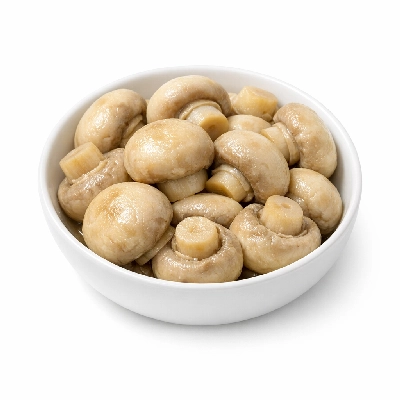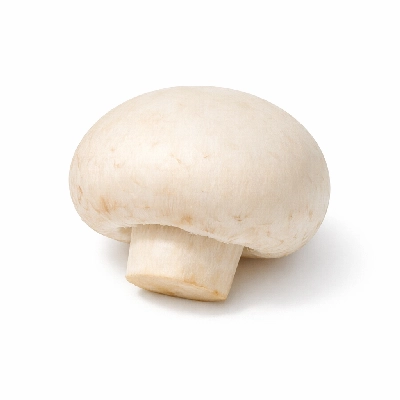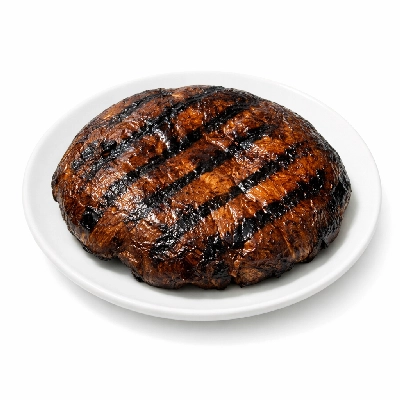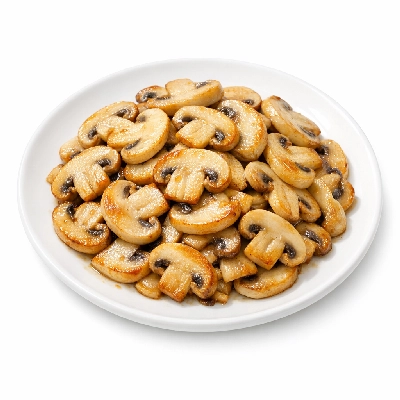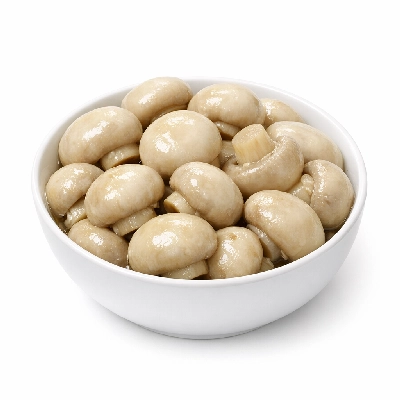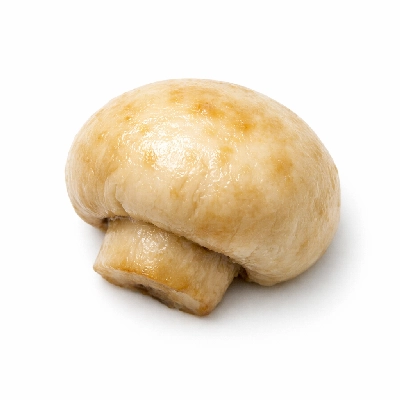
Microwaved White Mushrooms
Source of Calories
Nutrition Facts
| Nutrient | Amount | % Daily Value |
|---|---|---|
| Total Carbohydrates | 6.04 g | 2% |
| Net Carbohydrates | 3.54 g | 1% |
| Sugars | 0 g | 0% |
| Added Sugars | No data | - |
| Dietary Fiber | 2.5 g | 9% |
| Protein | 3.91 g | 8% |
| Total Fat | 0.46 g | 1% |
| Saturated Fat | 0.06 g | 0% |
| Monounsaturated Fat | 0.02 g | - |
| Polyunsaturated Fat | 0.28 g | - |
| Trans Fat | 0 g | 0% |
| Cholesterol | 0 mg | 0% |
| Vitamins | ||
| Vitamin A | 0 mcg | 0% |
| Vitamin C | 0 mg | 0% |
| Vitamin D | 0.28 mcg | 1% |
| Minerals | ||
| Sodium | 17 mg | 1% |
| Potassium | 488 mg | 10% |
| Calcium | 6 mg | 0% |
| Magnesium | 14 mg | 3% |
| Iron | 0.33 mg | 2% |
| Zinc | 0.73 mg | 7% |
% DV refers to how much a single serving of an individually packaged food or supplement contributes nutritionally to your daily diet, based on a 2,000-calorie-a-day diet. Generally, having 5% DV or less of a nutrient per serving is considered low, and 20% DV or more of a nutrient per serving is considered high.
Fat Composition
The suggested total fat consumption should be limited to 30% of total energy intake or less. The type of fat consumed should primarily be unsaturated fatty acids, with no more than 10% of total energy intake coming from saturated fatty acids (about 200 calories on a 2000-calorie diet) and no more than 1% of total energy intake coming from trans-fatty acids.
Vitamin Coverage
Vitamin A
0%
Vitamin C
0%
Vitamin D
1%
Vitamin E
0%
Vitamin K
0%
Vitamin B1
5%
Vitamin B2
33%
Vitamin B3
33%
Vitamin B5
39%
Vitamin B6
3%
Vitamin B7
-
Vitamin B9
4%
Vitamin B12
0%
There are 13 essential vitamins required for the body to work properly, which are categorised into two categories: fat-soluble and water-soluble vitamins. Vitamins have a Recommended Dietary Allowance (RDA), provided by the Dietary Reference Intakes (DRIs), which vary by age and sex. The %DV indicates how much one serving contributes to the average recommended daily intake.
Mineral Coverage
Calcium
0.5%
Iron
2%
Magnesium
3%
Phosphorus
10%
Potassium
10%
Sodium
0.7%
Zinc
7%
Copper
41%
Manganese
3%
Selenium
33%
Minerals are micronutrients, of which 13 of them are essential to the human body. The Recommended Dietary Allowance includes Calcium (1,300 mg/d), Phosphorus (1,250 mg/d), Potassium (4,700 mg/d), Sodium (2,300 mg/d), Chloride (1,500 mg/d), Magnesium (420 mg/d), Iron (18 mg/d), Zinc (11 mg/d), Copper (0.9 mg/d), Selenium (55 mcg/d), Molybdenum (45 mcg/d), Manganese (2.3 mg/d) and Iodine (150 mcg/d).
Protein Quality
Leucine
5%
Isoleucine
6%
Valine
16%
Lysine
5%
Tryptophan
11%
Threonine
9%
Phenylalanine
8%
Methionine
5%
Histidine
7%
Guidelines recommend a serving of protein with each meal and 1.2-1.6 g of protein per kg of body weight per day.
The data provided by eato.health is for informational purposes only and should not be considered medical advice. Please consult your physician before beginning any diet or nutrition plan.
About
How Long to Burn Off 35 Calories?
*Based on this person: 25-year-old female, 5'7", 144 lbs

Swimming
6 min

Jogging
5 min

Cycling
5 min

Walking
9 min
The data provided by eato.health is for informational purposes only and should not be considered medical advice. Please consult your physician before beginning any diet or nutrition plan.
📚 Health Research & Evidence About This Food
White mushrooms are a low-calorie, nutrient-dense food, rich in B vitamins, selenium, potassium, copper, and unique antioxidants such as ergothioneine and glutathione, as noted by WebMD, which contribute to energy production, nerve function, and cellular protection. Research indicates that incorporating mushrooms into a diet consistently led to decreased serum triglycerides and, as part of a healthy dietary pattern, decreased serum glucose. This nutritional profile supports heart health by helping regulate blood pressure, bone health through vitamin D content, and energy metabolism, and may also assist with weight management by promoting satiety and reducing overall caloric intake, and potentially reduce overall cancer risk, according to UCLA Health.
1. Mushroom Consumption Impacts on Biomarkers of Cardiometabolic Disease Risk and Immune Function: A Narrative Review From a Whole Food Perspective
Source: Taylor & Francis
Summary: Incorporating mushrooms into a self-chosen diet consistently led to decreased serum triglycerides and, when consumed as part of a healthy dietary pattern, decreased serum glucose.
Read More: https://www.tandfonline.com/doi/full/10.1080/10408398.2025.2582603
2. 50 Low Calorie Foods That May Help Weight Loss
Source: Medical News Today, 2021
Summary: White mushrooms are a valuable low-calorie food that can support weight loss by promoting satiety while reducing overall daily caloric intake.
Read More: https://www.medicalnewstoday.com/articles/zero-calorie-foods
3. Mushrooms: Nutritional Value and Health Benefits
Source: Medical News Today, 2019
Summary: White mushrooms are rich in protein, vitamins, minerals, and antioxidants, contributing to heart health, bone health, and energy metabolism.
4. Health Benefits of Mushrooms
Source: WebMD
Summary: White button mushrooms are a low-calorie, nutrient-dense fungus rich in B vitamins, selenium, potassium, copper, fiber, and unique antioxidants like ergothioneine and glutathione.
Read More: https://www.webmd.com/diet/health-benefits-mushrooms
5. 7 Health Benefits of Mushrooms
Source: UCLA Health
Summary: Regular consumption of mushrooms may reduce overall cancer risk, according to a review of multiple studies.
Read More: https://www.uclahealth.org/news/article/7-health-benefits-of-mushrooms