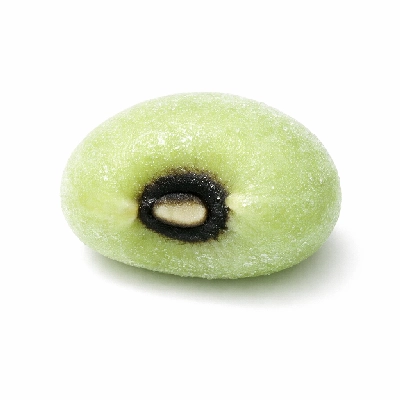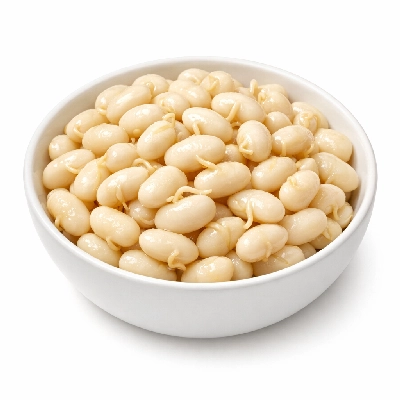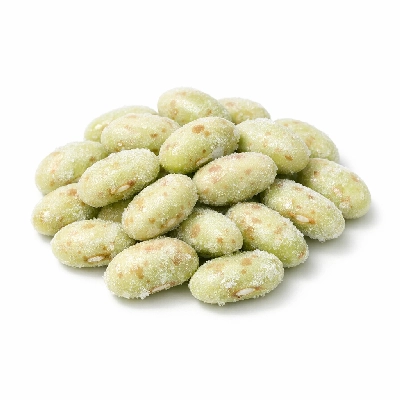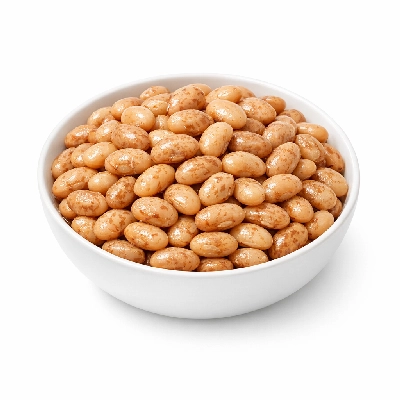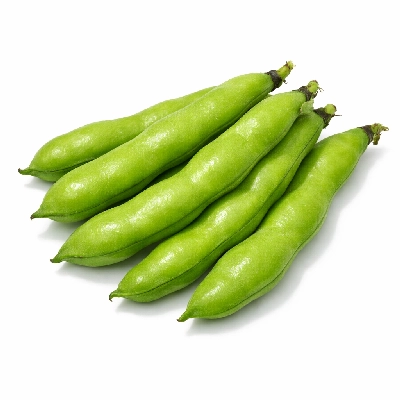
Raw Fava Beans in Pod
Source of Calories
Nutrition Facts
| Nutrient | Amount | % Daily Value |
|---|---|---|
| Total Carbohydrates | 22.21 g | 8% |
| Net Carbohydrates | 12.76 g | 5% |
| Sugars | 11.6 g | 33% |
| Added Sugars | No data | - |
| Dietary Fiber | 9.45 g | 34% |
| Protein | 9.98 g | 20% |
| Total Fat | 0.92 g | 1% |
| Saturated Fat | 0.15 g | 1% |
| Monounsaturated Fat | 0.13 g | - |
| Polyunsaturated Fat | 0.43 g | - |
| Trans Fat | 0 g | 0% |
| Cholesterol | 0 mg | 0% |
| Vitamins | ||
| Vitamin A | 21.05 mcg | 2% |
| Vitamin C | 4.66 mg | 5% |
| Vitamin D | 0 mcg | 0% |
| Minerals | ||
| Sodium | 31.5 mg | 1% |
| Potassium | 418.32 mg | 9% |
| Calcium | 46.62 mg | 4% |
| Magnesium | 41.58 mg | 10% |
| Iron | 1.95 mg | 11% |
| Zinc | 1.26 mg | 11% |
% DV refers to how much a single serving of an individually packaged food or supplement contributes nutritionally to your daily diet, based on a 2,000-calorie-a-day diet. Generally, having 5% DV or less of a nutrient per serving is considered low, and 20% DV or more of a nutrient per serving is considered high.
Fat Composition
The suggested total fat consumption should be limited to 30% of total energy intake or less. The type of fat consumed should primarily be unsaturated fatty acids, with no more than 10% of total energy intake coming from saturated fatty acids (about 200 calories on a 2000-calorie diet) and no more than 1% of total energy intake coming from trans-fatty acids.
Vitamin Coverage
Vitamin A
2%
Vitamin C
5%
Vitamin D
0%
Vitamin E
10%
Vitamin K
43%
Vitamin B1
14%
Vitamin B2
28%
Vitamin B3
18%
Vitamin B5
6%
Vitamin B6
8%
Vitamin B7
-
Vitamin B9
47%
Vitamin B12
0%
There are 13 essential vitamins required for the body to work properly, which are categorised into two categories: fat-soluble and water-soluble vitamins. Vitamins have a Recommended Dietary Allowance (RDA), provided by the Dietary Reference Intakes (DRIs), which vary by age and sex. The %DV indicates how much one serving contributes to the average recommended daily intake.
Mineral Coverage
Calcium
4%
Iron
11%
Magnesium
10%
Phosphorus
13%
Potassium
9%
Sodium
1%
Zinc
11%
Copper
56%
Manganese
36%
Selenium
2%
Minerals are micronutrients, of which 13 of them are essential to the human body. The Recommended Dietary Allowance includes Calcium (1,300 mg/d), Phosphorus (1,250 mg/d), Potassium (4,700 mg/d), Sodium (2,300 mg/d), Chloride (1,500 mg/d), Magnesium (420 mg/d), Iron (18 mg/d), Zinc (11 mg/d), Copper (0.9 mg/d), Selenium (55 mcg/d), Molybdenum (45 mcg/d), Manganese (2.3 mg/d) and Iodine (150 mcg/d).
The data provided by eato.health is for informational purposes only and should not be considered medical advice. Please consult your physician before beginning any diet or nutrition plan.
About
How Long to Burn Off 111 Calories?
*Based on this person: 25-year-old female, 5'7", 144 lbs

Swimming
17 min

Jogging
14 min

Cycling
15 min

Walking
27 min
The data provided by eato.health is for informational purposes only and should not be considered medical advice. Please consult your physician before beginning any diet or nutrition plan.
📚 Health Research & Evidence About This Food
Fava beans are nutrient-dense legumes, rich in plant protein, fiber, folate, and other essential micronutrients like manganese, copper, phosphorus, magnesium, iron, and potassium, supporting various health benefits like weight management and immunity. Clinical evidence from a study of healthy volunteers indicates that a fava bean diet can significantly reduce fasted plasma glucose and insulin levels while promoting beneficial gut bacteria like *Coprococcus eutactus*. Additionally, Stanford Medicine notes that genistein in fava beans may counteract inflammatory effects in endothelial cells, though fava beans contain vicine and convicine, which are associated with favism, particularly in individuals with G6PD deficiency and in breastfed infants whose mothers consume fava beans.
1. Fava Beans - Drugs and Lactation Database (Lactmed®) - Ncbi Bookshelf
Source: NCBI
Summary: Fava beans contain vicine and convicine, which are associated with favism, and multiple documented cases show breastfed infants developed favism after their mothers consumed fava beans.
Read More: https://www.ncbi.nlm.nih.gov/sites/books/NBK532498/
2. Fava Beans Nutrition and Health Benefits
Source: WebMD
Summary: Fava beans are a globally consumed legume rich in essential nutrients, including protein, folate, manganese, fiber, and iron, which contribute to various health benefits such as supporting weight management, enhancing immunity, and preventing nutrient deficiencies.
Read More: https://www.webmd.com/diet/health-benefits-of-fava-beans
3. Marijuana Linked to Heart Disease; Supplement May Mitigate Risk, Study Reports
Source: Stanford Medicine, 2022
Summary: Genistein, naturally present in fava beans, can counteract the inflammatory and atherosclerotic effects induced by THC in endothelial cells and laboratory mice.
Read More: https://med.stanford.edu/news/all-news/2022/04/marijuana-heart-disease.html
4. Fava Bean and Buckwheat Are Sustainable Food Sources Which Support Satiety and Beneficially Modulate Several Biomarkers, Bacteria and Metabolites Associated With Human Health.
Source: PubMed
Summary: The fava bean diet significantly reduced fasted plasma glucose and insulin levels, while increasing plasma homocysteine, and provided substantially higher amounts of dietary fiber, leading to a significant increase in urine indole-3-propionic acid concentration and promoting the growth of the gut bacterium *Coprococcus eutactus*.
Read More: https://pubmed.ncbi.nlm.nih.gov/40481954/
5. From Ancient Crop to Modern Superfood: Exploring the History, Diversity, Characteristics, Technological Applications, and Culinary Uses of Peruvian Fava Beans.
Source: PubMed
Summary: Peruvian fava beans are a valuable source of plant-based protein and essential micronutrients, offering diverse culinary applications and significant potential for production and marketing as a modern plant-based superfood.
Read More: https://pubmed.ncbi.nlm.nih.gov/37803732/
6. 10 Impressive Health Benefits of Fava Beans
Source: Healthline, 2018
Summary: Fava beans are nutrient-dense legumes that offer a wide array of health benefits due to their rich composition of plant protein, soluble fiber, and numerous vitamins and minerals.