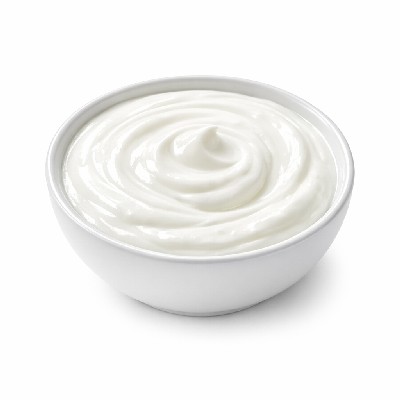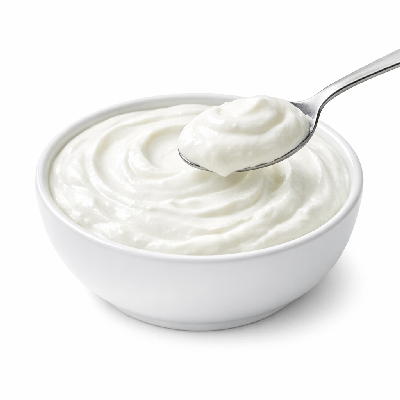
Plain Fat Free Yogurt, Nonfat
Source of Calories
Nutrition Facts
| Nutrient | Amount | % Daily Value |
|---|---|---|
| Total Carbohydrates | 18.82 g | 7% |
| Net Carbohydrates | 18.82 g | 8% |
| Sugars | 18.82 g | 54% |
| Added Sugars | 0 g | 0% |
| Dietary Fiber | 0 g | 0% |
| Protein | 14.04 g | 28% |
| Total Fat | 0.44 g | 1% |
| Saturated Fat | 0.28 g | 1% |
| Monounsaturated Fat | 0.12 g | - |
| Polyunsaturated Fat | 0.01 g | - |
| Trans Fat | No data | - |
| Cholesterol | 4.9 mg | 2% |
| Vitamins | ||
| Vitamin A | 4.9 mcg | 1% |
| Vitamin C | 2.21 mg | 2% |
| Vitamin D | 0 mcg | 0% |
| Minerals | ||
| Sodium | 188.65 mg | 8% |
| Potassium | 624.75 mg | 13% |
| Calcium | 487.55 mg | 38% |
| Magnesium | 46.55 mg | 11% |
| Iron | 0.22 mg | 1% |
| Zinc | 2.38 mg | 22% |
% DV refers to how much a single serving of an individually packaged food or supplement contributes nutritionally to your daily diet, based on a 2,000-calorie-a-day diet. Generally, having 5% DV or less of a nutrient per serving is considered low, and 20% DV or more of a nutrient per serving is considered high.
Fat Composition
The suggested total fat consumption should be limited to 30% of total energy intake or less. The type of fat consumed should primarily be unsaturated fatty acids, with no more than 10% of total energy intake coming from saturated fatty acids (about 200 calories on a 2000-calorie diet) and no more than 1% of total energy intake coming from trans-fatty acids.
Vitamin Coverage
Vitamin A
0.5%
Vitamin C
2%
Vitamin D
0%
Vitamin E
0%
Vitamin K
0.4%
Vitamin B1
10%
Vitamin B2
44%
Vitamin B3
2%
Vitamin B5
31%
Vitamin B6
8%
Vitamin B7
-
Vitamin B9
7%
Vitamin B12
62%
There are 13 essential vitamins required for the body to work properly, which are categorised into two categories: fat-soluble and water-soluble vitamins. Vitamins have a Recommended Dietary Allowance (RDA), provided by the Dietary Reference Intakes (DRIs), which vary by age and sex. The %DV indicates how much one serving contributes to the average recommended daily intake.
Mineral Coverage
Calcium
38%
Iron
1%
Magnesium
11%
Phosphorus
31%
Potassium
13%
Sodium
8%
Zinc
22%
Copper
4%
Manganese
0.5%
Selenium
16%
Minerals are micronutrients, of which 13 of them are essential to the human body. The Recommended Dietary Allowance includes Calcium (1,300 mg/d), Phosphorus (1,250 mg/d), Potassium (4,700 mg/d), Sodium (2,300 mg/d), Chloride (1,500 mg/d), Magnesium (420 mg/d), Iron (18 mg/d), Zinc (11 mg/d), Copper (0.9 mg/d), Selenium (55 mcg/d), Molybdenum (45 mcg/d), Manganese (2.3 mg/d) and Iodine (150 mcg/d).
Protein Quality
Leucine
48%
Isoleucine
58%
Valine
69%
Lysine
47%
Tryptophan
22%
Threonine
41%
Phenylalanine
66%
Methionine
62%
Histidine
36%
Guidelines recommend a serving of protein with each meal and 1.2-1.6 g of protein per kg of body weight per day.
The data provided by eato.health is for informational purposes only and should not be considered medical advice. Please consult your physician before beginning any diet or nutrition plan.
About
How Long to Burn Off 137 Calories?
*Based on this person: 25-year-old female, 5'7", 144 lbs

Swimming
21 min

Jogging
18 min

Cycling
18 min

Walking
33 min
The data provided by eato.health is for informational purposes only and should not be considered medical advice. Please consult your physician before beginning any diet or nutrition plan.
📚 Health Research & Evidence About This Food
Yogurt plain fat free or nonfat is a source of probiotics, which increase overall microbial diversity and reduce molecular signs of inflammation by decreasing the activation of immune cells, as noted by Stanford Medicine. It is also an excellent source of calcium, critical for bone and teeth formation, heart health, muscle function, and nerve signaling, according to Healthline. Furthermore, higher yogurt consumption is associated with a reduced risk of hip fracture in postmenopausal women, as shown in a meta-analysis of cohort studies, and plain varieties have considerably lower sugar levels compared to other yogurt categories, including fruit and flavored yogurts.
1. Evaluation of the Nutrient Content of Yogurts: A Comprehensive Survey of Yogurt Products in the Major Uk Supermarkets.
Source: PubMed
Summary: Natural/Greek yogurts have considerably lower sugar levels, primarily from lactose, in contrast to other categories like children's, fruit, and flavored yogurts which consistently show high median sugar content.
Read More: https://pubmed.ncbi.nlm.nih.gov/30228100/
2. Want Probiotics but Dislike Yogurt? Try These Foods - Harvard Health
Source: Harvard Health
Summary: Yogurt is highlighted as a primary source of probiotics, which are beneficial live bacteria and yeasts, and also contributes calcium and protein.
Read More: https://www.health.harvard.edu/blog/want-probiotics-but-dislike-yogurt-try-these-foods-202107142918
3. In Brief: How Can You Get Enough Calcium? - Informedhealth.Org - Ncbi Bookshelf
Source: NCBI
Summary: Yogurt is a key food source rich in calcium, an essential nutrient for adults who should consume an adequate amount daily.
4. Top 15 Calcium-Rich Foods (Many Are Nondairy)
Source: Healthline
Summary: Yogurt is an excellent source of calcium, which is critical for bone and teeth formation, heart health, muscle function, and nerve signaling.
Read More: https://www.healthline.com/nutrition/15-calcium-rich-foods
5. Fermented-Food Diet Increases Microbiome Diversity, Decreases Inflammatory Proteins, Study Finds
Source: Stanford Medicine
Summary: Consuming fermented foods, including yogurt, increases overall microbial diversity and reduces molecular signs of inflammation by decreasing the activation of certain types of immune cells.
6. Fermented Milk Products and Bone Health in Postmenopausal Women: A Systematic Review of Randomized Controlled Trials, Prospective Cohorts, and Case-Control Studies.
Source: PubMed
Summary: Higher yogurt consumption is significantly associated with a reduced risk of hip fracture in postmenopausal women.
Read More: https://pubmed.ncbi.nlm.nih.gov/31603185/