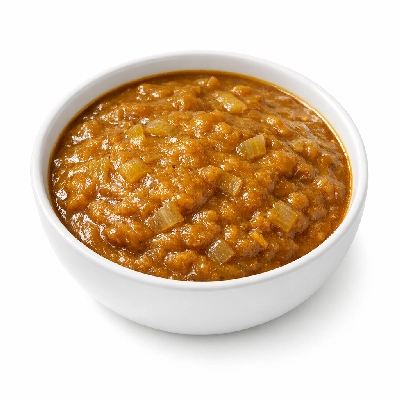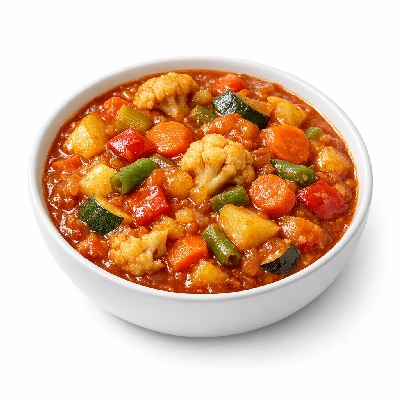
Tomato-based Vegetable Curry
Source of Calories
Nutrition Facts
| Nutrient | Amount | % Daily Value |
|---|---|---|
| Total Carbohydrates | 158.45 g | 58% |
| Net Carbohydrates | 119.77 g | 48% |
| Sugars | 52.92 g | 151% |
| Added Sugars | 0 g | 0% |
| Dietary Fiber | 38.68 g | 138% |
| Protein | 30.75 g | 61% |
| Total Fat | 139.47 g | 179% |
| Saturated Fat | 100.75 g | 504% |
| Monounsaturated Fat | 11.87 g | - |
| Polyunsaturated Fat | 18.09 g | - |
| Trans Fat | 0.18 g | 100% |
| Cholesterol | 0 mg | 0% |
| Vitamins | ||
| Vitamin A | 1338.27 mcg | 149% |
| Vitamin C | 316.17 mg | 351% |
| Vitamin D | 0 mcg | 0% |
| Minerals | ||
| Sodium | 2540.03 mg | 110% |
| Potassium | 5097.48 mg | 108% |
| Calcium | 319.49 mg | 25% |
| Magnesium | 395.62 mg | 94% |
| Iron | 16.58 mg | 92% |
| Zinc | 7.14 mg | 65% |
% DV refers to how much a single serving of an individually packaged food or supplement contributes nutritionally to your daily diet, based on a 2,000-calorie-a-day diet. Generally, having 5% DV or less of a nutrient per serving is considered low, and 20% DV or more of a nutrient per serving is considered high.
Fat Composition
The suggested total fat consumption should be limited to 30% of total energy intake or less. The type of fat consumed should primarily be unsaturated fatty acids, with no more than 10% of total energy intake coming from saturated fatty acids (about 200 calories on a 2000-calorie diet) and no more than 1% of total energy intake coming from trans-fatty acids.
Vitamin Coverage
Vitamin A
149%
Vitamin C
351%
Vitamin D
0%
Vitamin E
67%
Vitamin K
127%
Vitamin B1
73%
Vitamin B2
43%
Vitamin B3
95%
Vitamin B5
69%
Vitamin B6
122%
Vitamin B7
-
Vitamin B9
2%
Vitamin B12
0%
There are 13 essential vitamins required for the body to work properly, which are categorised into two categories: fat-soluble and water-soluble vitamins. Vitamins have a Recommended Dietary Allowance (RDA), provided by the Dietary Reference Intakes (DRIs), which vary by age and sex. The %DV indicates how much one serving contributes to the average recommended daily intake.
Mineral Coverage
Calcium
25%
Iron
92%
Magnesium
94%
Phosphorus
82%
Potassium
108%
Sodium
110%
Zinc
65%
Copper
251%
Manganese
295%
Selenium
65%
Minerals are micronutrients, of which 13 of them are essential to the human body. The Recommended Dietary Allowance includes Calcium (1,300 mg/d), Phosphorus (1,250 mg/d), Potassium (4,700 mg/d), Sodium (2,300 mg/d), Chloride (1,500 mg/d), Magnesium (420 mg/d), Iron (18 mg/d), Zinc (11 mg/d), Copper (0.9 mg/d), Selenium (55 mcg/d), Molybdenum (45 mcg/d), Manganese (2.3 mg/d) and Iodine (150 mcg/d).
Protein Quality
Leucine
3%
Isoleucine
4%
Valine
4%
Lysine
3%
Tryptophan
4%
Threonine
3%
Phenylalanine
5%
Methionine
3%
Histidine
3%
Guidelines recommend a serving of protein with each meal and 1.2-1.6 g of protein per kg of body weight per day.
The data provided by eato.health is for informational purposes only and should not be considered medical advice. Please consult your physician before beginning any diet or nutrition plan.
About
How Long to Burn Off 1893 Calories?
*Based on this person: 25-year-old female, 5'7", 144 lbs

Swimming
4 h 37 min

Jogging
3 h 59 min

Cycling
4 h 5 min

Walking
7 h 25 min
The data provided by eato.health is for informational purposes only and should not be considered medical advice. Please consult your physician before beginning any diet or nutrition plan.
FAQ
One serving of tomato-based vegetable curry has about 4.5 g of dietary fiber and around 420 mg of potassium. Potassium regulates heart function, nerve signals, and muscle contraction. Tomatoes also release lycopene, but curries cooked with large amounts of salt, ghee, butter, or cream may increase sodium and saturated fat intake.
Tomato-based vegetable curry may help maintain healthy blood pressure if it has minimal added salt. One serving contains 420 mg of potassium to balance sodium in the body and support normal blood pressure regulation. Foods rich in potassium are recommended in heart diets. However, packaged curry pastes or heavy seasoning may increase blood pressure. People managing hypertension should monitor sodium intake and prefer freshly prepared versions.
No, tomato-based vegetable curry generally does not raise cholesterol when it is made primarily with vegetables and plant oils. A serving provides about 4.5 g of fiber, which reduces LDL cholesterol absorption. Vegetable-based dishes also contain 0 mg of cholesterol unless animal ingredients are added. Cholesterol levels may increase if the curry is prepared with large amounts of butter, ghee, coconut cream, or other high saturated fat ingredients.
It depends, tomato based vegetable curry provides 18 mg of vitamin C, which helps immune function and may help reduce oxidative stress linked with inflammation. However, tomatoes belong to the nightshade family, and some individuals with arthritis report increased symptoms after consuming them.
Yes, only if it is part of a balanced diet and prepared with moderate oil and salt being only 150 calories and supplying 4.5 g of dietary fiber. However, it is still important to maintain dietary variety. Rotating different vegetables, legumes, and protein sources helps ensure a wider range of nutrients over time.