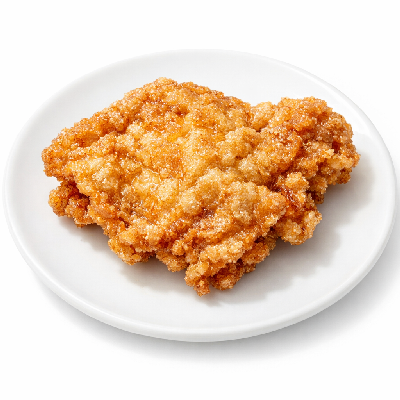
Raw Squab Pigeon, Meat, Skin
Source of Calories
Nutrition Facts
| Nutrient | Amount | % Daily Value |
|---|---|---|
| Total Carbohydrates | 0 g | 0% |
| Net Carbohydrates | 0 g | 0% |
| Sugars | No data | - |
| Added Sugars | No data | - |
| Dietary Fiber | 0 g | 0% |
| Protein | 54.86 g | 110% |
| Total Fat | 70.69 g | 91% |
| Saturated Fat | 25.04 g | 125% |
| Monounsaturated Fat | 28.87 g | - |
| Polyunsaturated Fat | 9.12 g | - |
| Trans Fat | No data | - |
| Cholesterol | 282.15 mg | 94% |
| Vitamins | ||
| Vitamin A | 216.51 mcg | 24% |
| Vitamin C | 15.44 mg | 17% |
| Vitamin D | No data | - |
| Minerals | ||
| Sodium | 160.38 mg | 7% |
| Potassium | 591.03 mg | 13% |
| Calcium | 35.64 mg | 3% |
| Magnesium | 65.34 mg | 16% |
| Iron | 10.51 mg | 58% |
| Zinc | 6.53 mg | 59% |
% DV refers to how much a single serving of an individually packaged food or supplement contributes nutritionally to your daily diet, based on a 2,000-calorie-a-day diet. Generally, having 5% DV or less of a nutrient per serving is considered low, and 20% DV or more of a nutrient per serving is considered high.
Fat Composition
The suggested total fat consumption should be limited to 30% of total energy intake or less. The type of fat consumed should primarily be unsaturated fatty acids, with no more than 10% of total energy intake coming from saturated fatty acids (about 200 calories on a 2000-calorie diet) and no more than 1% of total energy intake coming from trans-fatty acids.
Vitamin Coverage
Vitamin A
24%
Vitamin C
17%
Vitamin D
-
Vitamin E
-
Vitamin K
-
Vitamin B1
52%
Vitamin B2
51%
Vitamin B3
112%
Vitamin B5
45%
Vitamin B6
72%
Vitamin B7
-
Vitamin B9
4%
Vitamin B12
50%
There are 13 essential vitamins required for the body to work properly, which are categorised into two categories: fat-soluble and water-soluble vitamins. Vitamins have a Recommended Dietary Allowance (RDA), provided by the Dietary Reference Intakes (DRIs), which vary by age and sex. The %DV indicates how much one serving contributes to the average recommended daily intake.
Mineral Coverage
Calcium
3%
Iron
58%
Magnesium
16%
Phosphorus
59%
Potassium
13%
Sodium
7%
Zinc
59%
Copper
144%
Manganese
2%
Selenium
72%
Minerals are micronutrients, of which 13 of them are essential to the human body. The Recommended Dietary Allowance includes Calcium (1,300 mg/d), Phosphorus (1,250 mg/d), Potassium (4,700 mg/d), Sodium (2,300 mg/d), Chloride (1,500 mg/d), Magnesium (420 mg/d), Iron (18 mg/d), Zinc (11 mg/d), Copper (0.9 mg/d), Selenium (55 mcg/d), Molybdenum (45 mcg/d), Manganese (2.3 mg/d) and Iodine (150 mcg/d).
Protein Quality
Leucine
152%
Isoleucine
211%
Valine
171%
Lysine
172%
Tryptophan
227%
Threonine
188%
Phenylalanine
199%
Methionine
247%
Histidine
196%
Guidelines recommend a serving of protein with each meal and 1.2-1.6 g of protein per kg of body weight per day.
The data provided by eato.health is for informational purposes only and should not be considered medical advice. Please consult your physician before beginning any diet or nutrition plan.
About
How Long to Burn Off 873 Calories?
*Based on this person: 25-year-old female, 5'7", 144 lbs

Swimming
2 h 8 min

Jogging
1 h 51 min

Cycling
1 h 53 min

Walking
3 h 25 min
The data provided by eato.health is for informational purposes only and should not be considered medical advice. Please consult your physician before beginning any diet or nutrition plan.
📚 Health Research & Evidence About This Food
Squab pigeon meat provides essential trace elements like iron, copper, and zinc, which contribute to its nutritional value. Its crude protein content can increase with braising, as observed in studies on traditional Chinese braised squab preparation. Research indicates that adequate copper supplementation may enhance beneficial omega-3 fatty acids in the meat by influencing fatty acid metabolism and reducing saturated fatty acids, though observational evidence suggests an increased likelihood of bacterial contamination, such as Campylobacter and Salmonella, during processing and transport.
1. Trace Element Concentrations in Migratory Game Bird Meat: Contribution to Reference Intakes Through a Probabilistic Assessment
Source: SpringerLink, 2019
Summary: Squab pigeon meat contains essential trace elements such as cobalt, chromium, copper, iron, and zinc, contributing to daily recommended dietary intakes.
Read More: https://link.springer.com/article/10.1007/s12011-019-02014-9
2. Proteomics and Lipidomics Analysis of the Breast Muscles to Investigate the Effect of Dietary Copper Level on the Meat Quality of Pigeons.
Source: PubMed
Summary: Adequate copper supplementation in squabs reduces saturated fatty acids while increasing beneficial omega-3 polyunsaturated fatty acids like methyl linolenate, thereby improving meat quality.
Read More: https://pubmed.ncbi.nlm.nih.gov/40451078/
3. Prevalence of Campylobacter and Salmonella at a Squab (Young Pigeon) Processing Plant.
Source: PubMed
Summary: Squab pigeon processing plants showed a significantly greater likelihood of positive samples for Campylobacter (twofold) and Salmonella (eightfold) at processing compared to on-farm studies, indicating increased contamination during transport and processing.
Read More: https://pubmed.ncbi.nlm.nih.gov/11233002/
4. Application of the Effect of Nonthermal Technologies on the Oxidation of Proteins and Lipids in Pigeon Meat During Chilled Storage
Source: Wiley Online Library
Summary: Low-voltage electrostatic field (LVEF) treatment at a certain kV/m effectively inhibits both protein and lipid oxidation in pigeon meat during chilled storage, preserving its quality.
Read More: https://onlinelibrary.wiley.com/doi/10.1155/2024/6696954
5. Monitoring the Variations in Physicochemical Characteristics of Squab Meat During the Braising Cooking Process
Source: Wiley Online Library
Summary: Squab meat undergoes physicochemical changes during braising, including decreases in moisture content and drip loss rate, increases in crude protein content and pH value, and enhanced textural attributes like hardness, springiness, and chewiness, while essential amino acid content remains unchanged.
Read More: https://onlinelibrary.wiley.com/doi/full/10.1002/fsn3.2876