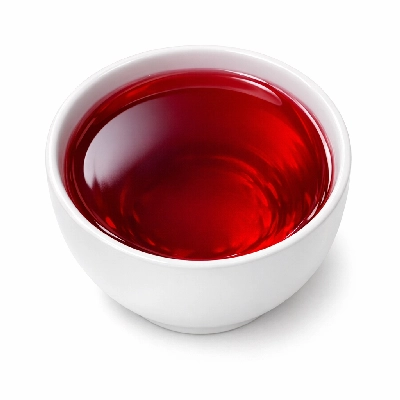
Hibiscus Tea
Source of Calories
Nutrition Facts
| Nutrient | Amount | % Daily Value |
|---|---|---|
| Total Carbohydrates | 0 g | 0% |
| Net Carbohydrates | 0 g | 0% |
| Sugars | 0 g | 0% |
| Added Sugars | No data | - |
| Dietary Fiber | 0 g | 0% |
| Protein | 0 g | 0% |
| Total Fat | 0 g | 0% |
| Saturated Fat | 0 g | 0% |
| Monounsaturated Fat | 0 g | - |
| Polyunsaturated Fat | 0 g | - |
| Trans Fat | 0 g | 0% |
| Cholesterol | 0 mg | 0% |
| Vitamins | ||
| Vitamin A | 0 mcg | 0% |
| Vitamin C | 0 mg | 0% |
| Vitamin D | 0 mcg | 0% |
| Minerals | ||
| Sodium | 9.48 mg | 0% |
| Potassium | 47.4 mg | 1% |
| Calcium | 18.96 mg | 1% |
| Magnesium | 7.11 mg | 2% |
| Iron | 0.19 mg | 1% |
| Zinc | 0.09 mg | 1% |
% DV refers to how much a single serving of an individually packaged food or supplement contributes nutritionally to your daily diet, based on a 2,000-calorie-a-day diet. Generally, having 5% DV or less of a nutrient per serving is considered low, and 20% DV or more of a nutrient per serving is considered high.
Vitamin Coverage
Vitamin A
0%
Vitamin C
0%
Vitamin D
0%
Vitamin E
0%
Vitamin K
0%
Vitamin B1
0%
Vitamin B2
0%
Vitamin B3
0.6%
Vitamin B5
0%
Vitamin B6
0%
Vitamin B7
-
Vitamin B9
0.6%
Vitamin B12
0%
There are 13 essential vitamins required for the body to work properly, which are categorised into two categories: fat-soluble and water-soluble vitamins. Vitamins have a Recommended Dietary Allowance (RDA), provided by the Dietary Reference Intakes (DRIs), which vary by age and sex. The %DV indicates how much one serving contributes to the average recommended daily intake.
Mineral Coverage
Calcium
1%
Iron
1%
Magnesium
2%
Phosphorus
0.2%
Potassium
1%
Sodium
0.4%
Zinc
0.9%
Copper
0%
Manganese
49%
Selenium
0%
Minerals are micronutrients, of which 13 of them are essential to the human body. The Recommended Dietary Allowance includes Calcium (1,300 mg/d), Phosphorus (1,250 mg/d), Potassium (4,700 mg/d), Sodium (2,300 mg/d), Chloride (1,500 mg/d), Magnesium (420 mg/d), Iron (18 mg/d), Zinc (11 mg/d), Copper (0.9 mg/d), Selenium (55 mcg/d), Molybdenum (45 mcg/d), Manganese (2.3 mg/d) and Iodine (150 mcg/d).
The data provided by eato.health is for informational purposes only and should not be considered medical advice. Please consult your physician before beginning any diet or nutrition plan.
About
How Long to Burn Off 0 Calories?
*Based on this person: 25-year-old female, 5'7", 144 lbs

Swimming
0 min

Jogging
0 min
Cycling
0 min
Walking
0 min
The data provided by eato.health is for informational purposes only and should not be considered medical advice. Please consult your physician before beginning any diet or nutrition plan.
FAQ
Yes, hibiscus tea is generally safe to drink every day in moderate amounts for many people, especially when it is unsweetened. 1 cup of hibiscus tea has 0 calories, 0 g carbs, 0 g sugar, 0 g fat, 0 g protein, 0 mg cholesterol, and 7.2 mg sodium. However, daily hibiscus tea may not be suitable for everyone. Be careful if you are pregnant, have low blood pressure, take blood pressure medication, take diuretics, use diabetes medication, or have kidney or liver disease.
Hibiscus tea may be liver friendly as an unsweetened, antioxidant rich drink, but it should not be treated as a liver detox or liver disease treatment
Yes, hibiscus tea may have a mild diuretic effect, meaning it may increase urine output for some people.
Hibiscus tea is caffeine free and has only 7.2 mg sodium per cup, while green tea contains caffeine unless it is decaffeinated
Yes, hibiscus tea has fairly good evidence for modest blood pressure reduction, especially in people with elevated blood pressure because it has 0 calories and 0 g sugar per cup.
📚 Health Research & Evidence About This Food
Clinical evidence, including a meta-analysis of studies, demonstrates that hibiscus tea significantly reduces systolic blood pressure and lowers low-density lipoprotein (LDL) levels, with effects comparable to some conventional medications and most pronounced in individuals with elevated baseline blood pressure. Additionally, compounds like anthocyanins and organic acids in Hibiscus sabdariffa contribute to its substantial antioxidant power, antiviral benefits, and may help combat obesity and its complications by preventing body-weight gain and reducing adipocyte hyperplasia, as noted by Harvard Health and PubMed.
1. Hibiscus Tea Benefits: The Latest Research
Source: NutritionFacts.org
Summary: Hibiscus tea significantly boosts the bloodstream's antioxidant power within an hour of consumption and is effective in managing high blood pressure.
2. Hibiscus Tea: Health Benefits and Risks
Source: Medical News Today, 2018
Summary: Hibiscus tea has been shown to lower blood pressure and reduce "bad" (LDL) cholesterol, particularly in individuals with elevated levels.
3. The Health Benefits of 3 Herbal Teas - Harvard Health
Source: Harvard Health, 2021
Summary: Hibiscus tea is recognized for its antiviral and cardiovascular benefits, largely due to its antioxidant compounds called anthocyanins, and has shown effectiveness against certain strains of bird flu.
Read More: https://www.health.harvard.edu/diet-and-nutrition/the-health-benefits-of-3-herbal-teas
4. A Systematic Review and Meta-Analysis of the Effects of Hibiscus Sabdariffa on Blood Pressure and Cardiometabolic Markers.
Source: PubMed
Summary: Hibiscus significantly reduced systolic blood pressure and lowered low-density lipoprotein levels compared to placebo.
Read More: https://pubmed.ncbi.nlm.nih.gov/34927694/
5. The Main Beneficial Effect of Roselle (Hibiscus Sabdariffa) on Obesity Is Not Only Related to Its Anthocyanin Content.
Source: PubMed
Summary: Calyxes from Hibiscus sabdariffa contain active compounds beyond anthocyanins, with organic acids being strongly linked to beneficial health effects in combating obesity and its complications.
Read More: https://pubmed.ncbi.nlm.nih.gov/29943479/