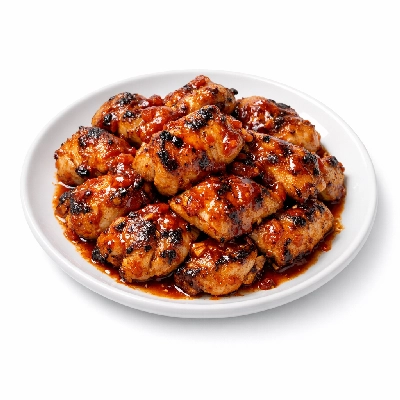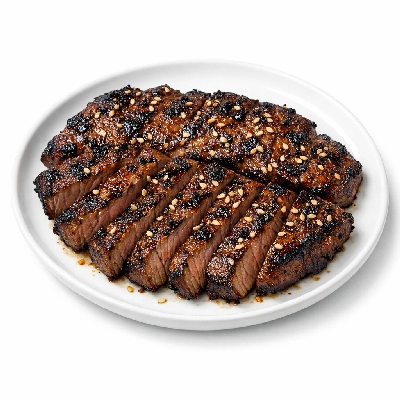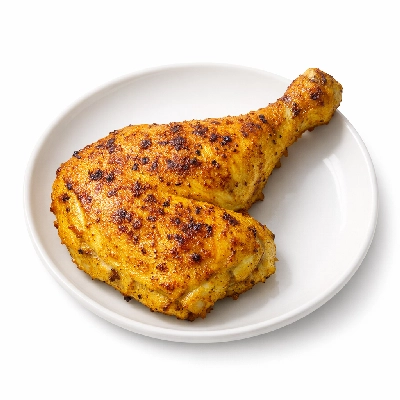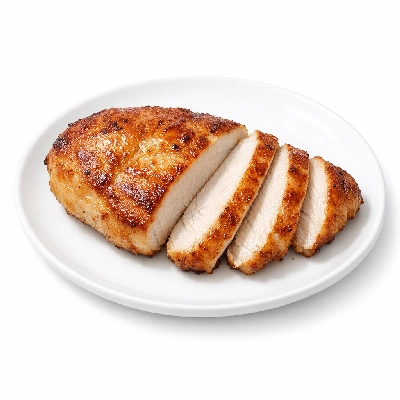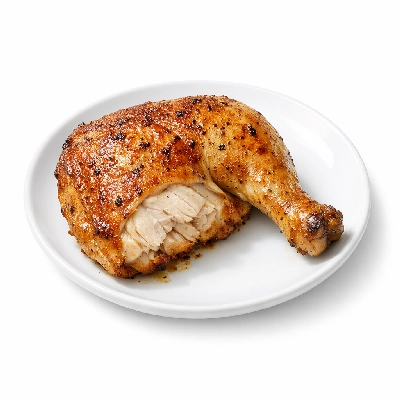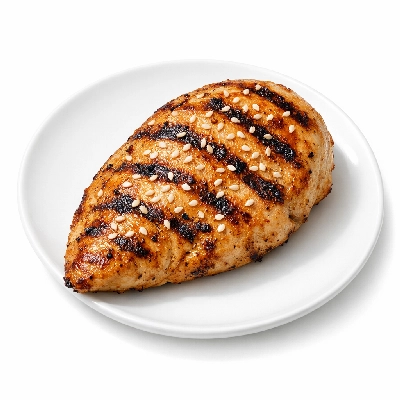
Grilled Chicken Breast with Sesame Seeds
Source of Calories
Nutrition Facts
| Nutrient | Amount | % Daily Value |
|---|---|---|
| Total Carbohydrates | 6.47 g | 2% |
| Net Carbohydrates | 3.93 g | 2% |
| Sugars | 0.3 g | 1% |
| Added Sugars | 0 g | 0% |
| Dietary Fiber | 2.54 g | 9% |
| Protein | 113.12 g | 226% |
| Total Fat | 49.35 g | 63% |
| Saturated Fat | 8.68 g | 43% |
| Monounsaturated Fat | 27.84 g | - |
| Polyunsaturated Fat | 9.68 g | - |
| Trans Fat | 0 g | 0% |
| Cholesterol | 292.4 mg | 97% |
| Vitamins | ||
| Vitamin A | 21.49 mcg | 2% |
| Vitamin C | 1.97 mg | 2% |
| Vitamin D | 0.43 mcg | 2% |
| Minerals | ||
| Sodium | 4347.35 mg | 189% |
| Potassium | 1126.1 mg | 24% |
| Calcium | 89.3 mg | 7% |
| Magnesium | 182.86 mg | 44% |
| Iron | 5.45 mg | 30% |
| Zinc | 4.89 mg | 44% |
% DV refers to how much a single serving of an individually packaged food or supplement contributes nutritionally to your daily diet, based on a 2,000-calorie-a-day diet. Generally, having 5% DV or less of a nutrient per serving is considered low, and 20% DV or more of a nutrient per serving is considered high.
Fat Composition
The suggested total fat consumption should be limited to 30% of total energy intake or less. The type of fat consumed should primarily be unsaturated fatty acids, with no more than 10% of total energy intake coming from saturated fatty acids (about 200 calories on a 2000-calorie diet) and no more than 1% of total energy intake coming from trans-fatty acids.
Vitamin Coverage
Vitamin A
2%
Vitamin C
2%
Vitamin D
2%
Vitamin E
34%
Vitamin K
16%
Vitamin B1
32%
Vitamin B2
36%
Vitamin B3
306%
Vitamin B5
70%
Vitamin B6
133%
Vitamin B7
-
Vitamin B9
1%
Vitamin B12
49%
There are 13 essential vitamins required for the body to work properly, which are categorised into two categories: fat-soluble and water-soluble vitamins. Vitamins have a Recommended Dietary Allowance (RDA), provided by the Dietary Reference Intakes (DRIs), which vary by age and sex. The %DV indicates how much one serving contributes to the average recommended daily intake.
Mineral Coverage
Calcium
7%
Iron
30%
Magnesium
44%
Phosphorus
76%
Potassium
24%
Sodium
189%
Zinc
44%
Copper
49%
Manganese
37%
Selenium
185%
Minerals are micronutrients, of which 13 of them are essential to the human body. The Recommended Dietary Allowance includes Calcium (1,300 mg/d), Phosphorus (1,250 mg/d), Potassium (4,700 mg/d), Sodium (2,300 mg/d), Chloride (1,500 mg/d), Magnesium (420 mg/d), Iron (18 mg/d), Zinc (11 mg/d), Copper (0.9 mg/d), Selenium (55 mcg/d), Molybdenum (45 mcg/d), Manganese (2.3 mg/d) and Iodine (150 mcg/d).
Protein Quality
Leucine
6%
Isoleucine
8%
Valine
7%
Lysine
5%
Tryptophan
9%
Threonine
6%
Phenylalanine
10%
Methionine
5%
Histidine
6%
Guidelines recommend a serving of protein with each meal and 1.2-1.6 g of protein per kg of body weight per day.
The data provided by eato.health is for informational purposes only and should not be considered medical advice. Please consult your physician before beginning any diet or nutrition plan.
About
How Long to Burn Off 937 Calories?
*Based on this person: 25-year-old female, 5'7", 144 lbs

Swimming
2 h 18 min

Jogging
1 h 59 min

Cycling
2 h 2 min

Walking
3 h 40 min
The data provided by eato.health is for informational purposes only and should not be considered medical advice. Please consult your physician before beginning any diet or nutrition plan.
FAQ
It depends. One serving has about 469 calories, 56.6 g protein, and just 3.2 g carbs, but it also packs 24.7 g fat, 4.3 g saturated fat, 146.2 mg cholesterol, and about 2,174 mg sodium. That sodium alone is almost a full day’s upper limit for most adults, so this is better viewed as a high protein but very high sodium dish.
No. one serving already gives about 2,174 mg sodium, plus a very high 56.6 g protein, which may be too much for some people with chronic kidney disease, especially if they have been told to moderate protein intake. Kidney guidance recommends avoiding high sodium foods, and nutrition needs vary by CKD stage, labs, and whether someone is on dialysis.
No. One serving has about 2,174 mg sodium, which is already close to the full 2,300 mg daily limit and well above the 1,500 mg ideal target often advised for adults with high blood pressure. High sodium intake can raise blood pressure, so this dish is a poor fit if hypertension is one of the main concerns.
Yes, one serving has about 4.3 g saturated fat and 146.2 mg cholesterol, and the American Heart Association notes that saturated fat raises LDL cholesterol and recommends keeping saturated fat under about 13 g a day on a 2,000 calorie diet.
📚 Health Research & Evidence About This Food
Chicken breast, an excellent source of lean protein, offers a healthier alternative to red meat due to its lower saturated fat content. This lean protein, rich in amino acids, supports muscle building, enhances satiety, and aids in weight management and heart health by promoting stronger bones and muscles. Additionally, research demonstrates that native and crossbred chicken breast meats can improve lipid profiles and enhance antioxidant status by reducing plasma total cholesterol and triglyceride levels and decreasing oxidative stress.
1. Breasts Vs. Thighs — Which Is More Nutritious?
Source: Academy of Nutrition and Dietetics
Summary: Chicken breasts are an excellent source of lean protein, offering a healthier alternative to red meat due to their lower saturated fat content.
Read More: https://www.eatright.org/food/food-groups/protein-foods/breasts-vs-thighs-which-is-more-nutritious
2. 38 High-Protein Foods
Source: Medical News Today, 2020
Summary: Chicken breast is specifically identified as a lean and excellent source of protein, which supports muscle building and enhances satiety.
3. Chicken: Health Benefits, Nutrients per Serving, Preparation Information, and More
Source: WebMD
Summary: Chicken breast is a lean protein source that provides essential amino acids for stronger bones and muscles, and its protein content can aid in weight management and support heart health.
Read More: https://www.webmd.com/diet/health-benefits-chicken
4. Effects of Thai Native Chicken Breast Meat Consumption on Serum Uric Acid Level, Biochemical Parameters, and Antioxidant Activities in Rats
Source: Nature, 2022
Summary: Thai native and crossbred chicken breast meats offer distinct health advantages, including improved lipid profiles and enhanced antioxidant status, without the adverse increases in uric acid, creatinine, liver enzymes, and oxidative stress associated with commercial broiler breast meat.
Read More: https://www.nature.com/articles/s41598-022-18484-2