• Home
  • Features
  • Food Database
  • Calculators
  • Blog
  • About
Get the App

Download and start your free trial to get your custom macro plan and food logging access today.

Download Eato App from App StoreDownload Eato App from Google Play
  • Calorie Tracker
  • Food Database
  • Calculators
  • Blog
  • About
  • Support
© 2025 Eato. All rights reserved.
  • Privacy Policy
  • Terms & Conditions
  • Cookie Setting
  1. Flaxseeds
Flaxseeds

Flaxseeds

Source of Calories

Amount%

Nutrition Facts

Amount% DV
NutrientAmount% Daily Value
Total Carbohydrates48.52 g18%
Net Carbohydrates2.65 g1%
Sugars2.6 g7%
Added Sugars0 g0%
Dietary Fiber45.86 g164%
Protein30.73 g61%
Total Fat70.83 g91%
Saturated Fat6.15 g31%
Monounsaturated Fat12.65 g-
Polyunsaturated Fat48.27 g-
Trans FatNo data-
Cholesterol0 mg0%
Vitamins
Vitamin A0 mcg0%
Vitamin C1.01 mg1%
Vitamin D0 mcg0%
Minerals
Sodium50.4 mg2%
Potassium1365.84 mg29%
Calcium428.4 mg33%
Magnesium658.56 mg157%
Iron9.63 mg53%
Zinc7.29 mg66%

% DV refers to how much a single serving of an individually packaged food or supplement contributes nutritionally to your daily diet, based on a 2,000-calorie-a-day diet. Generally, having 5% DV or less of a nutrient per serving is considered low, and 20% DV or more of a nutrient per serving is considered high.

Fat Composition

Amount%

The suggested total fat consumption should be limited to 30% of total energy intake or less. The type of fat consumed should primarily be unsaturated fatty acids, with no more than 10% of total energy intake coming from saturated fatty acids (about 200 calories on a 2000-calorie diet) and no more than 1% of total energy intake coming from trans-fatty acids.

Vitamin Coverage

% DV

Vitamin A

0%

Vitamin C

1%

Vitamin D

0%

Vitamin E

3%

Vitamin K

6%

Vitamin B1

230%

Vitamin B2

21%

Vitamin B3

32%

Vitamin B5

33%

Vitamin B6

47%

Vitamin B7

189%

Vitamin B9

37%

Vitamin B12

0%

There are 13 essential vitamins required for the body to work properly, which are categorised into two categories: fat-soluble and water-soluble vitamins. Vitamins have a Recommended Dietary Allowance (RDA), provided by the Dietary Reference Intakes (DRIs), which vary by age and sex. The %DV indicates how much one serving contributes to the average recommended daily intake.

Mineral Coverage

% DV

Calcium

33%

Iron

53%

Magnesium

157%

Phosphorus

86%

Potassium

29%

Sodium

2%

Zinc

66%

Copper

228%

Manganese

181%

Selenium

78%

Minerals are micronutrients, of which 13 of them are essential to the human body. The Recommended Dietary Allowance includes Calcium (1,300 mg/d), Phosphorus (1,250 mg/d), Potassium (4,700 mg/d), Sodium (2,300 mg/d), Chloride (1,500 mg/d), Magnesium (420 mg/d), Iron (18 mg/d), Zinc (11 mg/d), Copper (0.9 mg/d), Selenium (55 mcg/d), Molybdenum (45 mcg/d), Manganese (2.3 mg/d) and Iodine (150 mcg/d).

Protein Quality

% DV

Leucine

71%

Isoleucine

113%

Valine

107%

Lysine

54%

Tryptophan

143%

Threonine

92%

Phenylalanine

139%

Methionine

93%

Histidine

81%

Guidelines recommend a serving of protein with each meal and 1.2-1.6 g of protein per kg of body weight per day.

The data provided by eato.health is for informational purposes only and should not be considered medical advice. Please consult your physician before beginning any diet or nutrition plan.

About

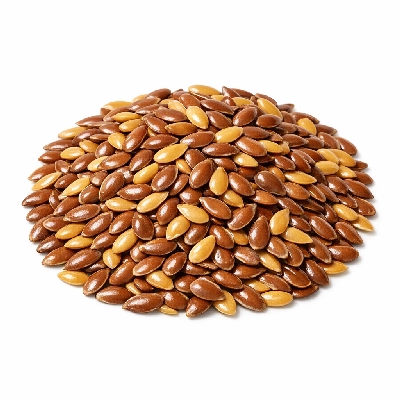
1 cup, whole of Flaxseeds contains 897 calories, 48.52g carbs, 70.83g fat, and 30.73g protein.
High FiberHigh IronLow CholesterolLow GILow SodiumLow SugarNo Added Sugar
See how the food you eat fits into your diet with the Eato app

Eato: AI-Powered Food Scanner

With over 1.9m+ food entries, accurately track your calories to build simple meal plans for weight loss.

Download Eato App from App StoreDownload Eato App from Google Play

How Long to Burn Off 897 Calories?

*Based on this person: 25-year-old female, 5'7", 144 lbs

  • Blue swimming icon

    Swimming

    2 h 12 min

  • Orange jogging icon

    Jogging

    1 h 54 min

  • Green cycling icon

    Cycling

    1 h 57 min

  • Yellow walking icon

    Walking

    3 h 31 min

The data provided by eato.health is for informational purposes only and should not be considered medical advice. Please consult your physician before beginning any diet or nutrition plan.
FAQ

Flaxseeds contain fiber, plant based omega 3 fat and lignans (antioxidants). Consuming 1-2 tablespoons of flaxseeds may help with improvements in body weight, bmi, lipids, blood pressure, fasting glucose and insulin resistence.


If you eat flaxseed everyday it may reduce your systolic blood pressure by 4.75 mmHg and diastolic blood pressure by 3.09 mmHg. However, if you are taking blood thinners, diabetes medication, blood pressure medication, or hormone related treatments, you should check with a clinician before taking large amounts regularly.

Yes, flaxseed is good for reducing LDL cholesterol, and by themselves, they have 0 mg cholesterol, 45.86 g fiber, 48.27 g polyunsaturated fat, and 12.65 g monounsaturated fat per cup.

Yes you can eat them together for their added fiber and omega 3 ALA. 

Food Health: Research and Evidence

Scientific research and expert reviews suggest that certain components in infant formula, such as specific fats and nutrients, can contribute to better cardiovascular health and improved blood sugar control in infants.

1. Food Health: Research and Evidence

Source: SpringerLink, 2024

Summary: Scientific research and expert reviews suggest that certain components in infant formula, such as specific fats and nutrients, can contribute to better cardiovascular health and improved blood sugar control in infants.

Read More: https://link.springer.com/article/10.1007/s13668-024-00561-9

2. Food Health: Research and Evidence

Source: SpringerLink, 2024

Summary: Scientific research and expert reviews suggest that certain components in infant formula, such as specific fats and nutrients, can contribute to better cardiovascular health and improved blood sugar control in infants.

Read More: https://link.springer.com/article/10.1007/s13668-024-00561-9

Home
Food Database
Nuts & Seeds

Related Blogs

woman clutching onto stomach due to period cramps, food that help with period cramps

10 Best Foods That Help With Period Cramps

Nov 14, 2025

bowl of salad representing clean eating

Clean Eating: What Does This Approach Mean?

Nov 14, 2025

21 day gluten and dairy free meal plan for PCOS

21-Day Gluten and Dairy Free Meal Plan for PCOS and Weight Loss

Nov 14, 2025

Food Nutrition Comparison

Food Nutrition Comparison
FoodUnitCaloriesCarbsProteinFat
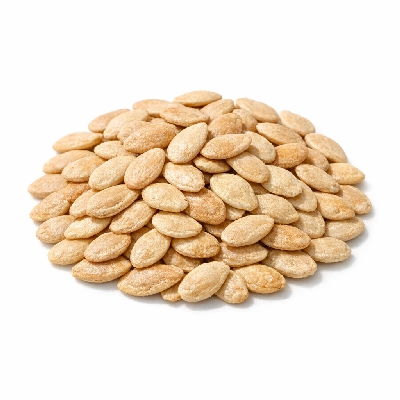
Whole Pumpkin Seeds, Roasted, with Shell without Salt
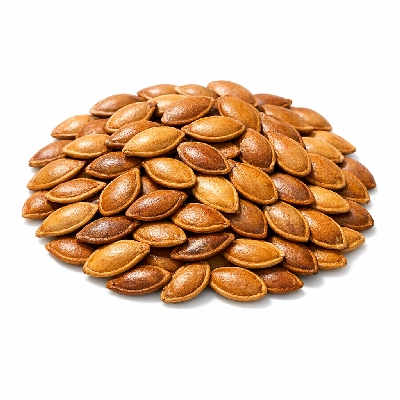
1 cup285 Cal34.4 g11.87 g12.42 g

Similar Food

  • Whole Pumpkin Seeds, Roasted, with Shell without Salt

    Whole Pumpkin Seeds, Roasted, with Shell without SaltA

    1 cup285 Cal

  • Toasted Sesame Seed Kernels, Shelled without Salt

    Toasted Sesame Seed Kernels, Shelled without SaltA

    1 cup726 Cal

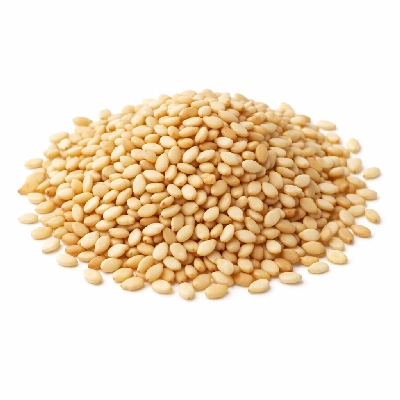
  • Dried Whole Sesame Seeds

    Dried Whole Sesame SeedsA

    1 cup825 Cal

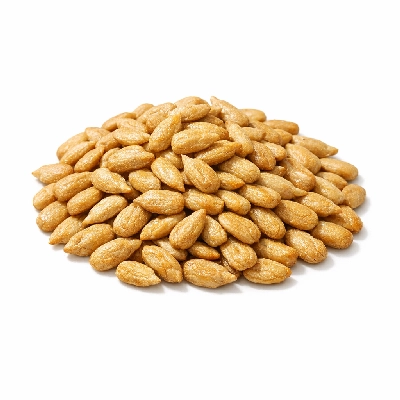
  • Dried Watermelon Seed Kernels, Shelled

    Dried Watermelon Seed Kernels, ShelledA

    1 cup602 Cal

  • Sunflower Seed Kernels, Dry Roasted, Shelled without Salt

    Sunflower Seed Kernels, Dry Roasted, Shelled without SaltA

    1 cup, hulled745 Cal

Toasted Sesame Seed Kernels, Shelled without SaltToasted Sesame Seed Kernels, Shelled without Salt
1 cup
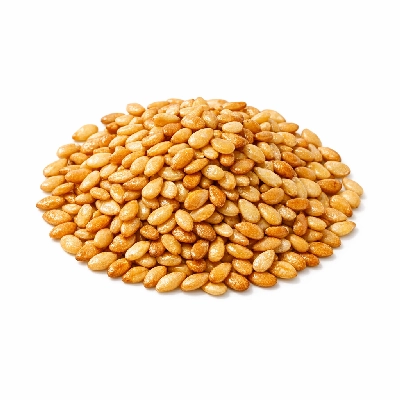
726 Cal
33.33 g
21.71 g
61.44 g
Dried Whole Sesame SeedsDried Whole Sesame Seeds
1 cup825 Cal34 g26 g72 g
Whole Pumpkin Seeds, Roasted, with Shell without Salt