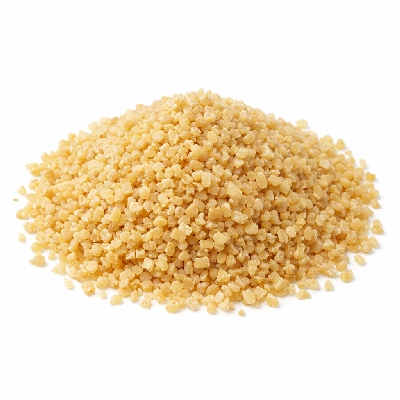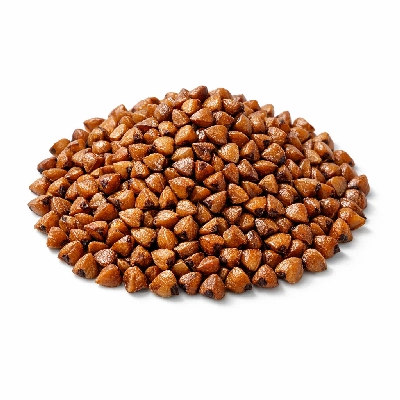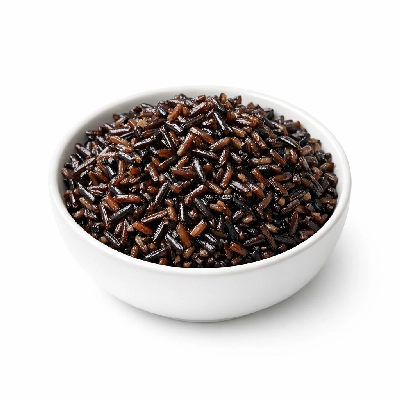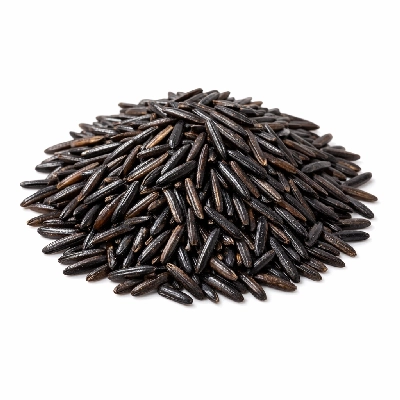
Dry Uncooked Wild Rice
Source of Calories
Nutrition Facts
| Nutrient | Amount | % Daily Value |
|---|---|---|
| Total Carbohydrates | 119.84 g | 44% |
| Net Carbohydrates | 109.92 g | 45% |
| Sugars | 4 g | 11% |
| Added Sugars | 0 g | 0% |
| Dietary Fiber | 9.92 g | 35% |
| Protein | 23.57 g | 47% |
| Total Fat | 1.73 g | 2% |
| Saturated Fat | 0.25 g | 1% |
| Monounsaturated Fat | 0.25 g | - |
| Polyunsaturated Fat | 1.08 g | - |
| Trans Fat | No data | - |
| Cholesterol | 0 mg | 0% |
| Vitamins | ||
| Vitamin A | 1.47 mcg | 0% |
| Vitamin C | 0 mg | 0% |
| Vitamin D | 0 mcg | 0% |
| Minerals | ||
| Sodium | 11.2 mg | 0% |
| Potassium | 683.2 mg | 15% |
| Calcium | 33.6 mg | 3% |
| Magnesium | 283.2 mg | 67% |
| Iron | 3.14 mg | 17% |
| Zinc | 9.54 mg | 87% |
% DV refers to how much a single serving of an individually packaged food or supplement contributes nutritionally to your daily diet, based on a 2,000-calorie-a-day diet. Generally, having 5% DV or less of a nutrient per serving is considered low, and 20% DV or more of a nutrient per serving is considered high.
Fat Composition
The suggested total fat consumption should be limited to 30% of total energy intake or less. The type of fat consumed should primarily be unsaturated fatty acids, with no more than 10% of total energy intake coming from saturated fatty acids (about 200 calories on a 2000-calorie diet) and no more than 1% of total energy intake coming from trans-fatty acids.
Vitamin Coverage
Vitamin A
0.2%
Vitamin C
0%
Vitamin D
0%
Vitamin E
9%
Vitamin K
3%
Vitamin B1
15%
Vitamin B2
32%
Vitamin B3
67%
Vitamin B5
34%
Vitamin B6
37%
Vitamin B7
-
Vitamin B9
38%
Vitamin B12
0%
There are 13 essential vitamins required for the body to work properly, which are categorised into two categories: fat-soluble and water-soluble vitamins. Vitamins have a Recommended Dietary Allowance (RDA), provided by the Dietary Reference Intakes (DRIs), which vary by age and sex. The %DV indicates how much one serving contributes to the average recommended daily intake.
Mineral Coverage
Calcium
3%
Iron
17%
Magnesium
67%
Phosphorus
55%
Potassium
15%
Sodium
0.5%
Zinc
87%
Copper
93%
Manganese
92%
Selenium
8%
Minerals are micronutrients, of which 13 of them are essential to the human body. The Recommended Dietary Allowance includes Calcium (1,300 mg/d), Phosphorus (1,250 mg/d), Potassium (4,700 mg/d), Sodium (2,300 mg/d), Chloride (1,500 mg/d), Magnesium (420 mg/d), Iron (18 mg/d), Zinc (11 mg/d), Copper (0.9 mg/d), Selenium (55 mcg/d), Molybdenum (45 mcg/d), Manganese (2.3 mg/d) and Iodine (150 mcg/d).
Protein Quality
Leucine
55%
Isoleucine
74%
Valine
82%
Lysine
38%
Tryptophan
82%
Threonine
54%
Phenylalanine
100%
Methionine
105%
Histidine
63%
Guidelines recommend a serving of protein with each meal and 1.2-1.6 g of protein per kg of body weight per day.
The data provided by eato.health is for informational purposes only and should not be considered medical advice. Please consult your physician before beginning any diet or nutrition plan.
About
How Long to Burn Off 571 Calories?
*Based on this person: 25-year-old female, 5'7", 144 lbs

Swimming
1 h 24 min

Jogging
1 h 13 min

Cycling
1 h 14 min

Walking
2 h 15 min
The data provided by eato.health is for informational purposes only and should not be considered medical advice. Please consult your physician before beginning any diet or nutrition plan.
📚 Health Research & Evidence About This Food
Research indicates wild rice has a low glycemic index in healthy adults and can reduce fasting blood glucose and insulin resistance in animal models. As a whole-grain option, it provides complex carbohydrates and higher fiber content, contributing to slower digestion and helping mitigate rapid blood sugar spikes, and is also a valuable source of quality protein, with a relatively high protein content compared to other cereal grains.
1. Wild Rice Tomatoes: Health Benefits, Nutrients per Serving, Preparation Information, and More
Source: WebMD
Summary: Wild rice is a naturally occurring grain, distinct from true rice, and is celebrated for its unique flavor, especially the "lake rice" variety preserved by Ojibwe communities.
Read More: https://www.webmd.com/diet/health-benefits-wild-rice
2. [Determination of the Glycemic Index of the Wild Rice and the Effects of Wild Rice on Insulin Resistance in Rats].
Source: PubMed
Summary: Wild rice is the primary ingredient in dry uncooked wild rice, and it was found to have a low glycemic index, classifying it as a low glycemic index food, and it significantly reduced fasting blood glucose, insulin, glucagon levels, and the insulin resistance index in insulin-resistant rats fed a high-fat diet.
Read More: https://pubmed.ncbi.nlm.nih.gov/25997214/
3. Rice With Diabetes: Counting Carbs, Nutrition, and Tips for Choosing
Source: Medical News Today, 2019
Summary: Wild rice is a recommended whole-grain option for managing diabetes due to its complex carbohydrates and higher fiber content, which contribute to slower digestion and help mitigate rapid blood sugar spikes.
4. Unique Starch Biosynthesis Pathways in Wild Rice Revealed by Multi‐Omics Analyses
Source: Wiley Online Library
Summary: Elevated activity and expression of essential starch genes—GBSSI, SSIIa, and BEIIb—in Australian wild rice species account for their higher amylose content, elevated gelatinization temperature, soft gel consistency, and high retrogradation.
Read More: https://onlinelibrary.wiley.com/doi/full/10.1111/pbi.70021
5. Wild Rice: The Indian's Staple and the White Man's Delicacy.
Source: PubMed
Summary: Wild rice is a valuable source of energy and quality protein, contributing positively to human diets due to its balanced nutritional composition.
Read More: https://pubmed.ncbi.nlm.nih.gov/7030624/