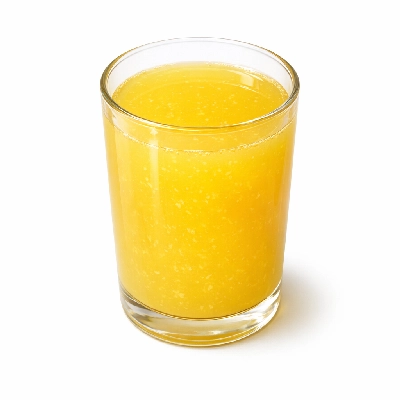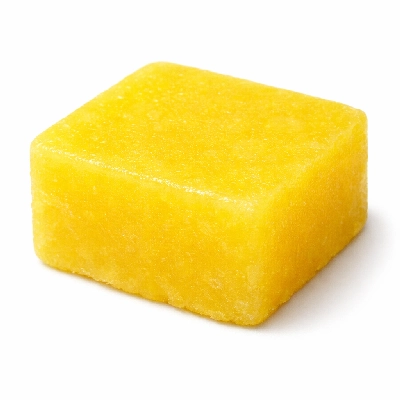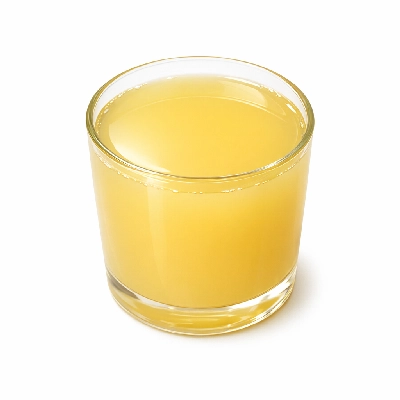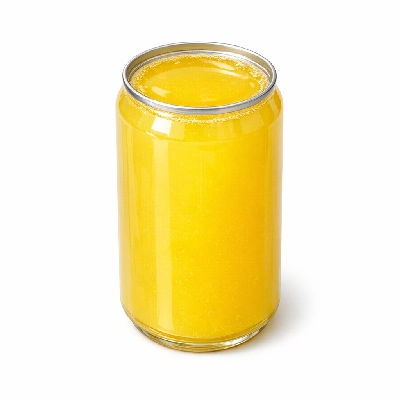
Canned or Bottled Pineapple Juice
Source of Calories
Nutrition Facts
| Nutrient | Amount | % Daily Value |
|---|---|---|
| Total Carbohydrates | 32.18 g | 12% |
| Net Carbohydrates | 31.68 g | 13% |
| Sugars | 24.95 g | 71% |
| Added Sugars | 0 g | 0% |
| Dietary Fiber | 0.5 g | 2% |
| Protein | 0.9 g | 2% |
| Total Fat | 0.3 g | 0% |
| Saturated Fat | 0.02 g | 0% |
| Monounsaturated Fat | 0.04 g | - |
| Polyunsaturated Fat | 0.11 g | - |
| Trans Fat | 0 g | 0% |
| Cholesterol | 0 mg | 0% |
| Vitamins | ||
| Vitamin A | 0.62 mcg | 0% |
| Vitamin C | 109.5 mg | 122% |
| Vitamin D | 0 mcg | 0% |
| Minerals | ||
| Sodium | 5 mg | 0% |
| Potassium | 325 mg | 7% |
| Calcium | 32.5 mg | 3% |
| Magnesium | 30 mg | 7% |
| Iron | 0.78 mg | 4% |
| Zinc | 0.28 mg | 3% |
% DV refers to how much a single serving of an individually packaged food or supplement contributes nutritionally to your daily diet, based on a 2,000-calorie-a-day diet. Generally, having 5% DV or less of a nutrient per serving is considered low, and 20% DV or more of a nutrient per serving is considered high.
Fat Composition
The suggested total fat consumption should be limited to 30% of total energy intake or less. The type of fat consumed should primarily be unsaturated fatty acids, with no more than 10% of total energy intake coming from saturated fatty acids (about 200 calories on a 2000-calorie diet) and no more than 1% of total energy intake coming from trans-fatty acids.
Vitamin Coverage
Vitamin A
0.1%
Vitamin C
122%
Vitamin D
0%
Vitamin E
0.3%
Vitamin K
0.6%
Vitamin B1
12%
Vitamin B2
4%
Vitamin B3
3%
Vitamin B5
3%
Vitamin B6
15%
Vitamin B7
-
Vitamin B9
11%
Vitamin B12
0%
There are 13 essential vitamins required for the body to work properly, which are categorised into two categories: fat-soluble and water-soluble vitamins. Vitamins have a Recommended Dietary Allowance (RDA), provided by the Dietary Reference Intakes (DRIs), which vary by age and sex. The %DV indicates how much one serving contributes to the average recommended daily intake.
Mineral Coverage
Calcium
3%
Iron
4%
Magnesium
7%
Phosphorus
2%
Potassium
7%
Sodium
0.2%
Zinc
3%
Copper
19%
Manganese
55%
Selenium
0.5%
Minerals are micronutrients, of which 13 of them are essential to the human body. The Recommended Dietary Allowance includes Calcium (1,300 mg/d), Phosphorus (1,250 mg/d), Potassium (4,700 mg/d), Sodium (2,300 mg/d), Chloride (1,500 mg/d), Magnesium (420 mg/d), Iron (18 mg/d), Zinc (11 mg/d), Copper (0.9 mg/d), Selenium (55 mcg/d), Molybdenum (45 mcg/d), Manganese (2.3 mg/d) and Iodine (150 mcg/d).
The data provided by eato.health is for informational purposes only and should not be considered medical advice. Please consult your physician before beginning any diet or nutrition plan.
About
How Long to Burn Off 133 Calories?
*Based on this person: 25-year-old female, 5'7", 144 lbs

Swimming
20 min

Jogging
17 min

Cycling
18 min

Walking
32 min
The data provided by eato.health is for informational purposes only and should not be considered medical advice. Please consult your physician before beginning any diet or nutrition plan.
📚 Health Research & Evidence About This Food
Pineapple juice, especially unsweetened, provides vitamins and minerals such as Vitamin C and manganese, and its enzymes may aid protein digestion, according to WebMD. Observational evidence suggests bromelain, an enzyme found in pineapple, possesses anti-inflammatory properties and may support immune health; however, heat processing in canned or bottled juice often reduces its content. Healthline notes that juicing breaks down fibers, causing sugars to enter the bloodstream more rapidly than from whole fruit, which can lead to quicker glucose spikes.
1. Is Pineapple Good for People With Diabetes?
Source: Healthline, 2020
Summary: Pineapple juice, due to its broken-down fibers, causes sugar to enter the bloodstream more quickly than whole pineapple, potentially leading to glucose spikes for individuals with diabetes.
Read More: https://www.healthline.com/health/diabetes/pineapples-and-diabetes
2. Pineapple Juice: Are There Health Benefits? Pros and Cons, Nutrition Information, and More
Source: WebMD
Summary: Pineapple juice provides a concentrated source of vitamins and minerals, including bromelain, which contributes to its anti-inflammatory, heart health, vision, and potential digestive benefits, though it also carries risks such as allergies, stomach issues, and tooth decay.
Read More: https://www.webmd.com/diet/pineapple-juice-health-benefits
3. Pineapple Juice for Cough Relief: Effectiveness, Benefits, and Recipes
Source: Medical News Today, 2017
Summary: Pineapple juice contains bromelain, which possesses anti-inflammatory, anticancer, and antibacterial properties, making it a low-risk home remedy for cough, although direct scientific evidence for its general cough-relieving effectiveness is limited.
4. 7 Reasons Pineapple Is Good for You
Source: Cleveland Clinic
Summary: Pineapple is low in calories and high in vitamins and minerals, containing bromelain which aids in healing, fights inflammation, and may provide pain relief for osteoarthritis.
Read More: https://health.clevelandclinic.org/benefits-of-pineapple