Key Takeaways
- During a fasting window, stick to zero calorie drinks.
- Bone broth contains nutrients like minerals and amino acids.
- Intermittent fasting is not for everyone, especially those who are pregnant or have a history of eating disorders.
Drinking bone broth is increasingly popular because of how easy, cost-effective, and tasty it can be, especially within the health-conscious community. As such, drinking bone broth has been commonly recommended as what should be consumed when breaking a fast, as a gentle and easy way to nudge your insulin levels up. However, what if bone broth is consumed during a fasting period? Does bone broth break a fast or make your fasting hours “not count”? Does consuming bone broth stop autophagy?
What Is Intermittent Fasting?
Unlike most diets, intermittent fasting focuses on when you eat, rather than what you eat. Intermittent fasting dictates that you only eat within a certain time frame [1].
There are many types of intermittent fasting plans available, for instance:
- 16:8: eating for eight hours and fasting for 16
- 5:2: involves eating regularly 5 days a week. For the other two days, you limit yourself to one 500–600 calorie meal.
- OMAD: where you eat only one meal a day
- Alternative-Day Fasting: where you eat on alternate days
Intermittent fasting is believed to effectively aid in weight management, and your body responds through a process called “autophagy” [1].
Autophagy is a process in which the fasting regimen triggers a “cleaning process”, where cells decompose damaged components or organelles [1]. This is thought to improve gut health, reduce inflammation, increase energy levels and have better overall well-being.
Who Should and Should Not Try Intermittent Fasting?

Before you start intermittent fasting, check whether you fall under any of the following categories:
- Children and teens under age 18.
- Women who are pregnant or breastfeeding.
- People with type 1 diabetes [2] who take insulin.
- Those with a history of eating disorders.
If you do, you should not attempt intermittent fasting. However, if you don’t fall under any of these categories and want to start intermittent fasting, check with your doctor and watch out for any of the common symptoms of intermittent fasting [2]:
- Anxiety
- Nausea
- Headaches
What Can You Eat During Fasting?
During a fasting window, there are many strategies to manage hunger and aid fat loss. One of them includes consuming beverages to “calm” your digestive system and ensure that you do not break your fast.

You can drink:
- Water
- Tea (no milk or added sugars allowed)
- Black coffee (no creamer or sugar allowed)
- Diet soda (although, this itself is contentious)
This strict, restrictive diet ensures that you remain in your fasted state and that you do not break a fast.
What Is Bone Broth?
What is bone broth exactly? Bone broth is a liquid derived from simmering bones.
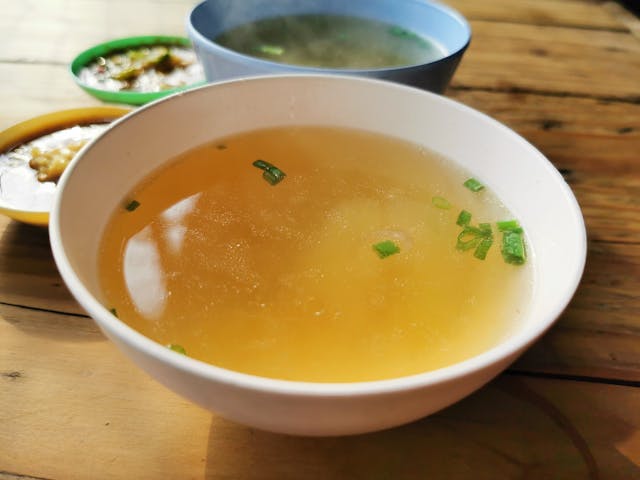
However, make no mistake, bone broth is not the same as stock or broth. According to Lindsey Wohlford [3]:
- Broth is made by simmering water, vegetables, herbs, spices, meat and sometimes bones for up to two hours.
- Stock is made by simmering water, vegetables and animal bones that sometimes have meat attached for four to six hours.
- Bone broth is made by simmering water, vegetables and roasted bones that sometimes have meat attached for up to 24 hours.
The clear differentiation between bone broth, broth and stock will allow you to extract as many potential benefits as possible to make a nutrient-dense drink for the maximum benefits.
Bone Broth Nutrition
A nutrient-dense bone broth contains many essential amino acids and essential nutrients that our body needs to thrive, including calcium and magnesium [3].
| Mineral | Amount (mg per 100 mL) | Function |
|---|---|---|
| Sodium | 12.58 mg | Fluid balance and nerve signaling |
| Calcium | 6.42 mg | Bone strength and muscle contraction |
| Phosphorus | 2.04 mg | Bone structure and energy production |
| Potassium | 1.96 mg | Electrolyte balance and heart rhythm |
| Magnesium | 1.85 mg | Nerve and muscle function and enzyme activity |
| Zinc | 0.097 mg | Immune function and tissue repair |
Benefits of Bone Broth
Drinking bone broth has extensive health benefits, including the following [3]:
- Supports gut health, your digestive health and intestinal barrier support during your fed state
- Has anti-inflammatory effects, reduces inflammation
- Has antioxidant properties
- Regulates and satiates your appetite, and curbs hunger pangs (appetite control)
- Improves weight loss and body composition
- Helps you to stay hydrated
For a more in-depth look into the benefits of bone broth, check out our blog on what is bone broth.
Does Bone Broth Break a Fast?
Yes. Bone broth breaks a fast, especially if you add in roasted vegetables into the broth mixture. Unfortunately, bone broth will break a fast, as it contains macronutrients like protein and fat that contains calories. Protein has 4kcal/g and fat has 9kcal/g.
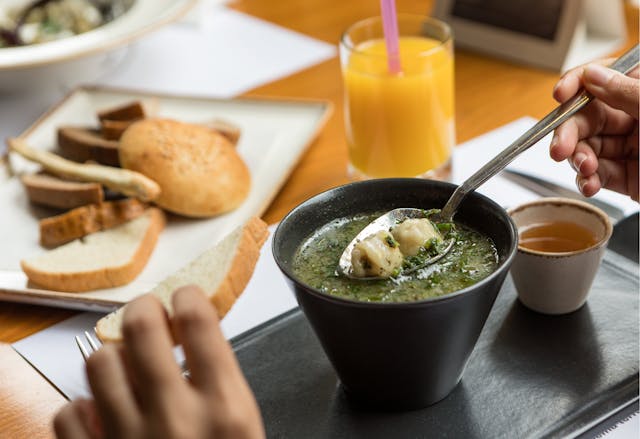
Despite the conflicting information on what breaks a fast, strictly speaking, a fast technically breaks when there is calorie intake involved due to an increase in blood sugar. Despite being light in calories, drinking bone broth breaks a fast, no matter how light it may be. Per portion, bone broth ranges between 20 and 60 calories, with some going up to 90 calories, which is more than enough to break a fast.
When Can You Drink Bone Broth While Fasting?
However, other people posit that bone broth does not break a fast due to the low calories. The magic number that many have agreed on as a threshold of whether a fast is broken is 50 calories.
Bone broth has many benefits, like containing electrolytes, collagen and gelatine, which can help contain hunger and aid digestion.
Best Time to Drink Bone Broth While Fasting
The timings in which you drink bone broth matter, and they have different effects. For instance:
- When drinking bone broth in the morning, you get to hydrate yourself with electrolytes that you may have passed when you went to the toilet.
- Drinking bone broth for “lunch” or in the afternoon can help to quell your hunger and ease your stomach.
- At night, or after your workout, bone broth can replenish your hydration and prepare you for the next day ahead.
How to Make Bone Broth?
According to Jessica Randhawa, the best way to make bone broth is the following [3]:
- Blanch your bones for 15 minutes in order to get a clear stock. This step removes the coagulated blood and protein within the bones.
- After blanching, roast the bones and your vegetables (carrot, onion, garlic, and celery) for about 30 minutes, until deep golden brown.
- Once you’ve completed the blanching, transfer the bones back into the pot and bring to a rolling boil.
- Add in your bay leaves, peppercorns, star anise, cinnamon sticks and ACV (optional) into the pot.
- Simmer for the next 8-12 hours, up to 24 hours. Ensure you do not leave the stove running overnight!
- Strain your broth, and enjoy.
Final Words
Extended fasting and bone broth have many health benefits. They support gut health, aid in weight loss, decrease inflammation and may improve insulin sensitivity. However, due to the very nature of the fasting process, the eating window may result in a deprivation of certain nutrients, which can be replenished by consuming bone broth during the fed state. It can be as easy as drinking a small glass, or two cups, of bone broth, along with other foods and vitamins (if needed).
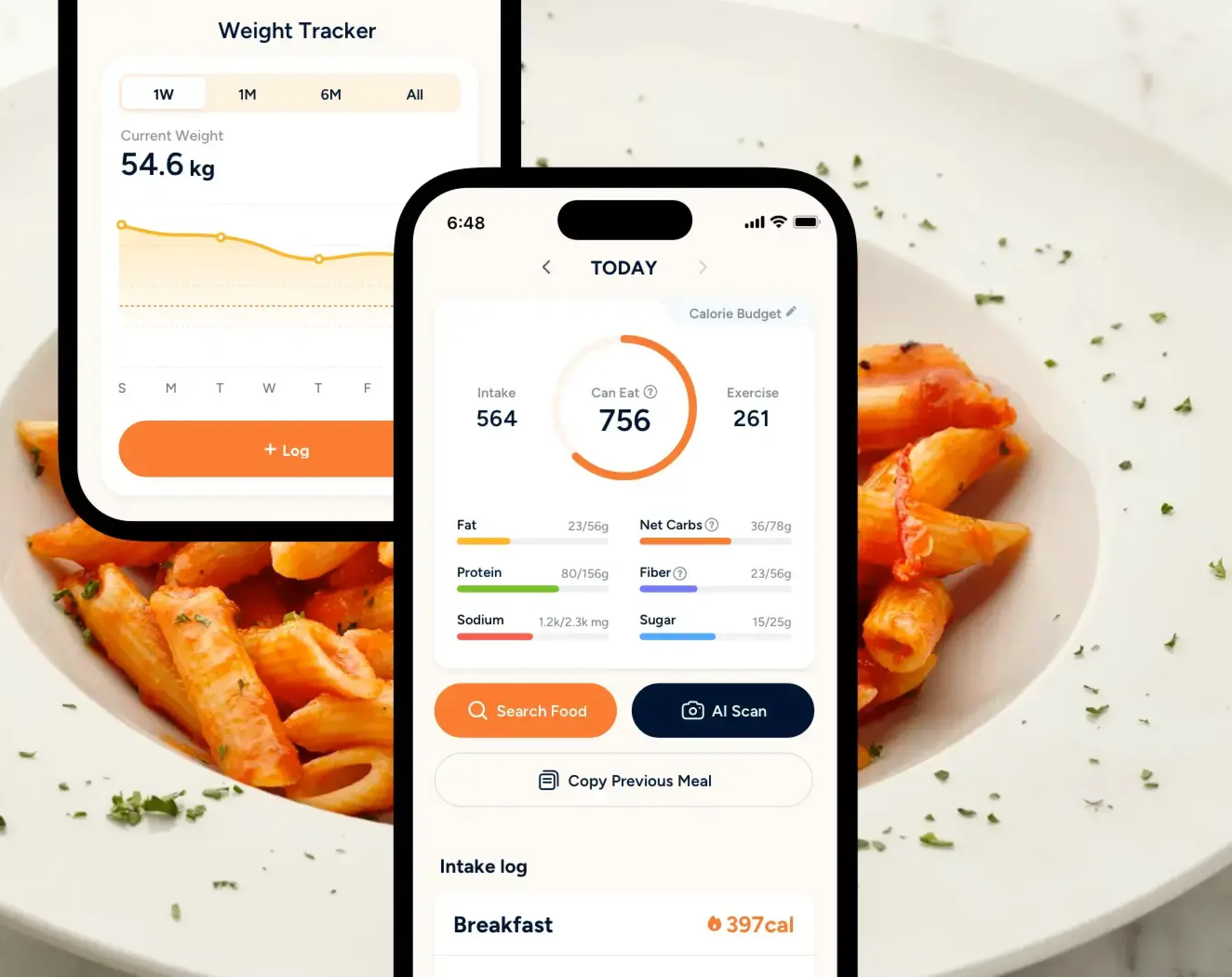
If you’re ever unsure as to what breaks a fast, use Eato‘s calorie counter to check: if it’s above 0 calories, it will likely break a fast. Track your nutrition, plan meals, and calculate your daily calorie intake alongside your after-fasting consumption so that you can effectively achieve your health goals safely. Try it today for free!
Smarter Nutrition Tracking
Track calories and over 100 other nutrients all in one place.
Download Eato For Free