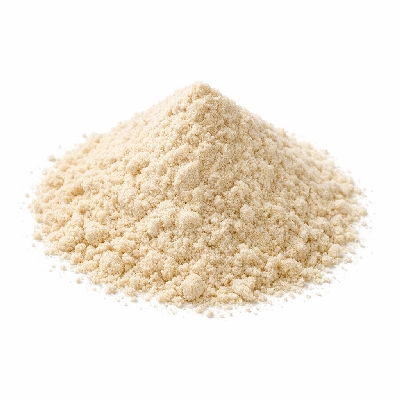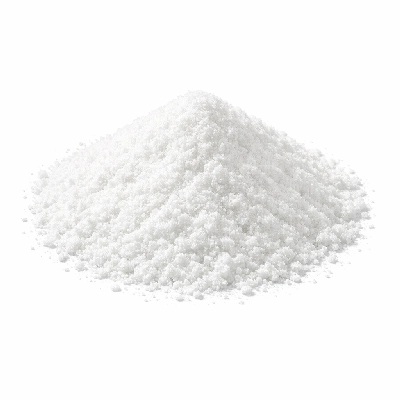
White Rice Flour
Source of Calories
Nutrition Facts
| Nutrient | Amount | % Daily Value |
|---|---|---|
| Total Carbohydrates | 126.61 g | 46% |
| Net Carbohydrates | 122.81 g | 50% |
| Sugars | 0.19 g | 1% |
| Added Sugars | 0 g | 0% |
| Dietary Fiber | 3.79 g | 14% |
| Protein | 9.4 g | 19% |
| Total Fat | 2.24 g | 3% |
| Saturated Fat | 0.61 g | 3% |
| Monounsaturated Fat | 0.7 g | - |
| Polyunsaturated Fat | 0.6 g | - |
| Trans Fat | No data | - |
| Cholesterol | 0 mg | 0% |
| Vitamins | ||
| Vitamin A | 0 mcg | 0% |
| Vitamin C | 0 mg | 0% |
| Vitamin D | 0 mcg | 0% |
| Minerals | ||
| Sodium | 0 mg | 0% |
| Potassium | 120.08 mg | 3% |
| Calcium | 15.8 mg | 1% |
| Magnesium | 55.3 mg | 13% |
| Iron | 0.55 mg | 3% |
| Zinc | 1.26 mg | 11% |
% DV refers to how much a single serving of an individually packaged food or supplement contributes nutritionally to your daily diet, based on a 2,000-calorie-a-day diet. Generally, having 5% DV or less of a nutrient per serving is considered low, and 20% DV or more of a nutrient per serving is considered high.
Fat Composition
The suggested total fat consumption should be limited to 30% of total energy intake or less. The type of fat consumed should primarily be unsaturated fatty acids, with no more than 10% of total energy intake coming from saturated fatty acids (about 200 calories on a 2000-calorie diet) and no more than 1% of total energy intake coming from trans-fatty acids.
Vitamin Coverage
Vitamin A
0%
Vitamin C
0%
Vitamin D
0%
Vitamin E
1%
Vitamin K
0%
Vitamin B1
18%
Vitamin B2
3%
Vitamin B3
26%
Vitamin B5
26%
Vitamin B6
41%
Vitamin B7
-
Vitamin B9
2%
Vitamin B12
0%
There are 13 essential vitamins required for the body to work properly, which are categorised into two categories: fat-soluble and water-soluble vitamins. Vitamins have a Recommended Dietary Allowance (RDA), provided by the Dietary Reference Intakes (DRIs), which vary by age and sex. The %DV indicates how much one serving contributes to the average recommended daily intake.
Mineral Coverage
Calcium
1%
Iron
3%
Magnesium
13%
Phosphorus
12%
Potassium
3%
Sodium
0%
Zinc
11%
Copper
23%
Manganese
82%
Selenium
43%
Minerals are micronutrients, of which 13 of them are essential to the human body. The Recommended Dietary Allowance includes Calcium (1,300 mg/d), Phosphorus (1,250 mg/d), Potassium (4,700 mg/d), Sodium (2,300 mg/d), Chloride (1,500 mg/d), Magnesium (420 mg/d), Iron (18 mg/d), Zinc (11 mg/d), Copper (0.9 mg/d), Selenium (55 mcg/d), Molybdenum (45 mcg/d), Manganese (2.3 mg/d) and Iodine (150 mcg/d).
Protein Quality
Leucine
26%
Isoleucine
29%
Valine
33%
Lysine
12%
Tryptophan
33%
Threonine
24%
Phenylalanine
43%
Methionine
34%
Histidine
24%
Guidelines recommend a serving of protein with each meal and 1.2-1.6 g of protein per kg of body weight per day.
The data provided by eato.health is for informational purposes only and should not be considered medical advice. Please consult your physician before beginning any diet or nutrition plan.
About
How Long to Burn Off 578 Calories?
*Based on this person: 25-year-old female, 5'7", 144 lbs

Swimming
1 h 25 min

Jogging
1 h 13 min

Cycling
1 h 15 min

Walking
2 h 16 min
The data provided by eato.health is for informational purposes only and should not be considered medical advice. Please consult your physician before beginning any diet or nutrition plan.
📚 Health Research & Evidence About This Food
Rice flour is a suitable ingredient for gluten-free diets, with brown rice flour containing zinc, as noted in studies on nutritionally enhanced gluten-free pasta. It provides highly digestible carbohydrates, particularly for the elderly, as demonstrated in research on cereal and legume-based food product development. Furthermore, specific preparations like inulin-fortified rice flour may mitigate glucose and lipid metabolic disorders by remodeling gut microbiota and increasing short-chain fatty acids, while fermented rice flour with probiotics has shown a steroid-sparing effect in infants with atopic dermatitis in a randomized, double-blind, placebo-controlled trial.
1. Rice Flour Fermented With Lactobacillus Paracasei Cba L74 in the Treatment of Atopic Dermatitis in Infants: A Randomized, Double- Blind, Placebo- Controlled Trial.
Source: PubMed
Summary: Rice flour fermented with heat-killed Lactobacillus paracasei CBA L74 significantly reduced topical steroid usage in infants with moderate to severe atopic dermatitis, suggesting a steroid-sparing effect.
Read More: https://pubmed.ncbi.nlm.nih.gov/33157233/
2. Amelioration on the Glycolipid Metabolism by Short-Chain Inulin-Fortified Rice Flour Is Mediated via Gut Microbiota Remodeling With Enhanced Colonic Fermentation and Scfa Production.
Source: PubMed
Summary: Short-chain inulin-fortified rice flour effectively mitigates glucose and lipid metabolic disorders, primarily through its synergistic effects on gut microbiota composition and the promotion of short-chain fatty acid production.
Read More: https://pubmed.ncbi.nlm.nih.gov/41825663/
3. Rice Flour: A Promising Food Material for Nutrition and Global Health.
Source: PubMed
Summary: Rice flour is a significant food material with considerable potential to address global challenges such as hunger and malnutrition, particularly affecting children and the elderly.
Read More: https://pubmed.ncbi.nlm.nih.gov/31619613/
4. Development and Evaluation of Gluten Free Pasta From Brown Rice, Quinoa, and Chickpeas for Celiac Disease Patients.
Source: PubMed
Summary: Brown rice flour, when used in a blend with quinoa and chickpea flours, contributes to gluten-free pasta formulations that can offer a palatable and nutritionally beneficial option for celiac patients.
Read More: https://pubmed.ncbi.nlm.nih.gov/40542042/
5. Development and Evaluation of Gluten Free Pasta From Brown Rice, Quinoa, and Chickpeas for Celiac Disease Patients
Source: Nature, 2025
Summary: Brown rice flour contains higher zinc compared to other gluten-free flours like quinoa and chickpea flour, as well as semolina flour.
Read More: https://www.nature.com/articles/s41598-025-06516-6
6. Development of Cereal and Legume Based Food Products for the Elderly
Source: SpringerLink
Summary: The carbohydrate in rice flour was the most digestible among the carbohydrate sources investigated for ready-to-eat food products for the elderly.
Read More: https://link.springer.com/article/10.1186/2193-1801-3-451