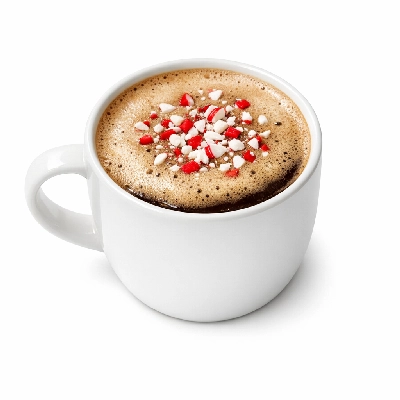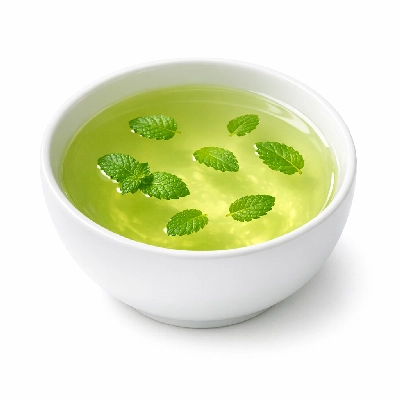
Peppermint Green Tea
Source of Calories
Nutrition Facts
| Nutrient | Amount | % Daily Value |
|---|---|---|
| Total Carbohydrates | 0 g | 0% |
| Net Carbohydrates | 0 g | 0% |
| Sugars | 0 g | 0% |
| Added Sugars | 0 g | 0% |
| Dietary Fiber | 0 g | 0% |
| Protein | 0 g | 0% |
| Total Fat | 0 g | 0% |
| Saturated Fat | 0 g | 0% |
| Monounsaturated Fat | 0 g | - |
| Polyunsaturated Fat | 0 g | - |
| Trans Fat | 0 g | 0% |
| Cholesterol | 0 mg | 0% |
| Vitamins | ||
| Vitamin A | 0 mcg | 0% |
| Vitamin C | 0 mg | 0% |
| Vitamin D | 0 mcg | 0% |
| Minerals | ||
| Sodium | 8.89 mg | 0% |
| Potassium | 2.96 mg | 0% |
| Calcium | 8.89 mg | 1% |
| Magnesium | 2.96 mg | 1% |
| Iron | 0 mg | 0% |
| Zinc | 0 mg | 0% |
% DV refers to how much a single serving of an individually packaged food or supplement contributes nutritionally to your daily diet, based on a 2,000-calorie-a-day diet. Generally, having 5% DV or less of a nutrient per serving is considered low, and 20% DV or more of a nutrient per serving is considered high.
Vitamin Coverage
Vitamin A
0%
Vitamin C
0%
Vitamin D
0%
Vitamin E
0%
Vitamin K
0%
Vitamin B1
0%
Vitamin B2
0%
Vitamin B3
0%
Vitamin B5
0%
Vitamin B6
0%
Vitamin B7
-
Vitamin B9
0%
Vitamin B12
0%
There are 13 essential vitamins required for the body to work properly, which are categorised into two categories: fat-soluble and water-soluble vitamins. Vitamins have a Recommended Dietary Allowance (RDA), provided by the Dietary Reference Intakes (DRIs), which vary by age and sex. The %DV indicates how much one serving contributes to the average recommended daily intake.
Mineral Coverage
Calcium
0.7%
Iron
0%
Magnesium
0.7%
Phosphorus
0%
Potassium
0.1%
Sodium
0.4%
Zinc
0%
Copper
3%
Manganese
0%
Selenium
0%
Minerals are micronutrients, of which 13 of them are essential to the human body. The Recommended Dietary Allowance includes Calcium (1,300 mg/d), Phosphorus (1,250 mg/d), Potassium (4,700 mg/d), Sodium (2,300 mg/d), Chloride (1,500 mg/d), Magnesium (420 mg/d), Iron (18 mg/d), Zinc (11 mg/d), Copper (0.9 mg/d), Selenium (55 mcg/d), Molybdenum (45 mcg/d), Manganese (2.3 mg/d) and Iodine (150 mcg/d).
The data provided by eato.health is for informational purposes only and should not be considered medical advice. Please consult your physician before beginning any diet or nutrition plan.
About
How Long to Burn Off 0 Calories?
*Based on this person: 25-year-old female, 5'7", 144 lbs

Swimming
0 min

Jogging
0 min

Cycling
0 min

Walking
0 min
The data provided by eato.health is for informational purposes only and should not be considered medical advice. Please consult your physician before beginning any diet or nutrition plan.
📚 Health Research & Evidence About This Food
Harvard Health notes that green tea, a key component of this beverage, is associated with a lower risk of cardiovascular disease, including reduced risk of death from heart attack or stroke. Both green tea and peppermint contain antioxidants and anti-inflammatory compounds, with green tea also linked to improved blood sugar regulation and peppermint traditionally used for digestive issues.
1. Mint Tea: Health Benefits, Nutrition, Preparation Information, and More
Source: WebMD
Summary: Mint tea is a calorie-free beverage that may assist with weight management and offers digestive benefits, though it can worsen acid reflux and interact with certain medications.
Read More: https://www.webmd.com/diet/mint-tea-health-benefits
2. Green Tea May Lower Heart Disease Risk - Harvard Health
Source: Harvard Health, 2012
Summary: Green tea, has been linked in studies to a reduced risk of cardiovascular disease, lower LDL cholesterol and triglyceride levels, and overall lower mortality, with no serious side effects reported in tested amounts.
Read More: https://www.health.harvard.edu/heart-health/green-tea-may-lower-heart-disease-risk
3. Green Tea - Livertox® - Ncbi Bookshelf
Source: NCBI
Summary: Green tea extract has been linked to rare cases of clinically apparent acute liver injury, including severe cases, especially in unregulated weight-loss supplements, whereas drinking green tea itself has generally not been associated with liver injury.
4. Comparative Study of Encapsulated Peppermint and Green Tea Essential Oils in Chitosan Nanoparticles: Encapsulation, Thermal Stability, In-Vitro Release, Antioxidant and Antibacterial Activities.
Source: PubMed
Summary: Peppermint green tea contains peppermint and green tea components. Peppermint oil and green tea oil have been studied in chitosan nanoparticles for their stability, release behavior, antioxidant activity, and antibacterial activity.
Read More: https://pubmed.ncbi.nlm.nih.gov/30593811/
5. 10 Reasons Green Tea Is Good for You
Source: Cleveland Clinic
Summary: Green tea offers numerous health benefits due to its catechins, including fighting inflammation, supporting heart and brain health, aiding blood sugar regulation, and potentially assisting with weight management.
Read More: https://health.clevelandclinic.org/green-tea-health-benefits
6. Green Tea: Nutrition Facts, Potential Benefits, and Risks
Source: WebMD
Summary: Green tea is a low-calorie, antioxidant-rich beverage that supports heart, brain, and blood sugar health, though high concentrations from extracts can pose liver risks.
Read More: https://www.webmd.com/diet/health-benefits-green-tea