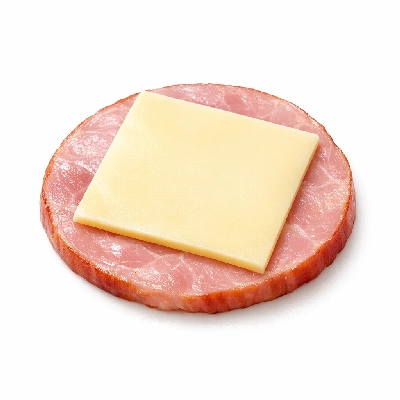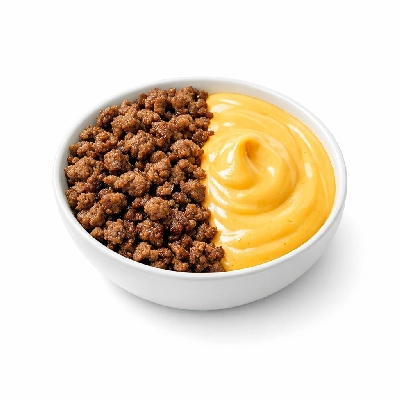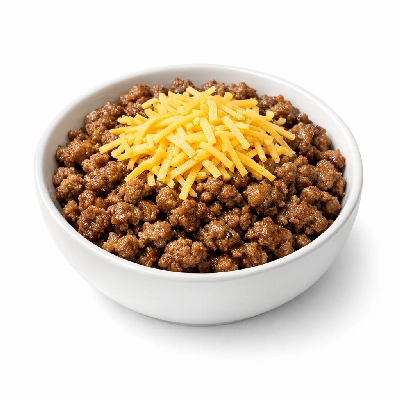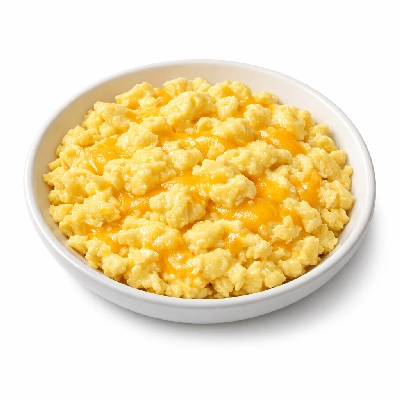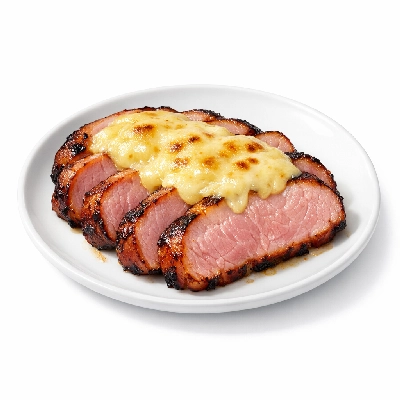
Ham, Grilled, Cheese
Source of Calories
Nutrition Facts
| Nutrient | Amount | % Daily Value |
|---|---|---|
| Total Carbohydrates | 4.77 g | 2% |
| Net Carbohydrates | 4.77 g | 2% |
| Sugars | 0.49 g | 1% |
| Added Sugars | 0 g | 0% |
| Dietary Fiber | 0 g | 0% |
| Protein | 56.67 g | 113% |
| Total Fat | 49.52 g | 63% |
| Saturated Fat | 26.45 g | 132% |
| Monounsaturated Fat | 14.73 g | - |
| Polyunsaturated Fat | 2.48 g | - |
| Trans Fat | 0.36 g | 100% |
| Cholesterol | 202.5 mg | 68% |
| Vitamins | ||
| Vitamin A | 405.5 mcg | 45% |
| Vitamin C | 0 mg | 0% |
| Vitamin D | 1.85 mcg | 9% |
| Minerals | ||
| Sodium | 2607.3 mg | 113% |
| Potassium | 1004.4 mg | 21% |
| Calcium | 722.4 mg | 56% |
| Magnesium | 65.2 mg | 16% |
| Iron | 1.32 mg | 7% |
| Zinc | 6.66 mg | 61% |
% DV refers to how much a single serving of an individually packaged food or supplement contributes nutritionally to your daily diet, based on a 2,000-calorie-a-day diet. Generally, having 5% DV or less of a nutrient per serving is considered low, and 20% DV or more of a nutrient per serving is considered high.
Fat Composition
The suggested total fat consumption should be limited to 30% of total energy intake or less. The type of fat consumed should primarily be unsaturated fatty acids, with no more than 10% of total energy intake coming from saturated fatty acids (about 200 calories on a 2000-calorie diet) and no more than 1% of total energy intake coming from trans-fatty acids.
Vitamin Coverage
Vitamin A
45%
Vitamin C
0%
Vitamin D
9%
Vitamin E
10%
Vitamin K
3%
Vitamin B1
58%
Vitamin B2
75%
Vitamin B3
72%
Vitamin B5
36%
Vitamin B6
51%
Vitamin B7
5%
Vitamin B9
7%
Vitamin B12
77%
There are 13 essential vitamins required for the body to work properly, which are categorised into two categories: fat-soluble and water-soluble vitamins. Vitamins have a Recommended Dietary Allowance (RDA), provided by the Dietary Reference Intakes (DRIs), which vary by age and sex. The %DV indicates how much one serving contributes to the average recommended daily intake.
Mineral Coverage
Calcium
56%
Iron
7%
Magnesium
16%
Phosphorus
77%
Potassium
21%
Sodium
113%
Zinc
61%
Copper
14%
Manganese
3%
Selenium
167%
Minerals are micronutrients, of which 13 of them are essential to the human body. The Recommended Dietary Allowance includes Calcium (1,300 mg/d), Phosphorus (1,250 mg/d), Potassium (4,700 mg/d), Sodium (2,300 mg/d), Chloride (1,500 mg/d), Magnesium (420 mg/d), Iron (18 mg/d), Zinc (11 mg/d), Copper (0.9 mg/d), Selenium (55 mcg/d), Molybdenum (45 mcg/d), Manganese (2.3 mg/d) and Iodine (150 mcg/d).
Protein Quality
Leucine
66%
Isoleucine
91%
Valine
84%
Lysine
39%
Tryptophan
156%
Threonine
75%
Phenylalanine
93%
Methionine
82%
Histidine
56%
Guidelines recommend a serving of protein with each meal and 1.2-1.6 g of protein per kg of body weight per day.
The data provided by eato.health is for informational purposes only and should not be considered medical advice. Please consult your physician before beginning any diet or nutrition plan.
About
How Long to Burn Off 689 Calories?
*Based on this person: 25-year-old female, 5'7", 144 lbs

Swimming
1 h 41 min

Jogging
1 h 27 min

Cycling
1 h 30 min

Walking
2 h 42 min
The data provided by eato.health is for informational purposes only and should not be considered medical advice. Please consult your physician before beginning any diet or nutrition plan.
📚 Health Research & Evidence About This Food
Ham, as a processed meat, frequently contains added nitrates and nitrites, according to Harvard Health, which notes that while chemically identical to nitrates in vegetables, processed meats lack the antioxidants that inhibit harmful nitrosamine formation. While high consumption of cured ham was not significantly associated with an increased or decreased risk of hypertension in a prospective cohort study of middle-aged adults, a high-meat diet including high-fat processed meat has been shown to lead to higher concentrations of HDL-cholesterol and apo A-I. Additionally, reformulated ham free from additives may offer potential oxidative and anti-inflammatory benefits by significantly reducing nitrate excretion and decreasing nitrification-related gut bacteria, as observed in a randomized clinical trial.
1. Exploring the Health Effects of New Additive- and Allergen-Free Reformulated Cooked Meat Products: Consumer Survey, Clinical Trial, and Perceived Satiety.
Source: PubMed
Summary: Reformulated ham, free from additives and allergens, may offer potential oxidative and anti-inflammatory benefits to consumers.
Read More: https://pubmed.ncbi.nlm.nih.gov/40431357/
2. Nitrates in Food and Medicine: What’S the Story? - Harvard Health
Source: Harvard Health, 2022
Summary: Ham, along with other cured or processed meats, frequently contains added nitrates and nitrites, which are not mitigated by antioxidants as they are in vegetables.
Read More: https://www.health.harvard.edu/diet-and-nutrition/nitrates-in-food-and-medicine-whats-the-story
3. Cured Ham Consumption and Incidence of Hypertension: The "Seguimiento Universidad De Navarra" (Sun) Cohort.
Source: PubMed
Summary: High consumption of cured ham, defined as multiple servings per week, was not significantly associated with an increased or decreased risk of hypertension among Spanish middle-aged adult university graduates.
Read More: https://pubmed.ncbi.nlm.nih.gov/31791802/
4. Diets With High-Fat Cheese, High-Fat Meat, or Carbohydrate on Cardiovascular Risk Markers in Overweight Postmenopausal Women: A Randomized Crossover Trial.
Source: PubMed
Summary: A high-meat diet, which included high-fat processed and unprocessed meat, led to significantly higher concentrations of HDL-cholesterol and apo A-I compared to a low-fat, high-carbohydrate diet.
Read More: https://pubmed.ncbi.nlm.nih.gov/26178720/