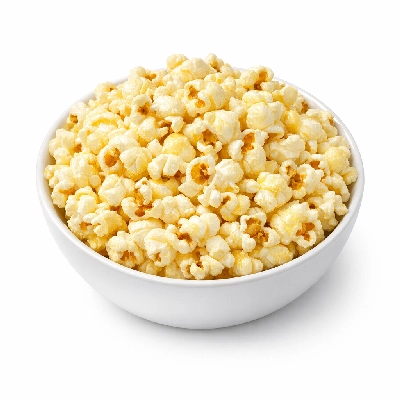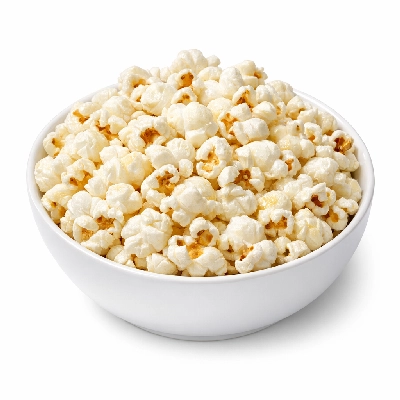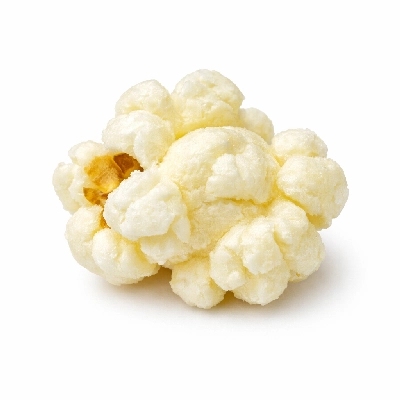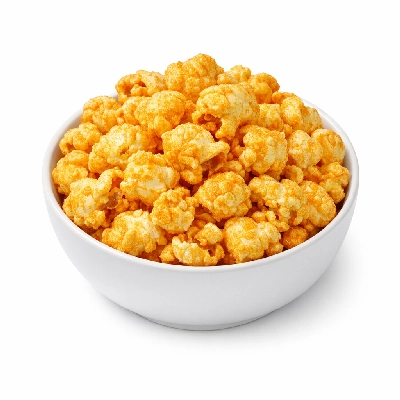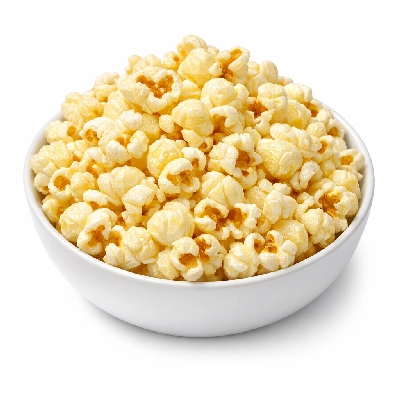
Flavor Popcorn, Butter, Regular, Microwave Made with Palm Oil
Source of Calories
Nutrition Facts
| Nutrient | Amount | % Daily Value |
|---|---|---|
| Total Carbohydrates | 4.52 g | 2% |
| Net Carbohydrates | 3.73 g | 2% |
| Sugars | 0.02 g | 0% |
| Added Sugars | No data | - |
| Dietary Fiber | 0.79 g | 3% |
| Protein | 0.66 g | 1% |
| Total Fat | 2.39 g | 3% |
| Saturated Fat | 1.15 g | 6% |
| Monounsaturated Fat | 0.83 g | - |
| Polyunsaturated Fat | 0.33 g | - |
| Trans Fat | 0.07 g | 100% |
| Cholesterol | 0 mg | 0% |
| Vitamins | ||
| Vitamin A | 0.71 mcg | 0% |
| Vitamin C | 0 mg | 0% |
| Vitamin D | 0 mcg | 0% |
| Minerals | ||
| Sodium | 60.28 mg | 3% |
| Potassium | 31.05 mg | 1% |
| Calcium | 1.82 mg | 0% |
| Magnesium | 8.69 mg | 2% |
| Iron | 0.16 mg | 1% |
| Zinc | 0.18 mg | 2% |
% DV refers to how much a single serving of an individually packaged food or supplement contributes nutritionally to your daily diet, based on a 2,000-calorie-a-day diet. Generally, having 5% DV or less of a nutrient per serving is considered low, and 20% DV or more of a nutrient per serving is considered high.
Fat Composition
The suggested total fat consumption should be limited to 30% of total energy intake or less. The type of fat consumed should primarily be unsaturated fatty acids, with no more than 10% of total energy intake coming from saturated fatty acids (about 200 calories on a 2000-calorie diet) and no more than 1% of total energy intake coming from trans-fatty acids.
Vitamin Coverage
Vitamin A
0.1%
Vitamin C
0%
Vitamin D
0%
Vitamin E
2%
Vitamin K
0.3%
Vitamin B1
0.3%
Vitamin B2
0.4%
Vitamin B3
0.8%
Vitamin B5
0.3%
Vitamin B6
1%
Vitamin B7
-
Vitamin B9
0.3%
Vitamin B12
0%
There are 13 essential vitamins required for the body to work properly, which are categorised into two categories: fat-soluble and water-soluble vitamins. Vitamins have a Recommended Dietary Allowance (RDA), provided by the Dietary Reference Intakes (DRIs), which vary by age and sex. The %DV indicates how much one serving contributes to the average recommended daily intake.
Mineral Coverage
Calcium
0.1%
Iron
0.9%
Magnesium
2%
Phosphorus
2%
Potassium
0.7%
Sodium
3%
Zinc
2%
Copper
2%
Manganese
3%
Selenium
0.8%
Minerals are micronutrients, of which 13 of them are essential to the human body. The Recommended Dietary Allowance includes Calcium (1,300 mg/d), Phosphorus (1,250 mg/d), Potassium (4,700 mg/d), Sodium (2,300 mg/d), Chloride (1,500 mg/d), Magnesium (420 mg/d), Iron (18 mg/d), Zinc (11 mg/d), Copper (0.9 mg/d), Selenium (55 mcg/d), Molybdenum (45 mcg/d), Manganese (2.3 mg/d) and Iodine (150 mcg/d).
Protein Quality
Leucine
3%
Isoleucine
2%
Valine
2%
Lysine
0.7%
Tryptophan
1%
Threonine
2%
Phenylalanine
3%
Methionine
2%
Histidine
2%
Guidelines recommend a serving of protein with each meal and 1.2-1.6 g of protein per kg of body weight per day.
The data provided by eato.health is for informational purposes only and should not be considered medical advice. Please consult your physician before beginning any diet or nutrition plan.
About
How Long to Burn Off 42 Calories?
*Based on this person: 25-year-old female, 5'7", 144 lbs

Swimming
7 min

Jogging
6 min

Cycling
6 min

Walking
10 min
The data provided by eato.health is for informational purposes only and should not be considered medical advice. Please consult your physician before beginning any diet or nutrition plan.
📚 Health Research & Evidence About This Food
Microwave popcorn, particularly with artificial butter flavoring, has been linked to serious lung disease, though many such chemicals have been removed. This type of prepared popcorn, often high in calories, sodium, and unhealthy oils, can negate the benefits of plain popcorn, which is recognized as a fiber-rich whole grain and source of antioxidants, according to the American Heart Association.
1. Macular Degeneration and Foods: Ones to Avoid and Meal Plans
Source: Medical News Today, 2023
Summary: Popcorn, as a whole-grain food, contributes to a high-fiber diet that research suggests can significantly benefit people with macular degeneration.
Read More: https://www.medicalnewstoday.com/articles/macular-degeneration-foods-to-avoid
2. Popcorn: Health Benefits, Nutrition, and Preparation
Source: WebMD
Summary: Popcorn, particularly when air-popped and consumed plain, offers health benefits such as a lower risk of diabetes, heart disease, and hypertension, along with aiding in weight management due to its fiber content, antioxidants, and low glycemic index.
Read More: https://www.webmd.com/food-recipes/health-benefits-popcorn
3. Nut, Corn, and Popcorn Consumption and the Incidence of Diverticular Disease.
Source: PubMed
Summary: Popcorn is among the foods, alongside nuts, corn, and seeds, that patients with diverticular disease are frequently advised to avoid to reduce the risk of complications.
Read More: https://pubmed.ncbi.nlm.nih.gov/18728264/
4. Popcorn: A Healthy, Whole Grain Snack : Usda Ars
Source: USDA ARS
Summary: Popcorn is a whole grain, offering an affordable and fiber-rich snack option that can be part of a healthy diet for omnivores, vegetarians, and vegans.
5. Dr. Greger's Videos on Popcorn
Source: NutritionFacts.org
Summary: Popcorn is presented as a whole grain that contributes to daily whole grain intake, with associated videos discussing its impact on gut microbiome, colon cancer risk, and the historical advice regarding its consumption for diverticulosis, while also addressing concerns about chemicals in microwave popcorn.
Read More: https://nutritionfacts.org/topics/popcorn/
6. Popcorn as a Snack: Healthy Hit or Dietary Horror Show?
Source: American Heart Association, 2019
Summary: Popcorn, when air-popped and lightly seasoned, is a healthy snack due to its dietary fiber, low calorie count, polyphenols, and high satiety, contrasting sharply with high-calorie, high-sodium movie theater versions and addressing past concerns about chemicals in microwave popcorn.
Read More: https://www.heart.org/en/news/2019/06/18/popcorn-as-a-snack-healthy-hit-or-dietary-horror-show