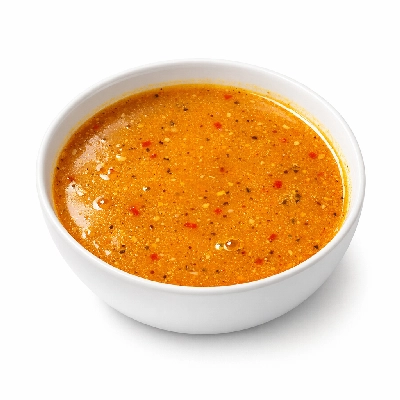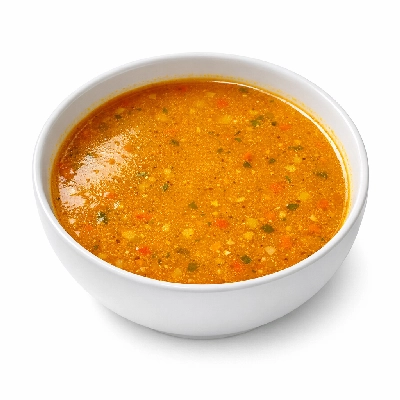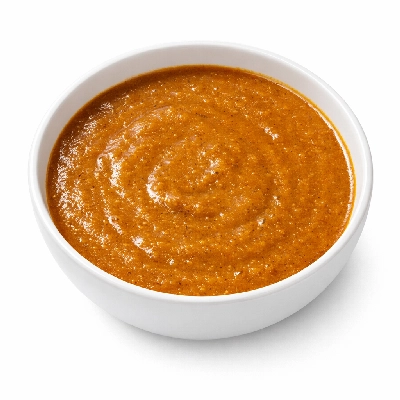
Curry Soup Base
Source of Calories
Nutrition Facts
| Nutrient | Amount | % Daily Value |
|---|---|---|
| Total Carbohydrates | 47.76 g | 17% |
| Net Carbohydrates | 31.99 g | 13% |
| Sugars | 22.61 g | 65% |
| Added Sugars | 1.33 g | 3% |
| Dietary Fiber | 15.78 g | 56% |
| Protein | 14.37 g | 29% |
| Total Fat | 123.09 g | 158% |
| Saturated Fat | 98.06 g | 490% |
| Monounsaturated Fat | 15.04 g | - |
| Polyunsaturated Fat | 2.88 g | - |
| Trans Fat | 0 g | 0% |
| Cholesterol | 0 mg | 0% |
| Vitamins | ||
| Vitamin A | 53.15 mcg | 6% |
| Vitamin C | 25.76 mg | 29% |
| Vitamin D | 0 mcg | 0% |
| Minerals | ||
| Sodium | 3712.3 mg | 161% |
| Potassium | 1586.8 mg | 34% |
| Calcium | 167.69 mg | 13% |
| Magnesium | 206 mg | 49% |
| Iron | 9.53 mg | 53% |
| Zinc | 3.81 mg | 35% |
% DV refers to how much a single serving of an individually packaged food or supplement contributes nutritionally to your daily diet, based on a 2,000-calorie-a-day diet. Generally, having 5% DV or less of a nutrient per serving is considered low, and 20% DV or more of a nutrient per serving is considered high.
Fat Composition
The suggested total fat consumption should be limited to 30% of total energy intake or less. The type of fat consumed should primarily be unsaturated fatty acids, with no more than 10% of total energy intake coming from saturated fatty acids (about 200 calories on a 2000-calorie diet) and no more than 1% of total energy intake coming from trans-fatty acids.
Vitamin Coverage
Vitamin A
6%
Vitamin C
29%
Vitamin D
0%
Vitamin E
29%
Vitamin K
17%
Vitamin B1
24%
Vitamin B2
11%
Vitamin B3
27%
Vitamin B5
27%
Vitamin B6
26%
Vitamin B7
-
Vitamin B9
1%
Vitamin B12
0%
There are 13 essential vitamins required for the body to work properly, which are categorised into two categories: fat-soluble and water-soluble vitamins. Vitamins have a Recommended Dietary Allowance (RDA), provided by the Dietary Reference Intakes (DRIs), which vary by age and sex. The %DV indicates how much one serving contributes to the average recommended daily intake.
Mineral Coverage
Calcium
13%
Iron
53%
Magnesium
49%
Phosphorus
43%
Potassium
34%
Sodium
161%
Zinc
35%
Copper
157%
Manganese
224%
Selenium
59%
Minerals are micronutrients, of which 13 of them are essential to the human body. The Recommended Dietary Allowance includes Calcium (1,300 mg/d), Phosphorus (1,250 mg/d), Potassium (4,700 mg/d), Sodium (2,300 mg/d), Chloride (1,500 mg/d), Magnesium (420 mg/d), Iron (18 mg/d), Zinc (11 mg/d), Copper (0.9 mg/d), Selenium (55 mcg/d), Molybdenum (45 mcg/d), Manganese (2.3 mg/d) and Iodine (150 mcg/d).
Protein Quality
Leucine
3%
Isoleucine
5%
Valine
5%
Lysine
3%
Tryptophan
4%
Threonine
3%
Phenylalanine
5%
Methionine
3%
Histidine
3%
Guidelines recommend a serving of protein with each meal and 1.2-1.6 g of protein per kg of body weight per day.
The data provided by eato.health is for informational purposes only and should not be considered medical advice. Please consult your physician before beginning any diet or nutrition plan.
About
How Long to Burn Off 1270 Calories?
*Based on this person: 25-year-old female, 5'7", 144 lbs

Swimming
3 h 6 min

Jogging
2 h 41 min

Cycling
2 h 45 min

Walking
4 h 59 min
The data provided by eato.health is for informational purposes only and should not be considered medical advice. Please consult your physician before beginning any diet or nutrition plan.
📚 Health Research & Evidence About This Food
Curry soup base, often featuring spices like turmeric, is recognized for its anti-inflammatory and antioxidant properties. The active compound curcumin in turmeric is noted for its anti-inflammatory effects, potentially benefiting conditions such as arthritis, according to Medical News Today. Furthermore, specific compounds from curry leaves may offer gastroprotective benefits, and the overall spice blend may support cardiovascular health by influencing blood flow and lipid levels, as Healthline suggests.
1. Turmeric: Benefits, Side Effects, and More
Source: Medical News Today
Summary: Curry soup base, through its key ingredient turmeric, offers anti-inflammatory and pain-relieving benefits, along with potential support for IBS and cancer treatment, but also carries risks such as blood thinning, iron deficiency, and liver injury, which can indirectly impact cardiovascular health.
2. 9 Impressive Curry Benefits
Source: Healthline, 2020
Summary: Curry soup base cardiovascular health benefits, stemming from its constituent spices like turmeric, coriander, and chili pepper, include improved blood flow, reduced triglyceride and cholesterol levels, and potential positive effects on blood pressure, thereby lowering risk factors for heart disease.
Read More: https://www.healthline.com/nutrition/curry-benefits
3. Girinimbine From Curry Leaves Promotes Gastro Protection Against Ethanol Induced Peptic Ulcers and Improves Healing via Regulation of Anti-Inflammatory and Antioxidant Mechanisms.
Source: PubMed
Summary: Curry soup base may contain curry leaves. A compound found in curry leaves, girinimbine, showed gastroprotective and ulcer-healing effects in an animal model of ethanol-induced gastric ulcers, possibly through anti-inflammatory and antioxidant mechanisms.
Read More: https://pubmed.ncbi.nlm.nih.gov/32248216/
4. 6 Foods to Eat for Healthy Joints
Source: Cleveland Clinic
Summary: Curry soup base, through its key ingredient turmeric, contains curcumin which is highlighted for its ability to calm painful, swollen joints by reducing inflammation, with its absorption enhanced by black pepper and healthy fats.
Read More: https://health.clevelandclinic.org/the-best-food-to-help-relieve-your-joint-pain
5. How Much Turmeric Should I Eat a Day? Is It Possible to Eat Too Much?
Source: NutritionFacts.org, 2021
Summary: Curry soup base may contain turmeric. Turmeric offers benefits for various health conditions such as certain cancers, brain disease, rheumatoid arthritis, osteoarthritis, lupus, and ulcerative colitis, with a recommended daily intake of a quarter teaspoon, though side effects like DNA damage and cautions for specific populations exist.
Read More: https://nutritionfacts.org/questions/what-is-turmeric-good-for/
6. Mastering Culinary Spices With Nisha Vora
Source: NutritionFacts.org, 2023
Summary: Curry soup base contains a variety of spices, such as turmeric, cumin, and coriander. These spices may provide antioxidant, anti-inflammatory, and anticarcinogenic effects and may also help support blood sugar and cholesterol control.
Read More: https://nutritionfacts.org/blog/mastering-culinary-spices-with-nisha-vora/