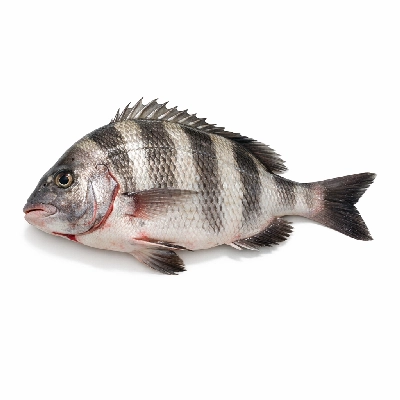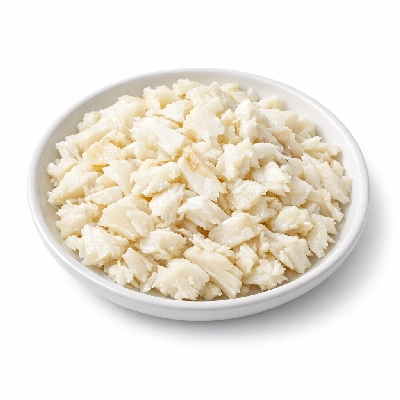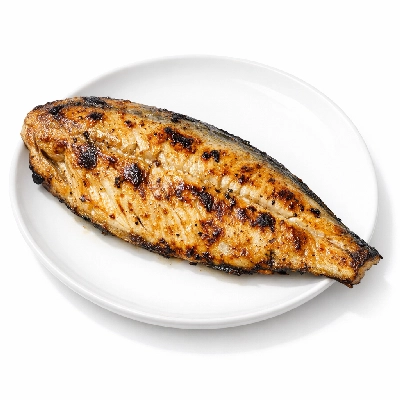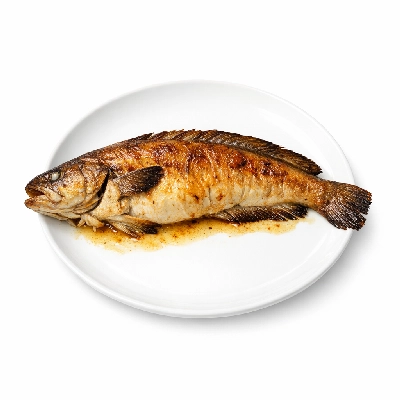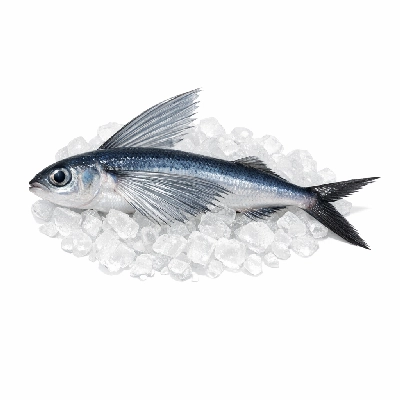
Raw or Uncooked Flying Fish
Source of Calories
Nutrition Facts
| Nutrient | Amount | % Daily Value |
|---|---|---|
| Total Carbohydrates | No data | - |
| Net Carbohydrates | No data | - |
| Sugars | No data | - |
| Added Sugars | No data | - |
| Dietary Fiber | No data | - |
| Protein | 24 g | 48% |
| Total Fat | 1 g | 1% |
| Saturated Fat | No data | - |
| Monounsaturated Fat | No data | - |
| Polyunsaturated Fat | No data | - |
| Trans Fat | No data | - |
| Cholesterol | 31 mg | 10% |
| Vitamins | ||
| Vitamin A | No data | - |
| Vitamin C | No data | - |
| Vitamin D | No data | - |
| Minerals | ||
| Sodium | 72 mg | 3% |
| Potassium | No data | - |
| Calcium | No data | - |
| Magnesium | No data | - |
| Iron | No data | - |
| Zinc | No data | - |
% DV refers to how much a single serving of an individually packaged food or supplement contributes nutritionally to your daily diet, based on a 2,000-calorie-a-day diet. Generally, having 5% DV or less of a nutrient per serving is considered low, and 20% DV or more of a nutrient per serving is considered high.
Mineral Coverage
Calcium
-
Iron
-
Magnesium
-
Phosphorus
-
Potassium
-
Sodium
3%
Zinc
-
Copper
-
Manganese
-
Selenium
-
Minerals are micronutrients, of which 13 of them are essential to the human body. The Recommended Dietary Allowance includes Calcium (1,300 mg/d), Phosphorus (1,250 mg/d), Potassium (4,700 mg/d), Sodium (2,300 mg/d), Chloride (1,500 mg/d), Magnesium (420 mg/d), Iron (18 mg/d), Zinc (11 mg/d), Copper (0.9 mg/d), Selenium (55 mcg/d), Molybdenum (45 mcg/d), Manganese (2.3 mg/d) and Iodine (150 mcg/d).
The data provided by eato.health is for informational purposes only and should not be considered medical advice. Please consult your physician before beginning any diet or nutrition plan.
About
How Long to Burn Off 105 Calories?
*Based on this person: 25-year-old female, 5'7", 144 lbs

Swimming
16 min

Jogging
14 min

Cycling
14 min

Walking
25 min
The data provided by eato.health is for informational purposes only and should not be considered medical advice. Please consult your physician before beginning any diet or nutrition plan.
FAQ
Raw fish can contain parasites and harmful germs, and public health guidance notes that cooking is the safest route, while previously frozen fish may reduce parasite risk but does not remove all germs. People who are pregnant, older, immunocompromised, or very young may want to avoid raw fish entirely.
Flying fish can be a healthy protein choice, especially if you cook it with low oil methods. One serving has about 105 kcal, 24 g protein, 1 g fat, 31 mg cholesterol, and 72 mg sodium, so it tends to be a lean, high protein fish.
FDA notes that nearly all fish contain some methylmercury, and their consumer advice recommends choosing a variety of fish that are lower in mercury, especially for pregnancy and children.
No. Flying fish may be considered a lean fish rather than an oily fish, as one serving has only 1 g fat, while oily fish are typically the higher fat fish (like salmon or sardines) that contain more omega 3 rich fat throughout the flesh.
Yes. At about 105 kcal and 24 g protein per serving, raw flying fish may help with fullness while keeping calories relatively low, but raw preparation adds food safety risk compared with cooked fish. For weight loss, a cooked version may be the safer choice with similar nutrition.
📚 Health Research & Evidence About This Food
Flying fish, as a type of fish, provides protein and beneficial unsaturated fatty acids, including omega-3s, according to research abstracted in PubMed and general recommendations from the American Heart Association for heart-healthy diets. Medical News Today further notes that flying fish roe (tobiko) is rich in protein, omega-3 fatty acids, and minerals such as magnesium, selenium, and vitamin B-12, though it is also high in cholesterol.
1. Fish and Omega-3 Fatty Acids
Source: American Heart Association, 2024
Summary: Flying fish, like other fish, is a healthy protein source recommended by the American Heart Association for its low saturated fat content and benefits for heart health, including for pregnant women and young children.
Read More: https://www.heart.org/en/healthy-living/healthy-eating/eat-smart/fats/fish-and-omega-3-fatty-acids
2. Quality Characteristics of Flyingfish ( Exocoetidae Spp.) - Pubmed
Source: PubMed
Summary: Flying fish (Exocoetidae spp.) were investigated to determine their chemical composition and nutritional characteristics.
Read More: https://pubmed.ncbi.nlm.nih.gov/31113091/
3. Tobiko, Masago, Ikura, Caviar: Similarities and Differences
Source: Medical News Today, 2019
Summary: Flying fish roe, known as tobiko, is a small, salt-cured delicacy commonly used in sushi, characterized by its vibrant color, smoky-salty taste, and high content of proteins, omega-3 fatty acids, and other nutrients, though it is also high in cholesterol.