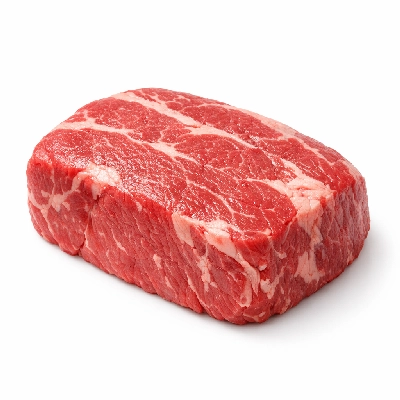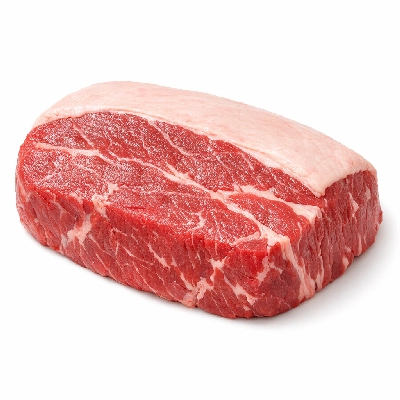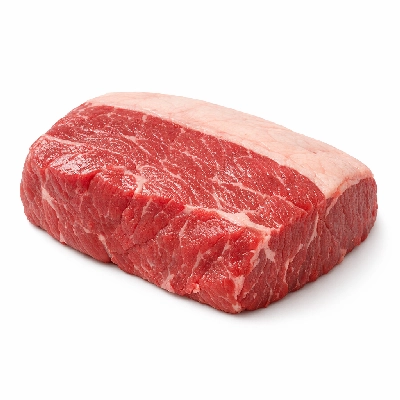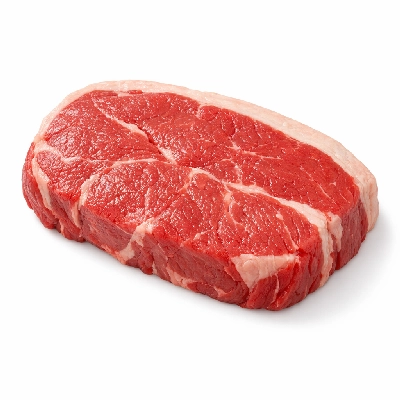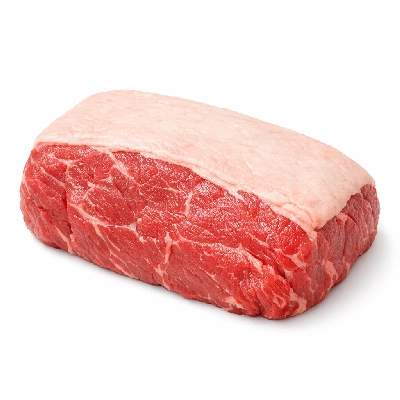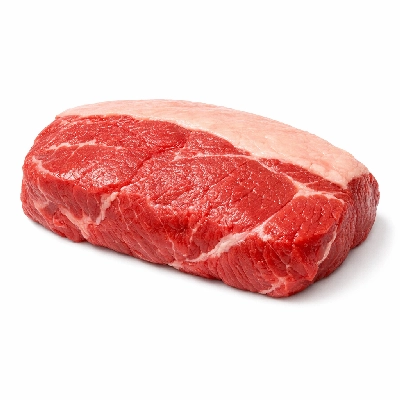
Raw Beef Chuck Top Blade Roast, USDA Select, Boneless, Separable Lean and Fat Trimmed to 1/4 Inch
Source of Calories
Nutrition Facts
| Nutrient | Amount | % Daily Value |
|---|---|---|
| Total Carbohydrates | 0 g | 0% |
| Net Carbohydrates | 0 g | 0% |
| Sugars | 0 g | 0% |
| Added Sugars | No data | - |
| Dietary Fiber | 0 g | 0% |
| Protein | 85.37 g | 171% |
| Total Fat | 25.17 g | 32% |
| Saturated Fat | 7.76 g | 39% |
| Monounsaturated Fat | 8.91 g | - |
| Polyunsaturated Fat | 1.43 g | - |
| Trans Fat | No data | - |
| Cholesterol | 258.55 mg | 86% |
| Vitamins | ||
| Vitamin A | 0 mcg | 0% |
| Vitamin C | 0 mg | 0% |
| Vitamin D | No data | - |
| Minerals | ||
| Sodium | 263.09 mg | 11% |
| Potassium | 1451.52 mg | 31% |
| Calcium | 22.68 mg | 2% |
| Magnesium | 95.26 mg | 23% |
| Iron | 9.66 mg | 54% |
| Zinc | 28.53 mg | 259% |
% DV refers to how much a single serving of an individually packaged food or supplement contributes nutritionally to your daily diet, based on a 2,000-calorie-a-day diet. Generally, having 5% DV or less of a nutrient per serving is considered low, and 20% DV or more of a nutrient per serving is considered high.
Fat Composition
The suggested total fat consumption should be limited to 30% of total energy intake or less. The type of fat consumed should primarily be unsaturated fatty acids, with no more than 10% of total energy intake coming from saturated fatty acids (about 200 calories on a 2000-calorie diet) and no more than 1% of total energy intake coming from trans-fatty acids.
Vitamin Coverage
Vitamin A
0%
Vitamin C
0%
Vitamin D
-
Vitamin E
4%
Vitamin K
-
Vitamin B1
43%
Vitamin B2
65%
Vitamin B3
94%
Vitamin B5
0%
Vitamin B6
104%
Vitamin B7
-
Vitamin B9
-
Vitamin B12
582%
There are 13 essential vitamins required for the body to work properly, which are categorised into two categories: fat-soluble and water-soluble vitamins. Vitamins have a Recommended Dietary Allowance (RDA), provided by the Dietary Reference Intakes (DRIs), which vary by age and sex. The %DV indicates how much one serving contributes to the average recommended daily intake.
Mineral Coverage
Calcium
2%
Iron
54%
Magnesium
23%
Phosphorus
63%
Potassium
31%
Sodium
11%
Zinc
259%
Copper
41%
Manganese
0%
Selenium
82%
Minerals are micronutrients, of which 13 of them are essential to the human body. The Recommended Dietary Allowance includes Calcium (1,300 mg/d), Phosphorus (1,250 mg/d), Potassium (4,700 mg/d), Sodium (2,300 mg/d), Chloride (1,500 mg/d), Magnesium (420 mg/d), Iron (18 mg/d), Zinc (11 mg/d), Copper (0.9 mg/d), Selenium (55 mcg/d), Molybdenum (45 mcg/d), Manganese (2.3 mg/d) and Iodine (150 mcg/d).
The data provided by eato.health is for informational purposes only and should not be considered medical advice. Please consult your physician before beginning any diet or nutrition plan.
About
How Long to Burn Off 594 Calories?
*Based on this person: 25-year-old female, 5'7", 144 lbs

Swimming
1 h 27 min

Jogging
1 h 15 min

Cycling
1 h 17 min

Walking
2 h 20 min
The data provided by eato.health is for informational purposes only and should not be considered medical advice. Please consult your physician before beginning any diet or nutrition plan.
📚 Health Research & Evidence About This Food
Unprocessed red meat, including beef, is considered nutritious, providing essential vitamins and minerals, according to Healthline. However, observational evidence suggests that red meat may be associated with an with an elevated risk of certain cancers, particularly colorectal cancer, a link that Cleveland Clinic notes may stem from substances formed during high-temperature cooking.
1. Understanding Expiration Dates: How Do I Know When My Food's Gone Bad?
Source: American Heart Association, 2024
Summary: Beef chuck top blade roast, is highly perishable and requires proper refrigeration at 40 degrees Fahrenheit or below, with freezing being an effective method for indefinite safety, though quality, such as taste and texture, may decline over extended periods.
2. Freezer Burn and Meat: What Causes It and How to Prevent It
Source: WebMD
Summary: Beef chuck top blade roast, like other meats, can experience freezer burn, which is the loss of moisture from its surface, resulting in color changes and a leathery texture, though it remains safe to eat.
Read More: https://www.webmd.com/diet/what-to-know-freezer-burn-meat
3. Can High Fat Red Meats Be Part of a Healthy Diet?
Source: Healthline, 2014
Summary: Beef chuck top blade roast offers significant nutritional value with similar nutrient content to leaner cuts, and while its fatty acid profile can be influenced by the animal's diet, the long-held concerns about saturated fat and cholesterol's harm to heart health may be weaker than previously thought.
Read More: https://www.healthline.com/nutrition/lean-vs-fatty-meat
4. Why Red Meat May Cause Cancer
Source: Cleveland Clinic
Summary: Beef chuck top blade roast is a type of red meat. Red meat is classified by the International Agency for Research on Cancer as a Group 2A carcinogen, meaning it is "probably carcinogenic to humans," with a known link to increased risks of colorectal, pancreatic, and prostate cancers, partly due to carcinogens formed during high-temperature cooking.
Read More: https://health.clevelandclinic.org/link-red-meat-cancer-need-know