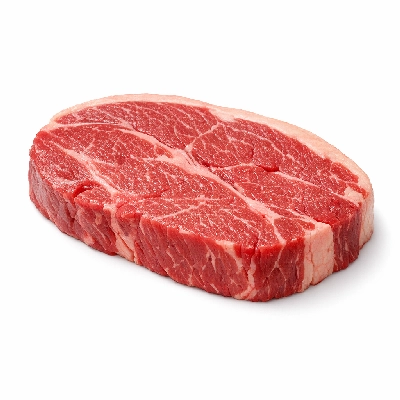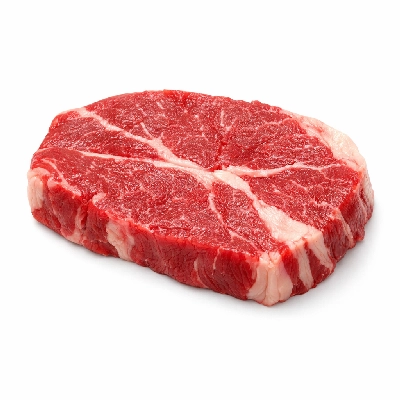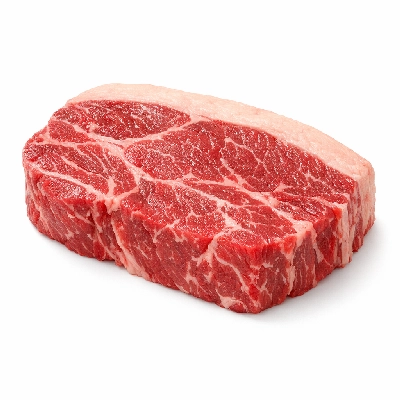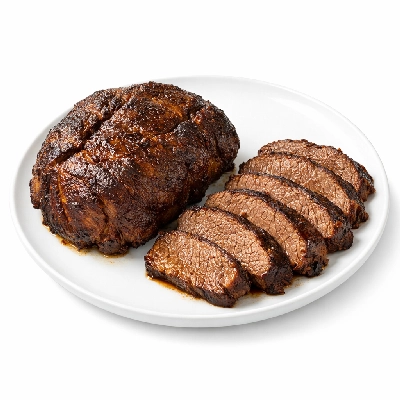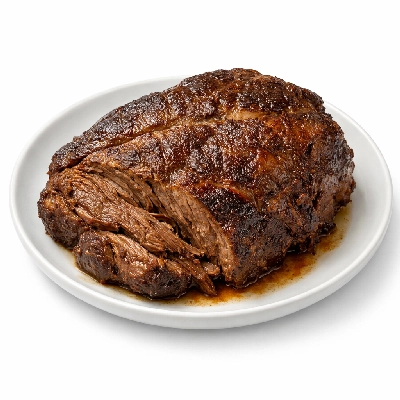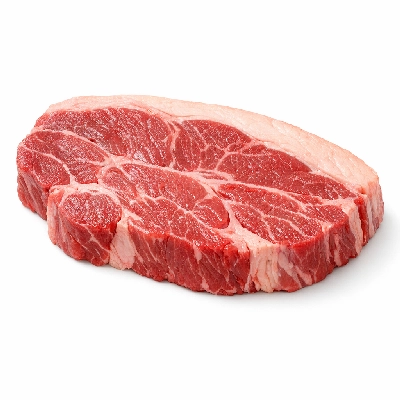
Raw Beef Chuck Blade Roast Top Steak, Choice, Separable Lean Only, Trimmed to 1/4 Inch Fat
Source of Calories
Nutrition Facts
| Nutrient | Amount | % Daily Value |
|---|---|---|
| Total Carbohydrates | 0 g | 0% |
| Net Carbohydrates | 0 g | 0% |
| Sugars | No data | - |
| Added Sugars | No data | - |
| Dietary Fiber | 0 g | 0% |
| Protein | 5.46 g | 11% |
| Total Fat | 2.41 g | 3% |
| Saturated Fat | 0.9 g | 5% |
| Monounsaturated Fat | 1.07 g | - |
| Polyunsaturated Fat | 0.09 g | - |
| Trans Fat | No data | - |
| Cholesterol | 18.43 mg | 6% |
| Vitamins | ||
| Vitamin A | 0 mcg | 0% |
| Vitamin C | 0 mg | 0% |
| Vitamin D | No data | - |
| Minerals | ||
| Sodium | 21.83 mg | 1% |
| Potassium | 90.44 mg | 2% |
| Calcium | 2.84 mg | 0% |
| Magnesium | 5.67 mg | 1% |
| Iron | 0.66 mg | 4% |
| Zinc | 1.68 mg | 15% |
% DV refers to how much a single serving of an individually packaged food or supplement contributes nutritionally to your daily diet, based on a 2,000-calorie-a-day diet. Generally, having 5% DV or less of a nutrient per serving is considered low, and 20% DV or more of a nutrient per serving is considered high.
Fat Composition
The suggested total fat consumption should be limited to 30% of total energy intake or less. The type of fat consumed should primarily be unsaturated fatty acids, with no more than 10% of total energy intake coming from saturated fatty acids (about 200 calories on a 2000-calorie diet) and no more than 1% of total energy intake coming from trans-fatty acids.
Vitamin Coverage
Vitamin A
0%
Vitamin C
0%
Vitamin D
-
Vitamin E
-
Vitamin K
-
Vitamin B1
3%
Vitamin B2
4%
Vitamin B3
4%
Vitamin B5
2%
Vitamin B6
7%
Vitamin B7
-
Vitamin B9
-
Vitamin B12
45%
There are 13 essential vitamins required for the body to work properly, which are categorised into two categories: fat-soluble and water-soluble vitamins. Vitamins have a Recommended Dietary Allowance (RDA), provided by the Dietary Reference Intakes (DRIs), which vary by age and sex. The %DV indicates how much one serving contributes to the average recommended daily intake.
Mineral Coverage
Calcium
0.2%
Iron
4%
Magnesium
1%
Phosphorus
4%
Potassium
2%
Sodium
0.9%
Zinc
15%
Copper
3%
Manganese
0.2%
Selenium
9%
Minerals are micronutrients, of which 13 of them are essential to the human body. The Recommended Dietary Allowance includes Calcium (1,300 mg/d), Phosphorus (1,250 mg/d), Potassium (4,700 mg/d), Sodium (2,300 mg/d), Chloride (1,500 mg/d), Magnesium (420 mg/d), Iron (18 mg/d), Zinc (11 mg/d), Copper (0.9 mg/d), Selenium (55 mcg/d), Molybdenum (45 mcg/d), Manganese (2.3 mg/d) and Iodine (150 mcg/d).
The data provided by eato.health is for informational purposes only and should not be considered medical advice. Please consult your physician before beginning any diet or nutrition plan.
About
How Long to Burn Off 45 Calories?
*Based on this person: 25-year-old female, 5'7", 144 lbs

Swimming
7 min

Jogging
6 min

Cycling
6 min

Walking
11 min
The data provided by eato.health is for informational purposes only and should not be considered medical advice. Please consult your physician before beginning any diet or nutrition plan.
📚 Health Research & Evidence About This Food
Beef chuck blade roast top steak, like other red meats, is a valuable source of protein, essential for muscle growth, and vitamin B12, crucial for red blood cell formation, according to Harvard Health. However, red meat, including beef, is classified as probably carcinogenic to humans by the Cleveland Clinic, based on limited human evidence and strong mechanistic support, and is associated with increased health risks when consumed in high amounts, with carcinogenic substances like heterocyclic amines (HCAs) forming during high-temperature cooking methods, which increase with longer cooking times and higher temperatures.
1. Minced Beef Is More Rapidly Digested and Absorbed Than Beef Steak, Resulting in Greater Postprandial Protein Retention in Older Men.
Source: PubMed
Summary: Phenylalanine derived from meat protein appeared more rapidly in circulation after consuming minced beef compared to beef steak, with amino acid availability in the circulation over a postprandial period being significantly greater with minced beef.
Read More: https://pubmed.ncbi.nlm.nih.gov/23636241/
2. Use of Mobile Phone Technology to Measure Beef Steak Doneness Preference
Source: Cambridge University Press
Summary: Mobile phone assessment of meat doneness correlated more highly with self-reporting at the eating occasion compared to initial screening, suggesting its potential as a robust tool for collecting meat doneness preference data.
3. What’S the Beef With Red Meat? - Harvard Health
Source: Harvard Health, 2020
Summary: Red meat, including beef chuck blade roast top steak, is a valuable source of protein and vitamin B12, essential for muscle growth and red blood cell formation, but is associated with increased health risks when consumed in high amounts.
Read More: https://www.health.harvard.edu/healthy-aging-and-longevity/whats-the-beef-with-red-meat
4. Effect of Aging Time on Physicochemical Meat Quality and Sensory Property of Hanwoo Bull Beef.
Source: PubMed
Summary: Warner-Bratzler shear force values, which indicate meat toughness, decreased for most muscles, including chuck blade roast top steak, as the aging period increased, suggesting improved tenderness.
Read More: https://pubmed.ncbi.nlm.nih.gov/27499666/
5. Why Red Meat May Cause Cancer
Source: Cleveland Clinic
Summary: Red meat, including beef, is classified as a Group 2A carcinogen, meaning it is probably carcinogenic to humans based on limited human evidence and strong mechanistic support.
Read More: https://health.clevelandclinic.org/link-red-meat-cancer-need-know