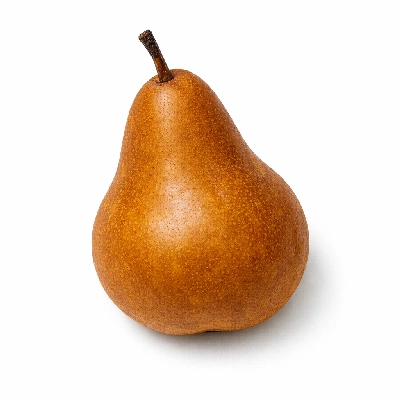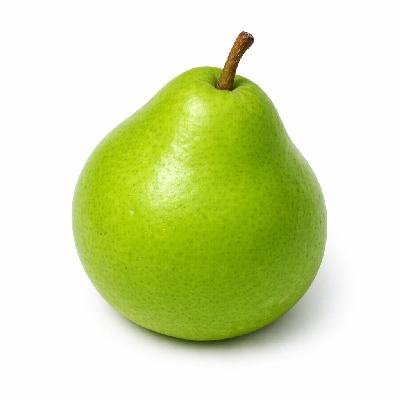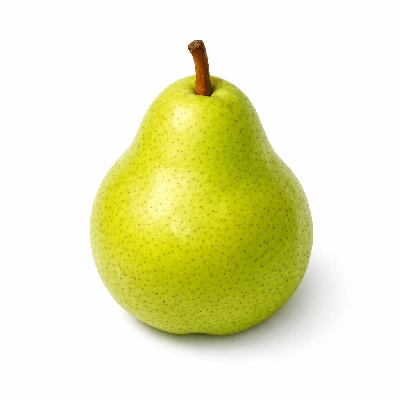
Raw Bartlett Pears
Source of Calories
Nutrition Facts
| Nutrient | Amount | % Daily Value |
|---|---|---|
| Total Carbohydrates | 21.01 g | 8% |
| Net Carbohydrates | 16.67 g | 7% |
| Sugars | 13.57 g | 39% |
| Added Sugars | No data | - |
| Dietary Fiber | 4.34 g | 16% |
| Protein | 0.55 g | 1% |
| Total Fat | 0.22 g | 0% |
| Saturated Fat | No data | - |
| Monounsaturated Fat | No data | - |
| Polyunsaturated Fat | No data | - |
| Trans Fat | 0 g | 0% |
| Cholesterol | No data | - |
| Vitamins | ||
| Vitamin A | 1.92 mcg | 0% |
| Vitamin C | 6.16 mg | 7% |
| Vitamin D | No data | - |
| Minerals | ||
| Sodium | 1.4 mg | 0% |
| Potassium | 141.4 mg | 3% |
| Calcium | 12.6 mg | 1% |
| Magnesium | 8.4 mg | 2% |
| Iron | 0.27 mg | 1% |
| Zinc | 0.11 mg | 1% |
% DV refers to how much a single serving of an individually packaged food or supplement contributes nutritionally to your daily diet, based on a 2,000-calorie-a-day diet. Generally, having 5% DV or less of a nutrient per serving is considered low, and 20% DV or more of a nutrient per serving is considered high.
Fat Composition
The suggested total fat consumption should be limited to 30% of total energy intake or less. The type of fat consumed should primarily be unsaturated fatty acids, with no more than 10% of total energy intake coming from saturated fatty acids (about 200 calories on a 2000-calorie diet) and no more than 1% of total energy intake coming from trans-fatty acids.
Vitamin Coverage
Vitamin A
0.2%
Vitamin C
7%
Vitamin D
-
Vitamin E
1%
Vitamin K
4%
Vitamin B1
1%
Vitamin B2
3%
Vitamin B3
1%
Vitamin B5
1%
Vitamin B6
2%
Vitamin B7
-
Vitamin B9
2%
Vitamin B12
-
There are 13 essential vitamins required for the body to work properly, which are categorised into two categories: fat-soluble and water-soluble vitamins. Vitamins have a Recommended Dietary Allowance (RDA), provided by the Dietary Reference Intakes (DRIs), which vary by age and sex. The %DV indicates how much one serving contributes to the average recommended daily intake.
Mineral Coverage
Calcium
1%
Iron
1%
Magnesium
2%
Phosphorus
1%
Potassium
3%
Sodium
0.1%
Zinc
1%
Copper
12%
Manganese
2%
Selenium
0.3%
Minerals are micronutrients, of which 13 of them are essential to the human body. The Recommended Dietary Allowance includes Calcium (1,300 mg/d), Phosphorus (1,250 mg/d), Potassium (4,700 mg/d), Sodium (2,300 mg/d), Chloride (1,500 mg/d), Magnesium (420 mg/d), Iron (18 mg/d), Zinc (11 mg/d), Copper (0.9 mg/d), Selenium (55 mcg/d), Molybdenum (45 mcg/d), Manganese (2.3 mg/d) and Iodine (150 mcg/d).
Protein Quality
Leucine
1%
Isoleucine
1%
Valine
2%
Lysine
0.9%
Tryptophan
0.8%
Threonine
1%
Phenylalanine
1%
Methionine
0.4%
Histidine
0.3%
Guidelines recommend a serving of protein with each meal and 1.2-1.6 g of protein per kg of body weight per day.
The data provided by eato.health is for informational purposes only and should not be considered medical advice. Please consult your physician before beginning any diet or nutrition plan.
About
How Long to Burn Off 88 Calories?
*Based on this person: 25-year-old female, 5'7", 144 lbs

Swimming
13 min

Jogging
12 min

Cycling
12 min

Walking
21 min
The data provided by eato.health is for informational purposes only and should not be considered medical advice. Please consult your physician before beginning any diet or nutrition plan.
FAQ
Yes, they are safe when eaten raw, and provide about 88 kcal, 21.01 g carbs, and 4.34 g fiber, which can help with fullness, due to their high fiber content.
Yes raw bartlett pears may help with inflammation, because they contain polyphenols and antioxidants. Reviews show pears with higher phenolic and flavonoid content demonstrate stronger anti inflammatory activity and can influence inflammatory pathways like cytokines. Per serving, they also provide 6.16 mg vitamin C and 4.34 g fiber, both of which support lower inflammation patterns over time.
Yes, if there is portion control. Per serving, they have about 21.01 g carbs with 4.34 g fiber (about 16.67 g net carbs) and 13.57 g natural sugar, so they raise blood sugar more slowly than low fiber sweets. Research also links higher flavonoid rich fruit intake, including pears, with lower diabetes risk in cohort studies.
Yes. Ssodium is extremely low at about 1.4 mg per serving, while potassium is about 141.4 mg, which supports a better sodium to potassium balance. Daily pear intake has been linked with improvements in blood pressure related markers, including reduced pulse pressure in adults with metabolic risk.
Yes. They can support cholesterol control mainly due to fiber. Per serving, they provide 4.34 g fiber, and fiber rich diets are consistently linked with lower LDL cholesterol levels. Research also shows pear bioactive compounds have hypolipidemic effects, meaning they can help reduce blood lipids over time.
📚 Health Research & Evidence About This Food
Pears raw bartlett, whose pomace has been studied for its soluble and insoluble dietary fibers, which contribute to antioxidant and hypoglycemic effects by influencing factors like molecular weight distribution and thermal stability, are a low-glycemic index fruit that helps prevent blood sugar spikes and is beneficial for blood sugar management, with their anthocyanin pigments linked to a reduced risk of type 2 diabetes. Additionally, Harvard Health recommends pears for individuals managing gastroesophageal reflux disease due to their lower likelihood of provoking reflux symptoms, unlike citrus fruits or spicy foods.
1. Pears and Diabetes: Benefits, Risks, and Nutrition
Source: WebMD
Summary: Pears have a low glycemic index, which helps prevent blood sugar spikes and is linked to a reduced risk of type 2 diabetes due to their anthocyanin pigments.
Read More: https://www.webmd.com/diabetes/pears-diabetes-benefits-risks-nutrition
2. Characterization and Functional Activities of Dietary Fiber From Pear Fruit Pomace
Source: PubMed
Summary: Pears contain both soluble and insoluble dietary fibers, with extraction methods significantly influencing their yield, molecular weight, thermal stability, and functional activities such as antioxidant and hypoglycemic effects.
Read More: https://pubmed.ncbi.nlm.nih.gov/35885404/
3. 10 Low-Glycemic Fruits for Diabetes
Source: Healthline
Summary: Pears are highlighted as a low-glycemic index fruit, making them beneficial for blood sugar management due to their slow and gradual effect on blood glucose levels.
Read More: https://www.healthline.com/health/diabetes/low-glycemic-fruits-for-diabetes
4. Raw Fruits Poster (Text Version / Accessible Version)
Source: FDA
Summary: Pears raw bartlett is a type of pear. The FDA’s raw fruits nutrition poster provides general nutrition facts for raw pears, including serving size, calories, sodium, potassium, carbohydrates, fiber, sugars, and vitamin content.
5. Gerd Diet: Foods to Avoid to Reduce Acid Reflux - Harvard Health
Source: Harvard Health
Summary: Pears are among the non-citrus fruits recommended for individuals managing gastroesophageal reflux disease (GERD) due to their lower likelihood of provoking reflux symptoms.