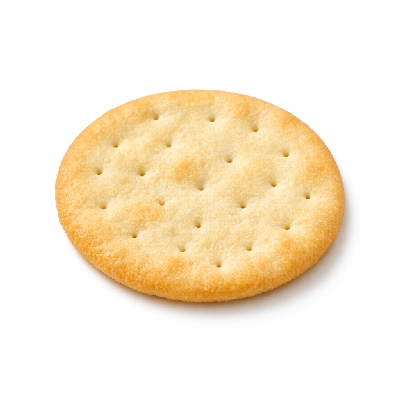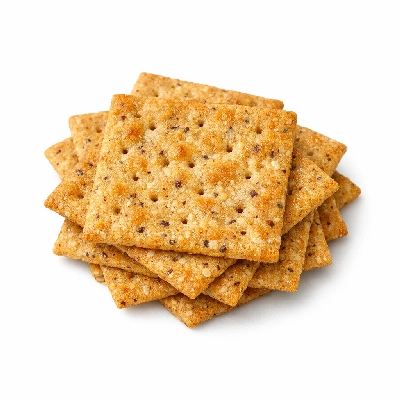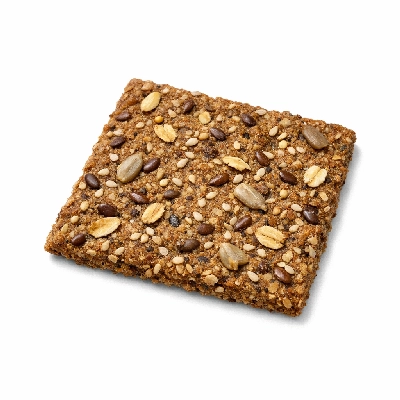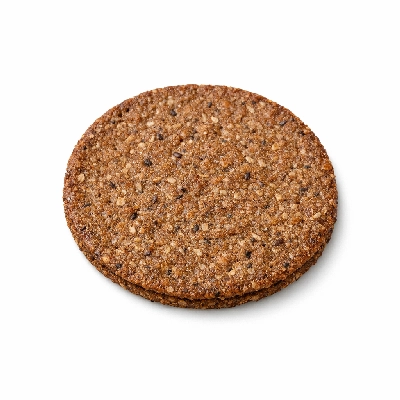
Mary's Gone Crackers, Original Gluten Free Crackers, Organic
Source of Calories
Nutrition Facts
| Nutrient | Amount | % Daily Value |
|---|---|---|
| Total Carbohydrates | 4.76 g | 2% |
| Net Carbohydrates | 3.56 g | 1% |
| Sugars | 0.07 g | 0% |
| Added Sugars | No data | - |
| Dietary Fiber | 1.2 g | 4% |
| Protein | 0.89 g | 2% |
| Total Fat | 1.16 g | 1% |
| Saturated Fat | No data | - |
| Monounsaturated Fat | No data | - |
| Polyunsaturated Fat | No data | - |
| Trans Fat | No data | - |
| Cholesterol | No data | - |
| Vitamins | ||
| Vitamin A | No data | - |
| Vitamin C | No data | - |
| Vitamin D | No data | - |
| Minerals | ||
| Sodium | 43.44 mg | 2% |
| Potassium | 35.3 mg | 1% |
| Calcium | 16.5 mg | 1% |
| Magnesium | 14.65 mg | 3% |
| Iron | 0.23 mg | 1% |
| Zinc | 0.22 mg | 2% |
% DV refers to how much a single serving of an individually packaged food or supplement contributes nutritionally to your daily diet, based on a 2,000-calorie-a-day diet. Generally, having 5% DV or less of a nutrient per serving is considered low, and 20% DV or more of a nutrient per serving is considered high.
Vitamin Coverage
Vitamin A
-
Vitamin C
-
Vitamin D
-
Vitamin E
-
Vitamin K
-
Vitamin B1
1%
Vitamin B2
1%
Vitamin B3
2%
Vitamin B5
-
Vitamin B6
-
Vitamin B7
-
Vitamin B9
-
Vitamin B12
-
There are 13 essential vitamins required for the body to work properly, which are categorised into two categories: fat-soluble and water-soluble vitamins. Vitamins have a Recommended Dietary Allowance (RDA), provided by the Dietary Reference Intakes (DRIs), which vary by age and sex. The %DV indicates how much one serving contributes to the average recommended daily intake.
Mineral Coverage
Calcium
1%
Iron
1%
Magnesium
3%
Phosphorus
2%
Potassium
0.8%
Sodium
2%
Zinc
2%
Copper
5%
Manganese
8%
Selenium
3%
Minerals are micronutrients, of which 13 of them are essential to the human body. The Recommended Dietary Allowance includes Calcium (1,300 mg/d), Phosphorus (1,250 mg/d), Potassium (4,700 mg/d), Sodium (2,300 mg/d), Chloride (1,500 mg/d), Magnesium (420 mg/d), Iron (18 mg/d), Zinc (11 mg/d), Copper (0.9 mg/d), Selenium (55 mcg/d), Molybdenum (45 mcg/d), Manganese (2.3 mg/d) and Iodine (150 mcg/d).
The data provided by eato.health is for informational purposes only and should not be considered medical advice. Please consult your physician before beginning any diet or nutrition plan.
About
How Long to Burn Off 33 Calories?
*Based on this person: 25-year-old female, 5'7", 144 lbs

Swimming
5 min

Jogging
5 min

Cycling
5 min

Walking
8 min
The data provided by eato.health is for informational purposes only and should not be considered medical advice. Please consult your physician before beginning any diet or nutrition plan.
📚 Health Research & Evidence About This Food
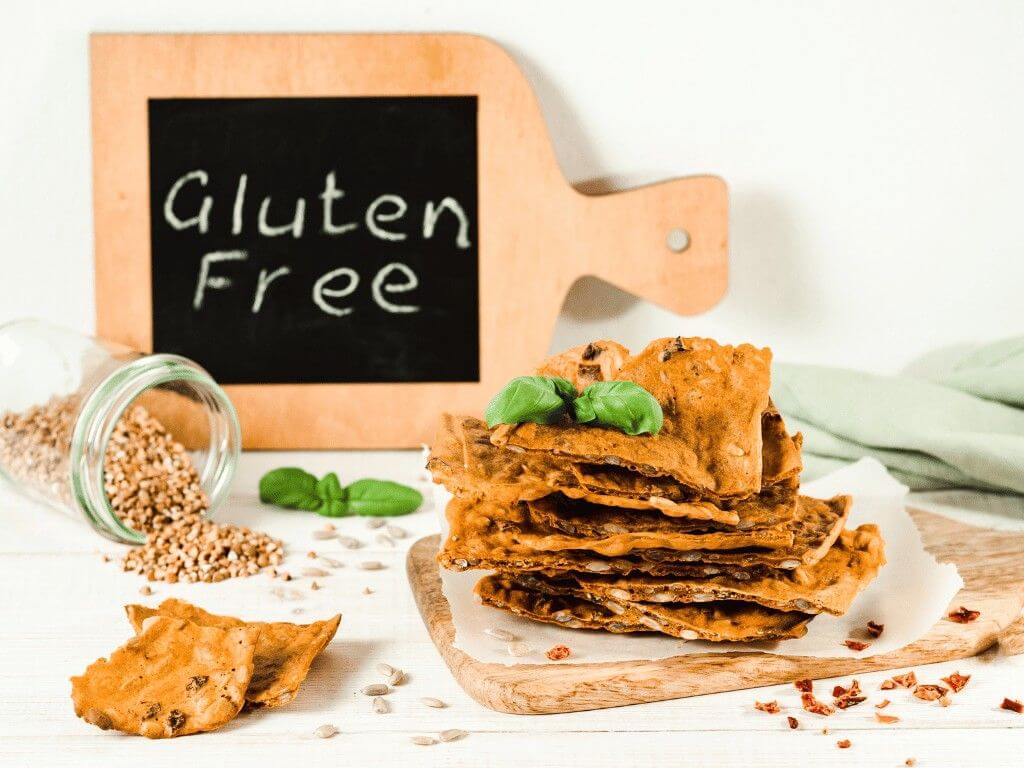
According to MedlinePlus, gluten-free crackers are an essential food choice for individuals managing celiac disease or non-celiac gluten sensitivity, allowing them to avoid gluten-containing grains like wheat, rye, and barley. While a gluten-free diet, if not carefully planned, can lead to deficiencies in fiber and other nutrients, research suggests that gluten-free crackers can be enhanced with ingredients like hemp seed and green tea to improve their nutritional profile and antioxidant capacity.
1. Learn About Gluten-Free Diets: Medlineplus Medical Encyclopedia
Source: MedlinePlus
Summary: Gluten free crackers are among the gluten-free versions of foods available for individuals following a gluten-free diet, which is essential for managing conditions like celiac disease.
Read More: https://medlineplus.gov/ency/patientinstructions/000813.htm
2. Effects of Hemp (Cannabis Sativa L.) Seed Oil Press-Cake and Decaffeinated Green Tea Leaves (Camellia Sinensis) on Functional Characteristics of Gluten-Free Crackers.
Source: PubMed
Summary: Gluten free crackers can have their nutritional characteristics and antioxidant properties enhanced through the addition of functional ingredients like hemp seed oil press-cake and decaffeinated green tea leaves, as explored in an experimental design.
Read More: https://pubmed.ncbi.nlm.nih.gov/24527987/
3. Getting Fiber While Avoiding Gluten - Harvard Health
Source: Harvard Health, 2025
Summary: Gluten free crackers, as part of a gluten-free diet, should be considered within a broader dietary strategy that prioritizes fiber-rich foods like fruits, vegetables, legumes, nuts, and seeds to prevent nutrient deficiencies and support heart health.
Read More: https://www.health.harvard.edu/heart-health/getting-fiber-while-avoiding-gluten
4. Popular Gluten-Free Foods for Gluten-Free Diets
Source: WebMD
Summary: Gluten free crackers are an important consideration for a gluten-free diet, as most traditional crackers are made of wheat, necessitating the selection of specifically gluten-free alternatives or substitutes like rice cakes.
Read More: https://www.webmd.com/digestive-disorders/celiac-disease/ss/slideshow-gluten-free-diet
5. 7 Gluten Intolerance Symptoms: Should You Be Eating It?
Source: Medical News Today
Summary: Gluten free crackers, as part of a gluten-free diet, are relevant for individuals managing gluten intolerance, which involves avoiding gluten-containing foods to alleviate symptoms such as gastrointestinal discomfort, fatigue, and headaches.
6. Gluten-Associated Medical Problems - Statpearls - Ncbi Bookshelf
Source: NCBI
Summary: Gluten free crackers, as part of a gluten-free diet, are relevant to the management of various gluten-associated medical problems, including celiac disease, non-celiac gluten sensitivity, dermatitis herpetiformis, and gluten ataxia, for which a gluten-free diet is the cornerstone of treatment.