• Home
  • Features
  • Food Database
  • Calculators
  • Blog
  • About
Get the App

Download and start your free trial to get your custom macro plan and food logging access today.

Download Eato App from App StoreDownload Eato App from Google Play
  • Calorie Tracker
  • Food Database
  • Calculators
  • Blog
  • About
  • Support
© 2025 Eato. All rights reserved.
  • Privacy Policy
  • Terms & Conditions
  • Cookie Setting
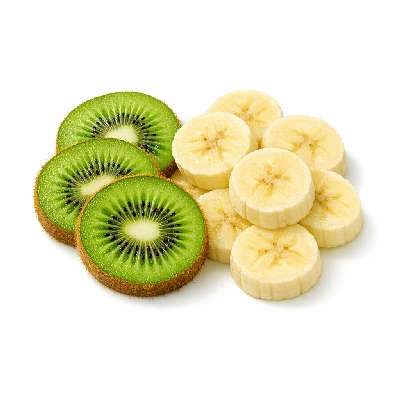
  1. Kiwi & Banana
Kiwi & Banana

Kiwi & Banana

Source of Calories

Amount%

Nutrition Facts

Amount% DV
NutrientAmount% Daily Value
Total Carbohydrates48.7 g18%
Net Carbohydrates41.16 g17%
Sugars27.3 g78%
Added Sugars0 g0%
Dietary Fiber7.54 g27%
Protein2.99 g6%
Total Fat1.17 g1%
Saturated Fat0.14 g1%
Monounsaturated Fat0.07 g-
Polyunsaturated Fat0.53 g-
Trans Fat0 g0%
Cholesterol0 mg0%
Vitamins
Vitamin A10.2 mcg1%
Vitamin C147.2 mg164%
Vitamin D0 mcg0%
Minerals
Sodium5.64 mg0%
Potassium883.76 mg19%
Calcium56.22 mg4%
Magnesium57.16 mg14%
Iron0.76 mg4%
Zinc0.41 mg4%

% DV refers to how much a single serving of an individually packaged food or supplement contributes nutritionally to your daily diet, based on a 2,000-calorie-a-day diet. Generally, having 5% DV or less of a nutrient per serving is considered low, and 20% DV or more of a nutrient per serving is considered high.

Fat Composition

Amount%

The suggested total fat consumption should be limited to 30% of total energy intake or less. The type of fat consumed should primarily be unsaturated fatty acids, with no more than 10% of total energy intake coming from saturated fatty acids (about 200 calories on a 2000-calorie diet) and no more than 1% of total energy intake coming from trans-fatty acids.

Vitamin Coverage

% DV

Vitamin A

1%

Vitamin C

164%

Vitamin D

0%

Vitamin E

15%

Vitamin K

50%

Vitamin B1

3%

Vitamin B2

10%

Vitamin B3

8%

Vitamin B5

13%

Vitamin B6

29%

Vitamin B7

0%

Vitamin B9

15%

Vitamin B12

0%

There are 13 essential vitamins required for the body to work properly, which are categorised into two categories: fat-soluble and water-soluble vitamins. Vitamins have a Recommended Dietary Allowance (RDA), provided by the Dietary Reference Intakes (DRIs), which vary by age and sex. The %DV indicates how much one serving contributes to the average recommended daily intake.

Mineral Coverage

% DV

Calcium

4%

Iron

4%

Magnesium

14%

Phosphorus

6%

Potassium

19%

Sodium

0.2%

Zinc

4%

Copper

32%

Manganese

19%

Selenium

3%

Minerals are micronutrients, of which 13 of them are essential to the human body. The Recommended Dietary Allowance includes Calcium (1,300 mg/d), Phosphorus (1,250 mg/d), Potassium (4,700 mg/d), Sodium (2,300 mg/d), Chloride (1,500 mg/d), Magnesium (420 mg/d), Iron (18 mg/d), Zinc (11 mg/d), Copper (0.9 mg/d), Selenium (55 mcg/d), Molybdenum (45 mcg/d), Manganese (2.3 mg/d) and Iodine (150 mcg/d).

Protein Quality

% DV

Leucine

6%

Isoleucine

8%

Valine

8%

Lysine

6%

Tryptophan

9%

Threonine

7%

Phenylalanine

11%

Methionine

7%

Histidine

13%

Guidelines recommend a serving of protein with each meal and 1.2-1.6 g of protein per kg of body weight per day.

The data provided by eato.health is for informational purposes only and should not be considered medical advice. Please consult your physician before beginning any diet or nutrition plan.

About

2 servings of Kiwi & Banana contains 195 calories, 48.7g carbs, 1.17g fat, and 2.99g protein.
High Vitamin CLow CholesterolLow SodiumNo Added SugarTrans Fat Free
See how the food you eat fits into your diet with the Eato app

Eato: AI-Powered Food Scanner

With over 1.9m+ food entries, accurately track your calories to build simple meal plans for weight loss.

Download Eato App from App StoreDownload Eato App from Google Play

How Long to Burn Off 195 Calories?

*Based on this person: 25-year-old female, 5'7", 144 lbs

  • Blue swimming icon

    Swimming

    29 min

  • Orange jogging icon

    Jogging

    25 min

  • Green cycling icon

    Cycling

    26 min

  • Yellow walking icon

    Walking

    46 min

The data provided by eato.health is for informational purposes only and should not be considered medical advice. Please consult your physician before beginning any diet or nutrition plan.
FAQ

Yes, bananas and kiwis are generally good for you. They are high in fiber and potassium, which promote healthy bowel movements and blood sugar, increase your energy, lower blood pressure, and help promote weight loss.

There is no universal “do not mix kiwi with X” rule for healthy people, but you should avoid kiwi if you have kiwi allergy or latex fruit cross reactivity. Kiwi is commonly reported in cross reactive allergy patterns (for example with latex and some fruits or nuts), so symptom prone individuals should be cautious and seek medical advice.

Yes, kiwi and banana can support weight loss, if portion controlled within a calorie deficit. A practical combo like 1 medium banana plus 1 kiwi is usually around 140 to 160 kcal total, adds fiber, and can improve fullness compared with sugary snacks when eaten moderately.

No, kiwi and banana are not stone fruits. Stone fruits are fruits with one large pit (like peach, plum, apricot, cherry), while kiwi is a berry type fruit and banana is botanically a berry as well.

Yes, there are real weight management benefits from kiwi and banana, with limits. Kiwi is relatively low calorie and high in vitamin C and fiber, banana provides fiber plus potassium and convenient pre workout carbs, and both can help adherence when used as snack swaps. For blood sugar sensitive users, kiwi is usually lower GI than banana, and less ripe bananas are often better tolerated than very ripe ones.

Food Health: Research and Evidence

Scientific research and expert reviews suggest that certain components in infant formula, such as specific fats and nutrients, can contribute to better cardiovascular health and improved blood sugar control in infants.

1. Food Health: Research and Evidence

Source: SpringerLink, 2024

Summary: Scientific research and expert reviews suggest that certain components in infant formula, such as specific fats and nutrients, can contribute to better cardiovascular health and improved blood sugar control in infants.

Read More: https://link.springer.com/article/10.1007/s13668-024-00561-9

2. Food Health: Research and Evidence

Source: SpringerLink, 2024

Summary: Scientific research and expert reviews suggest that certain components in infant formula, such as specific fats and nutrients, can contribute to better cardiovascular health and improved blood sugar control in infants.

Read More: https://link.springer.com/article/10.1007/s13668-024-00561-9

Home
Food Database
Entrees & Sides

Related Blogs

Low fodmap diet: what it is

What Is a Low FODMAP Diet? An Introductory Guide

Nov 14, 2025

What are the functions of vitamins and supplements?

Do Vitamins Break a Fast? What You Can or Cannot Eat While Intermittent Fasting

Apr 28, 2026

bowl of salad representing clean eating

Clean Eating: What Does This Approach Mean?

Nov 14, 2025

Food Nutrition Comparison

Food Nutrition Comparison
FoodUnitCaloriesCarbsProteinFat
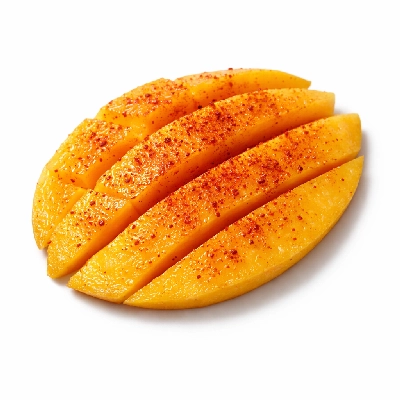
Sliced Chili Powder Mango
1 serving132 Cal32.3 g2.04 g1.16 g
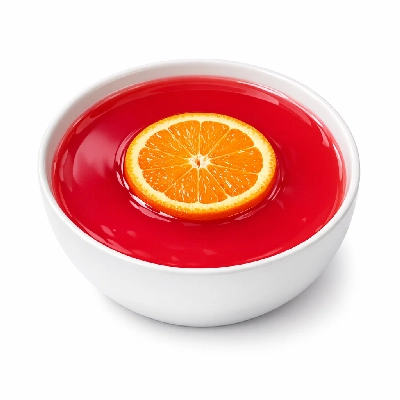
Fruit Punch & Orange Slice

Similar Food

  • Sliced Chili Powder Mango

    Sliced Chili Powder MangoA

    1 serving132 Cal

  • Fruit Punch & Orange Slice

    Fruit Punch & Orange SliceA

    6 servings836 Cal

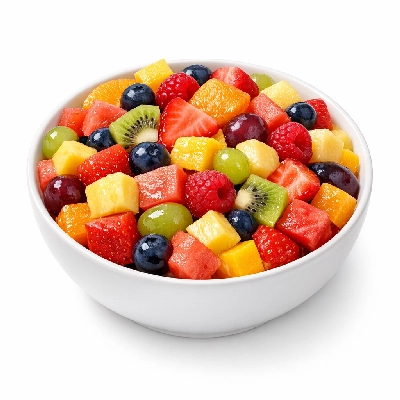
  • Mojito Fruit Salad

    Mojito Fruit SaladA

    6 serving485 Cal

  • Pineapple Salsa

    Pineapple SalsaA

    6 serving111 Cal

  • Citrus Mocktail

    Citrus MocktailA

    1 serving187 Cal

6 servings
836 Cal
205.84 g
6.31 g
1.66 g
Mojito Fruit SaladMojito Fruit Salad
6 serving485 Cal119.22 g10.48 g3.82 g
Sliced Chili Powder Mango
Fruit Punch & Orange Slice