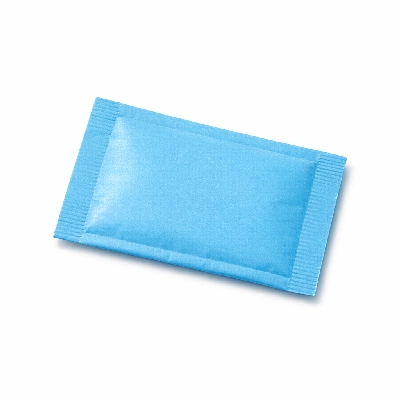
Equal, Noncaloric Sweetener or Aspartame (Blue Packet)
Source of Calories
Nutrition Facts
| Nutrient | Amount | % Daily Value |
|---|---|---|
| Total Carbohydrates | 3.12 g | 1% |
| Net Carbohydrates | 3.12 g | 1% |
| Sugars | 2.82 g | 8% |
| Added Sugars | 2.82 g | 6% |
| Dietary Fiber | 0 g | 0% |
| Protein | 0.08 g | 0% |
| Total Fat | 0 g | 0% |
| Saturated Fat | 0 g | 0% |
| Monounsaturated Fat | 0 g | - |
| Polyunsaturated Fat | 0 g | - |
| Trans Fat | No data | - |
| Cholesterol | 0 mg | 0% |
| Vitamins | ||
| Vitamin A | 0 mcg | 0% |
| Vitamin C | 0 mg | 0% |
| Vitamin D | 0 mcg | 0% |
| Minerals | ||
| Sodium | 0 mg | 0% |
| Potassium | 0.14 mg | 0% |
| Calcium | 0 mg | 0% |
| Magnesium | 0 mg | 0% |
| Iron | 0 mg | 0% |
| Zinc | 0 mg | 0% |
% DV refers to how much a single serving of an individually packaged food or supplement contributes nutritionally to your daily diet, based on a 2,000-calorie-a-day diet. Generally, having 5% DV or less of a nutrient per serving is considered low, and 20% DV or more of a nutrient per serving is considered high.
Vitamin Coverage
Vitamin A
0%
Vitamin C
0%
Vitamin D
0%
Vitamin E
0%
Vitamin K
0%
Vitamin B1
0%
Vitamin B2
0%
Vitamin B3
0%
Vitamin B5
0%
Vitamin B6
0%
Vitamin B7
-
Vitamin B9
0%
Vitamin B12
0%
There are 13 essential vitamins required for the body to work properly, which are categorised into two categories: fat-soluble and water-soluble vitamins. Vitamins have a Recommended Dietary Allowance (RDA), provided by the Dietary Reference Intakes (DRIs), which vary by age and sex. The %DV indicates how much one serving contributes to the average recommended daily intake.
Mineral Coverage
Calcium
0%
Iron
0%
Magnesium
0%
Phosphorus
0%
Potassium
0%
Sodium
0%
Zinc
0%
Copper
0%
Manganese
0%
Selenium
0%
Minerals are micronutrients, of which 13 of them are essential to the human body. The Recommended Dietary Allowance includes Calcium (1,300 mg/d), Phosphorus (1,250 mg/d), Potassium (4,700 mg/d), Sodium (2,300 mg/d), Chloride (1,500 mg/d), Magnesium (420 mg/d), Iron (18 mg/d), Zinc (11 mg/d), Copper (0.9 mg/d), Selenium (55 mcg/d), Molybdenum (45 mcg/d), Manganese (2.3 mg/d) and Iodine (150 mcg/d).
Protein Quality
Leucine
0%
Isoleucine
0%
Valine
0%
Lysine
0%
Tryptophan
0%
Threonine
0%
Phenylalanine
4%
Methionine
0%
Histidine
0%
Guidelines recommend a serving of protein with each meal and 1.2-1.6 g of protein per kg of body weight per day.
The data provided by eato.health is for informational purposes only and should not be considered medical advice. Please consult your physician before beginning any diet or nutrition plan.
About
How Long to Burn Off 13 Calories?
*Based on this person: 25-year-old female, 5'7", 144 lbs

Swimming
2 min

Jogging
2 min

Cycling
2 min

Walking
3 min
The data provided by eato.health is for informational purposes only and should not be considered medical advice. Please consult your physician before beginning any diet or nutrition plan.
📚 Health Research & Evidence About This Food
Clinical evidence demonstrates that noncaloric aspartame sweetener consumption has little to no effect on glucose metabolism, fasting insulin, or fasting glucose levels, and is not significantly associated with the risk of developing diabetes, according to a systematic review and meta-analysis of human studies. However, aspartame is classified by the WHO's International Agency for Research on Cancer (IARC) as "possibly carcinogenic in humans" (Group 2B) based on limited evidence for liver cancer, as noted by MedlinePlus and WebMD. Furthermore, aspartame carries a warning for individuals with phenylketonuria (PKU) due to its phenylalanine content, as highlighted by Harvard Health.
1. Sweeteners - Sugar Substitutes: Medlineplus Medical Encyclopedia
Source: MedlinePlus
Summary: Aspartame has been classified by the WHO's International Agency for Research on Cancer (IARC) as "possibly carcinogenic in humans" as of July.
2. What Is Aspartame? Food Sources, Safety, and Health Effects
Source: WebMD
Summary: Aspartame is classified by the WHO's IARC as "possibly carcinogenic to humans" (Group 2B) based on limited evidence for liver cancer, with a large study correlating higher intake with an increased cancer risk.
Read More: https://www.webmd.com/diet/what-to-know-about-aspartame
3. Sweeteners: Time to Rethink Your Choices? - Harvard Health
Source: Harvard Health, 2019
Summary: Aspartame carries a warning for individuals with phenylketonuria (PKU) due to metabolic challenges.
Read More: https://www.health.harvard.edu/blog/sweeteners-time-to-rethink-your-choices-2019022215967
4. The Effects of Aspartame on Glucose, Insulin, and Appetite-Regulating Hormone Responses in Humans: Systematic Review and Meta-Analyses.
Source: PubMed, 2024
Summary: Aspartame consumption has little to no effects on glucose metabolism in either the short or long term.
Read More: https://pubmed.ncbi.nlm.nih.gov/40381807/
5. What to Know About Artificial Sweeteners and Diabetes
Source: Cleveland Clinic
Summary: Aspartame has been supported by numerous studies regarding its safety, but it is classified as a Group 2B carcinogen by the IARC and contains phenylalanine, making it unsuitable for individuals with phenylketonuria (PKU).
Read More: https://health.clevelandclinic.org/are-artificial-sweeteners-safe-for-people-with-diabetes
6. Associations of Diet Soda and Non-Caloric Artificial Sweetener Use With Markers of Glucose and Insulin Homeostasis and Incident Diabetes: The Strong Heart Family Study
Source: Nature, 2019
Summary: Noncaloric aspartame sweetener consumption was not significantly associated with fasting insulin levels, fasting glucose levels, or the risk of developing incident diabetes in American Indians.
Read More: https://www.nature.com/articles/s41430-019-0461-6