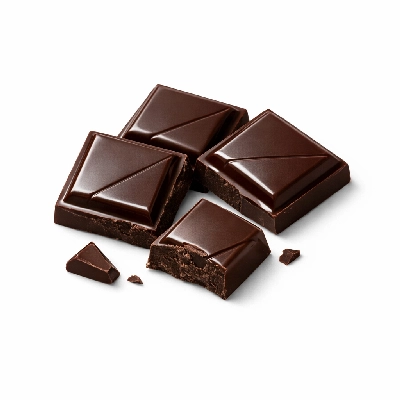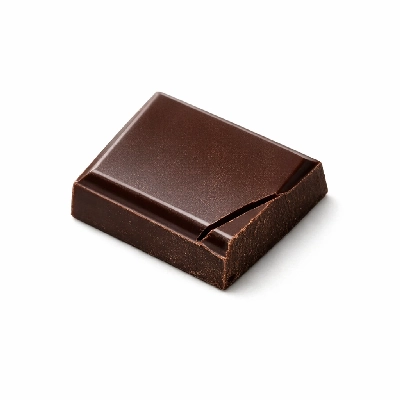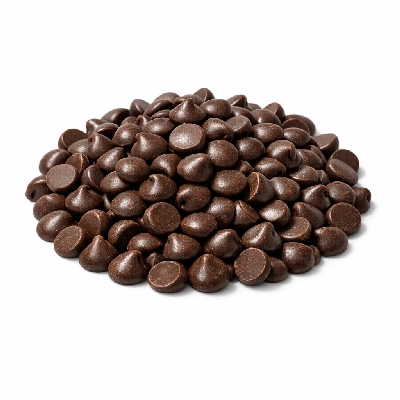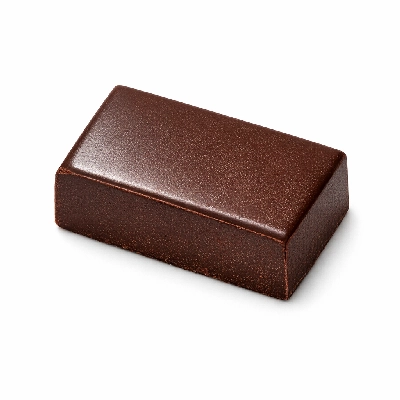
Dark Chocolate (60 to 69)% Cacao
Source of Calories
Nutrition Facts
| Nutrient | Amount | % Daily Value |
|---|---|---|
| Total Carbohydrates | 14.86 g | 5% |
| Net Carbohydrates | 12.59 g | 5% |
| Sugars | 10.41 g | 30% |
| Added Sugars | 10.4 g | 21% |
| Dietary Fiber | 2.27 g | 8% |
| Protein | 1.74 g | 3% |
| Total Fat | 10.86 g | 14% |
| Saturated Fat | 6.25 g | 31% |
| Monounsaturated Fat | 3.27 g | - |
| Polyunsaturated Fat | 0.35 g | - |
| Trans Fat | 0.02 g | 100% |
| Cholesterol | 1.7 mg | 1% |
| Vitamins | ||
| Vitamin A | 0.71 mcg | 0% |
| Vitamin C | No data | - |
| Vitamin D | No data | - |
| Minerals | ||
| Sodium | 2.84 mg | 0% |
| Potassium | 160.74 mg | 3% |
| Calcium | 17.58 mg | 1% |
| Magnesium | 49.9 mg | 12% |
| Iron | 1.79 mg | 10% |
| Zinc | 0.75 mg | 7% |
% DV refers to how much a single serving of an individually packaged food or supplement contributes nutritionally to your daily diet, based on a 2,000-calorie-a-day diet. Generally, having 5% DV or less of a nutrient per serving is considered low, and 20% DV or more of a nutrient per serving is considered high.
Fat Composition
The suggested total fat consumption should be limited to 30% of total energy intake or less. The type of fat consumed should primarily be unsaturated fatty acids, with no more than 10% of total energy intake coming from saturated fatty acids (about 200 calories on a 2000-calorie diet) and no more than 1% of total energy intake coming from trans-fatty acids.
Vitamin Coverage
Vitamin A
0.1%
Vitamin C
-
Vitamin D
-
Vitamin E
1%
Vitamin K
2%
Vitamin B1
0.8%
Vitamin B2
1%
Vitamin B3
1%
Vitamin B5
2%
Vitamin B6
0.6%
Vitamin B7
-
Vitamin B9
-
Vitamin B12
2%
There are 13 essential vitamins required for the body to work properly, which are categorised into two categories: fat-soluble and water-soluble vitamins. Vitamins have a Recommended Dietary Allowance (RDA), provided by the Dietary Reference Intakes (DRIs), which vary by age and sex. The %DV indicates how much one serving contributes to the average recommended daily intake.
Mineral Coverage
Calcium
1%
Iron
10%
Magnesium
12%
Phosphorus
6%
Potassium
3%
Sodium
0.1%
Zinc
7%
Copper
39%
Manganese
16%
Selenium
4%
Minerals are micronutrients, of which 13 of them are essential to the human body. The Recommended Dietary Allowance includes Calcium (1,300 mg/d), Phosphorus (1,250 mg/d), Potassium (4,700 mg/d), Sodium (2,300 mg/d), Chloride (1,500 mg/d), Magnesium (420 mg/d), Iron (18 mg/d), Zinc (11 mg/d), Copper (0.9 mg/d), Selenium (55 mcg/d), Molybdenum (45 mcg/d), Manganese (2.3 mg/d) and Iodine (150 mcg/d).
The data provided by eato.health is for informational purposes only and should not be considered medical advice. Please consult your physician before beginning any diet or nutrition plan.
About
How Long to Burn Off 164 Calories?
*Based on this person: 25-year-old female, 5'7", 144 lbs

Swimming
25 min

Jogging
21 min

Cycling
22 min

Walking
39 min
The data provided by eato.health is for informational purposes only and should not be considered medical advice. Please consult your physician before beginning any diet or nutrition plan.
📚 Health Research & Evidence About This Food
Clinical research suggests that dark chocolate supplementation may contribute to reducing arterial stiffness and lowering blood pressure. These effects are often attributed to cocoa flavanols and other antioxidants, which observational evidence suggests may also support blood flow and combat cell damage, according to Harvard Health. Dark chocolate also contains various minerals, including magnesium, and is recognized for its overall antioxidant capacity, as noted by Healthline.
1. Fda Announces Qualified Health Claim for Cocoa Flavanols in High Flavanol Cocoa Powder and Reduced Risk of Cardiovascular Disease
Source: FDA, 2024
Summary: Dark chocolate with 60–69% cacao contains cocoa flavanols. Cocoa flavanols in high flavanol cocoa powder may reduce the risk of cardiovascular disease, but the FDA has concluded that the scientific evidence is very limited, and this claim does not specifically apply to chocolate products.
2. Dark Chocolate Is Best Choice for Health—But Don’T Turn It Into Medicine
Source: Harvard T.H. Chan School of Public Health, 2024
Summary: Dark chocolate 60 - 69% cacao, particularly darker varieties, contains flavonoids that offer antioxidant benefits and may help lower the risk of chronic diseases, but it should be consumed in moderation as part of a healthy diet rather than as medicine.
Read More: https://hsph.harvard.edu/news/dark-chocolate-health-flavonoids/
3. 7 Proven Health Benefits of Dark Chocolate
Source: Healthline, 2018
Summary: Dark chocolate, particularly varieties with high cocoa content, is rich in antioxidants like polyphenols and flavanols, providing essential minerals, potentially improving cardiovascular health by lowering LDL cholesterol and blood pressure, and offering skin protection against sun damage, though it should be consumed in moderation due to its calorie and sugar content.
Read More: https://www.healthline.com/nutrition/7-health-benefits-dark-chocolate
4. Sweet Dreams: Eating Chocolate Prevents Heart Disease - Harvard Health
Source: Harvard Health, 2015
Summary: Dark chocolate, particularly varieties with higher cocoa content, contains flavonoids that may contribute to heart health by lowering blood pressure, improving blood flow, and preventing blood clots, as suggested by observational studies, though it is not yet a medical prescription.
5. Are There Health Benefits From Chocolate?
Source: American Heart Association, 2019
Summary: "Chocolate contains dietary flavanols associated with a lower risk of heart disease and may help lower LDL cholesterol, but the amount of flavanols in commercially available products might not be sufficient for significant health effects, and it should be consumed in moderation for enjoyment.
Read More: https://www.heart.org/en/news/2019/02/12/are-there-health-benefits-from-chocolate
6. The Cardiovascular Benefits of Dark Chocolate Supplementation Before High-Intensity Resistance Exercise in the Early Follicular and Mid-Luteal Phases of the Menstrual Cycle.
Source: PubMed
Summary: "Dark chocolate, rich in flavanols, may support vascular health by reducing arterial stiffness and blood pressure across different phases of the menstrual cycle.
Read More: https://pubmed.ncbi.nlm.nih.gov/40249472/