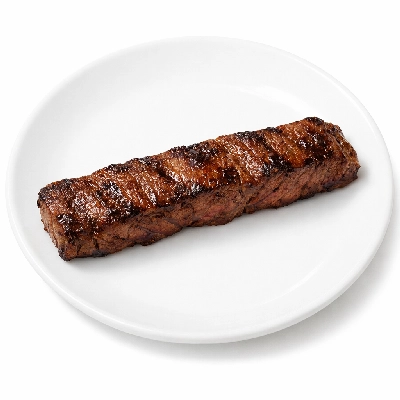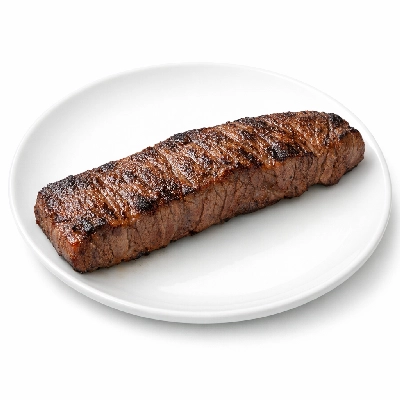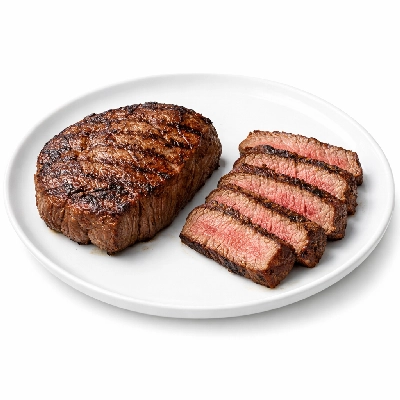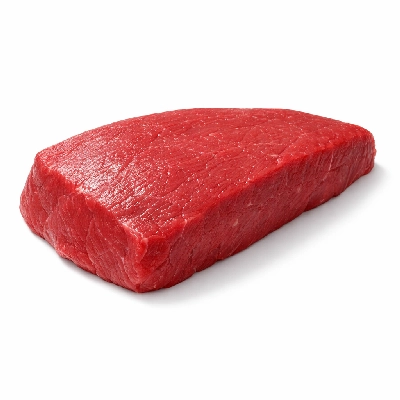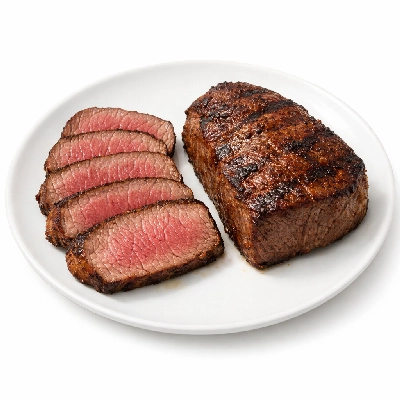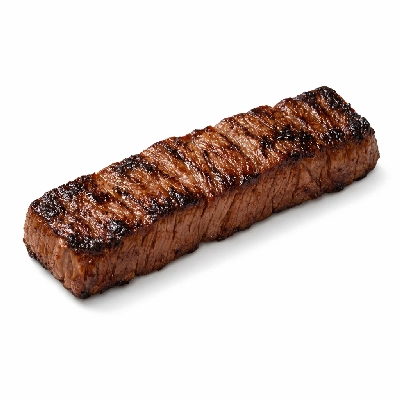
Cooked Beef Top Sirloin Steak Strip, Choice, Broiled, Separable Lean Only, Trimmed to 0 Inch Fat
Source of Calories
Nutrition Facts
| Nutrient | Amount | % Daily Value |
|---|---|---|
| Total Carbohydrates | 0 g | 0% |
| Net Carbohydrates | 0 g | 0% |
| Sugars | 0 g | 0% |
| Added Sugars | No data | - |
| Dietary Fiber | 0 g | 0% |
| Protein | 119.04 g | 238% |
| Total Fat | 25.74 g | 33% |
| Saturated Fat | 9.81 g | 49% |
| Monounsaturated Fat | 10.28 g | - |
| Polyunsaturated Fat | 0.95 g | - |
| Trans Fat | No data | - |
| Cholesterol | 326.19 mg | 109% |
| Vitamins | ||
| Vitamin A | 0 mcg | 0% |
| Vitamin C | 0 mg | 0% |
| Vitamin D | No data | - |
| Minerals | ||
| Sodium | 247.59 mg | 11% |
| Potassium | 1493.4 mg | 32% |
| Calcium | 66.81 mg | 5% |
| Magnesium | 102.18 mg | 24% |
| Iron | 8.14 mg | 45% |
| Zinc | 22.6 mg | 205% |
% DV refers to how much a single serving of an individually packaged food or supplement contributes nutritionally to your daily diet, based on a 2,000-calorie-a-day diet. Generally, having 5% DV or less of a nutrient per serving is considered low, and 20% DV or more of a nutrient per serving is considered high.
Fat Composition
The suggested total fat consumption should be limited to 30% of total energy intake or less. The type of fat consumed should primarily be unsaturated fatty acids, with no more than 10% of total energy intake coming from saturated fatty acids (about 200 calories on a 2000-calorie diet) and no more than 1% of total energy intake coming from trans-fatty acids.
Vitamin Coverage
Vitamin A
0%
Vitamin C
0%
Vitamin D
-
Vitamin E
10%
Vitamin K
5%
Vitamin B1
26%
Vitamin B2
47%
Vitamin B3
220%
Vitamin B5
47%
Vitamin B6
146%
Vitamin B7
-
Vitamin B9
10%
Vitamin B12
309%
There are 13 essential vitamins required for the body to work properly, which are categorised into two categories: fat-soluble and water-soluble vitamins. Vitamins have a Recommended Dietary Allowance (RDA), provided by the Dietary Reference Intakes (DRIs), which vary by age and sex. The %DV indicates how much one serving contributes to the average recommended daily intake.
Mineral Coverage
Calcium
5%
Iron
45%
Magnesium
24%
Phosphorus
75%
Potassium
32%
Sodium
11%
Zinc
205%
Copper
42%
Manganese
2%
Selenium
251%
Minerals are micronutrients, of which 13 of them are essential to the human body. The Recommended Dietary Allowance includes Calcium (1,300 mg/d), Phosphorus (1,250 mg/d), Potassium (4,700 mg/d), Sodium (2,300 mg/d), Chloride (1,500 mg/d), Magnesium (420 mg/d), Iron (18 mg/d), Zinc (11 mg/d), Copper (0.9 mg/d), Selenium (55 mcg/d), Molybdenum (45 mcg/d), Manganese (2.3 mg/d) and Iodine (150 mcg/d).
Protein Quality
Leucine
322%
Isoleucine
407%
Valine
352%
Lysine
378%
Tryptophan
223%
Threonine
340%
Phenylalanine
407%
Methionine
466%
Histidine
388%
Guidelines recommend a serving of protein with each meal and 1.2-1.6 g of protein per kg of body weight per day.
The data provided by eato.health is for informational purposes only and should not be considered medical advice. Please consult your physician before beginning any diet or nutrition plan.
About
How Long to Burn Off 739 Calories?
*Based on this person: 25-year-old female, 5'7", 144 lbs

Swimming
1 h 49 min

Jogging
1 h 34 min

Cycling
1 h 36 min

Walking
2 h 54 min
The data provided by eato.health is for informational purposes only and should not be considered medical advice. Please consult your physician before beginning any diet or nutrition plan.
📚 Health Research & Evidence About This Food
Beef top sirloin, when lean and trimmed, is recognized as a good source of protein. Harvard Health and the American Heart Association recommend choosing lean red meat cuts like sirloin to help manage saturated fat intake for cardiovascular health. Additionally, WebMD suggests that incorporating lean beef into meals can contribute to satiety, potentially aiding in appetite control.
1. Nutrient Data in Time for the New Year : Usda Ars
Source: USDA ARS, 2012
Summary: Beef top sirloin steak lean protein satiety, as part of retail beef cuts, is subject to updated nutrient data sets released by the USDA ARS, which provide comprehensive nutritional information for various beef products.
Read More: https://www.ars.usda.gov/news-events/news/research-news/2012/nutrient-data-in-time-for-the-new-year/
2. Chill Out Your Appetite With Soups and Stews
Source: WebMD
Summary: Beef top sirloin steak lean protein satiety is exemplified in a "Slow Cooker Taco Soup" recipe that utilizes lean ground sirloin and provides protein per serving, contributing to satiety within a calorie-controlled meal.
Read More: https://www.webmd.com/diet/features/chill-out-you-appetitie-with-soups-and-stews
3. 4 Foods Not to Eat if You Have High Cholesterol - Harvard Health
Source: Harvard Health, 2021
Summary: Beef top sirloin steak lean protein satiety, as a red meat, is generally advised to be consumed in moderation or replaced with lower saturated fat proteins like skinless chicken, fish, or beans to manage high cholesterol levels, according to Harvard Health.
Read More: https://www.health.harvard.edu/heart-health/4-foods-not-to-eat-if-you-have-high-cholesterol
4. Picking Healthy Proteins
Source: American Heart Association, 2024
Summary: Beef top sirloin steak lean protein satiety, as a red meat, is recommended by the American Heart Association to be chosen in lean or extra-lean cuts with minimal visible fat and consumed in moderation as part of a heart-healthy diet, prioritizing plant-based proteins and fish.
5. What Are the Lean Cuts of Beef? Their Types, Benefits, and More
Source: WebMD
Summary: Beef top sirloin steak lean protein satiety is supported by lean beef cuts, including sirloin, which are excellent sources of protein for muscle development and contain low levels of saturated fat, offering a healthier way to incorporate red meat into the diet.
Read More: https://www.webmd.com/food-recipes/what-to-know-about-lean-beef-cuts
6. Cholesterol Control: Chicken Vs. Beef
Source: Healthline, 2015
Summary: Beef top sirloin steak lean protein satiety, as a lean cut of beef, is recommended for cholesterol control, with emphasis on choosing cuts like sirloin and preparing them healthily to minimize saturated fat intake, which is a primary driver of LDL cholesterol.
Read More: https://www.healthline.com/health/high-cholesterol/chicken-vs-beef