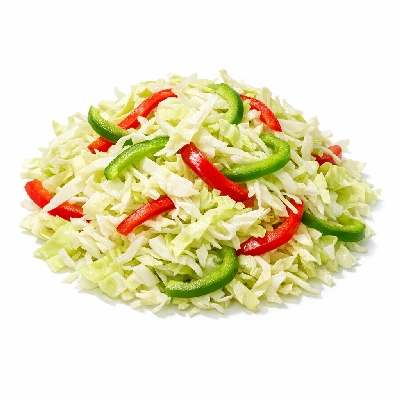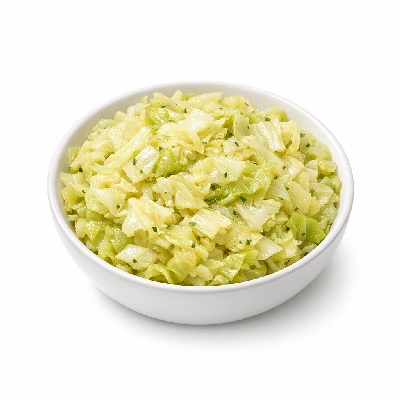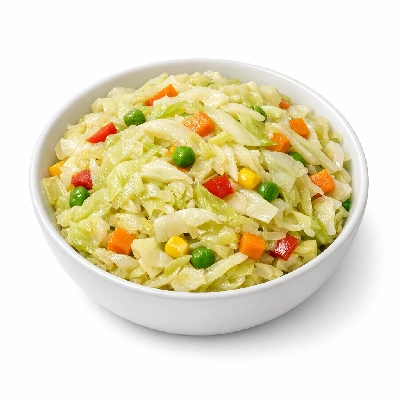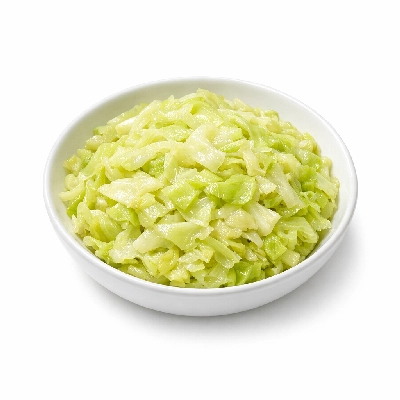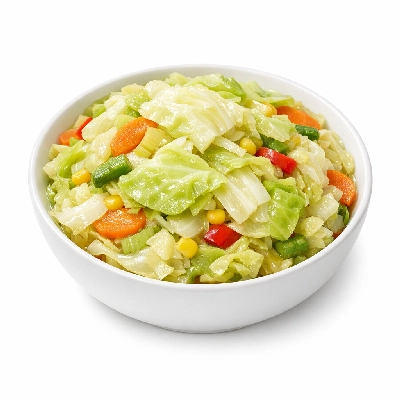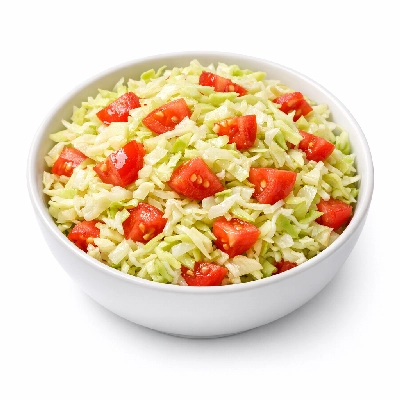
Cabbage with Tomatoes
Source of Calories
Nutrition Facts
| Nutrient | Amount | % Daily Value |
|---|---|---|
| Total Carbohydrates | 77.61 g | 28% |
| Net Carbohydrates | 48.4 g | 20% |
| Sugars | 43.4 g | 124% |
| Added Sugars | 0 g | 0% |
| Dietary Fiber | 29.21 g | 104% |
| Protein | 16.11 g | 32% |
| Total Fat | 28.79 g | 37% |
| Saturated Fat | 4.09 g | 20% |
| Monounsaturated Fat | 20.17 g | - |
| Polyunsaturated Fat | 3.32 g | - |
| Trans Fat | 0 g | 0% |
| Cholesterol | 0 mg | 0% |
| Vitamins | ||
| Vitamin A | 198.06 mcg | 22% |
| Vitamin C | 390.95 mg | 434% |
| Vitamin D | 0 mcg | 0% |
| Minerals | ||
| Sodium | 2512.54 mg | 109% |
| Potassium | 2586.38 mg | 55% |
| Calcium | 429.44 mg | 33% |
| Magnesium | 161.53 mg | 38% |
| Iron | 5.73 mg | 32% |
| Zinc | 2.57 mg | 23% |
% DV refers to how much a single serving of an individually packaged food or supplement contributes nutritionally to your daily diet, based on a 2,000-calorie-a-day diet. Generally, having 5% DV or less of a nutrient per serving is considered low, and 20% DV or more of a nutrient per serving is considered high.
Fat Composition
The suggested total fat consumption should be limited to 30% of total energy intake or less. The type of fat consumed should primarily be unsaturated fatty acids, with no more than 10% of total energy intake coming from saturated fatty acids (about 200 calories on a 2000-calorie diet) and no more than 1% of total energy intake coming from trans-fatty acids.
Vitamin Coverage
Vitamin A
22%
Vitamin C
434%
Vitamin D
0%
Vitamin E
48%
Vitamin K
614%
Vitamin B1
67%
Vitamin B2
34%
Vitamin B3
28%
Vitamin B5
47%
Vitamin B6
88%
Vitamin B7
-
Vitamin B9
0%
Vitamin B12
0%
There are 13 essential vitamins required for the body to work properly, which are categorised into two categories: fat-soluble and water-soluble vitamins. Vitamins have a Recommended Dietary Allowance (RDA), provided by the Dietary Reference Intakes (DRIs), which vary by age and sex. The %DV indicates how much one serving contributes to the average recommended daily intake.
Mineral Coverage
Calcium
33%
Iron
32%
Magnesium
38%
Phosphorus
29%
Potassium
55%
Sodium
109%
Zinc
23%
Copper
56%
Manganese
93%
Selenium
6%
Minerals are micronutrients, of which 13 of them are essential to the human body. The Recommended Dietary Allowance includes Calcium (1,300 mg/d), Phosphorus (1,250 mg/d), Potassium (4,700 mg/d), Sodium (2,300 mg/d), Chloride (1,500 mg/d), Magnesium (420 mg/d), Iron (18 mg/d), Zinc (11 mg/d), Copper (0.9 mg/d), Selenium (55 mcg/d), Molybdenum (45 mcg/d), Manganese (2.3 mg/d) and Iodine (150 mcg/d).
Protein Quality
Leucine
0.2%
Isoleucine
0.1%
Valine
0.2%
Lysine
0%
Tryptophan
0.1%
Threonine
0.1%
Phenylalanine
0.2%
Methionine
0.1%
Histidine
0.1%
Guidelines recommend a serving of protein with each meal and 1.2-1.6 g of protein per kg of body weight per day.
The data provided by eato.health is for informational purposes only and should not be considered medical advice. Please consult your physician before beginning any diet or nutrition plan.
About
How Long to Burn Off 577 Calories?
*Based on this person: 25-year-old female, 5'7", 144 lbs

Swimming
1 h 25 min

Jogging
1 h 13 min

Cycling
1 h 15 min

Walking
2 h 16 min
The data provided by eato.health is for informational purposes only and should not be considered medical advice. Please consult your physician before beginning any diet or nutrition plan.
📚 Health Research & Evidence About This Food
Cabbage is a nutrient-dense vegetable, rich in fiber, vitamins C and K, and minerals, and contains antioxidants like anthocyanins that may reduce chronic inflammation. Its high content of insoluble fiber and bound polyphenols supports digestive health and promotes satiety, according to Cleveland Clinic and PubMed research.
1. Red Cabbage: Health Benefits, Nutrients per Serving, Preparation Information, and More
Source: WebMD
Summary: Cabbage, particularly red cabbage, is a nutrient-rich cruciferous vegetable abundant in antioxidants like anthocyanins, vitamins C and K, and fiber, offering potential benefits for heart, brain, bone, and digestive health, as well as supporting weight control and potentially reducing the risk of certain cancers and type 2 diabetes.
Read More: https://www.webmd.com/diet/health-benefits-red-cabbage
2. 8 Health Benefits of Cabbage
Source: Cleveland Clinic
Summary: Cabbage is a nutrient-dense leafy green vegetable rich in fiber, vitamins C and K, potassium, and anthocyanins, contributing to lower blood pressure, reduced inflammation, improved digestion, stronger bones, and potential protection against certain cancers.
Read More: https://health.clevelandclinic.org/benefits-of-cabbage
3. Bioactivity and Prebiotic Potential of Insoluble Dietary Fiber From Discarded Chinese Cabbage Outer Leaves and the Metabolomic Dynamics of Bound Polyphenols During Alkaline Extraction, in Vitro Gastrointestinal Digestion and Colonic Fermentation.
Source: PubMed
Summary: Cabbage, specifically the insoluble dietary fiber from discarded Chinese cabbage outer leaves, contains abundant bound polyphenols whose release and influence on fiber function are being investigated through in vitro gastrointestinal digestion and colonic fermentation to understand their bioactivity and prebiotic potential.
Read More: https://pubmed.ncbi.nlm.nih.gov/41703820/
4. Chemical Evaluation and Sensory Quality of Sauerkrauts Obtained by Natural and Induced Fermentations at Different Nacl Levels From Brassica Oleracea Var. Capitata Cv. Bronco Grown in Eastern Spain. Effect of Storage.
Source: PubMed
Summary: Cabbage, specifically white cabbage, is the subject of research aimed at optimizing fermentation conditions for sauerkraut production, evaluating chemical and sensory quality under different NaCl levels and fermentation types, and assessing the impact of storage.
Read More: https://pubmed.ncbi.nlm.nih.gov/20170112/