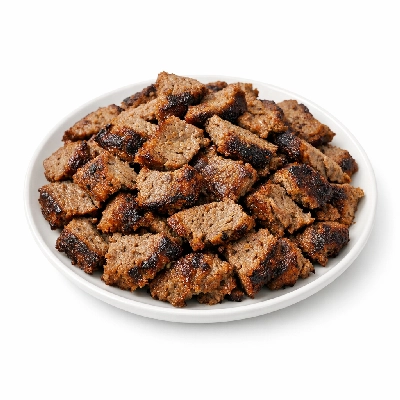
Beef Kebab Meat
Source of Calories
Nutrition Facts
| Nutrient | Amount | % Daily Value |
|---|---|---|
| Total Carbohydrates | 24.3 g | 9% |
| Net Carbohydrates | 17.71 g | 7% |
| Sugars | 7.2 g | 21% |
| Added Sugars | 0 g | 0% |
| Dietary Fiber | 6.58 g | 24% |
| Protein | 102.01 g | 204% |
| Total Fat | 92.38 g | 118% |
| Saturated Fat | 30.66 g | 153% |
| Monounsaturated Fat | 44.47 g | - |
| Polyunsaturated Fat | 5.89 g | - |
| Trans Fat | 3.75 g | 100% |
| Cholesterol | 310 mg | 103% |
| Vitamins | ||
| Vitamin A | 292.3 mcg | 32% |
| Vitamin C | 89.88 mg | 100% |
| Vitamin D | 0 mcg | 0% |
| Minerals | ||
| Sodium | 2711.1 mg | 118% |
| Potassium | 2137.14 mg | 45% |
| Calcium | 232.52 mg | 18% |
| Magnesium | 159.82 mg | 38% |
| Iron | 16.34 mg | 91% |
| Zinc | 24.01 mg | 218% |
% DV refers to how much a single serving of an individually packaged food or supplement contributes nutritionally to your daily diet, based on a 2,000-calorie-a-day diet. Generally, having 5% DV or less of a nutrient per serving is considered low, and 20% DV or more of a nutrient per serving is considered high.
Fat Composition
The suggested total fat consumption should be limited to 30% of total energy intake or less. The type of fat consumed should primarily be unsaturated fatty acids, with no more than 10% of total energy intake coming from saturated fatty acids (about 200 calories on a 2000-calorie diet) and no more than 1% of total energy intake coming from trans-fatty acids.
Vitamin Coverage
Vitamin A
32%
Vitamin C
100%
Vitamin D
0%
Vitamin E
45%
Vitamin K
797%
Vitamin B1
33%
Vitamin B2
70%
Vitamin B3
159%
Vitamin B5
68%
Vitamin B6
128%
Vitamin B7
-
Vitamin B9
8%
Vitamin B12
410%
There are 13 essential vitamins required for the body to work properly, which are categorised into two categories: fat-soluble and water-soluble vitamins. Vitamins have a Recommended Dietary Allowance (RDA), provided by the Dietary Reference Intakes (DRIs), which vary by age and sex. The %DV indicates how much one serving contributes to the average recommended daily intake.
Mineral Coverage
Calcium
18%
Iron
91%
Magnesium
38%
Phosphorus
79%
Potassium
45%
Sodium
118%
Zinc
218%
Copper
61%
Manganese
33%
Selenium
134%
Minerals are micronutrients, of which 13 of them are essential to the human body. The Recommended Dietary Allowance includes Calcium (1,300 mg/d), Phosphorus (1,250 mg/d), Potassium (4,700 mg/d), Sodium (2,300 mg/d), Chloride (1,500 mg/d), Magnesium (420 mg/d), Iron (18 mg/d), Zinc (11 mg/d), Copper (0.9 mg/d), Selenium (55 mcg/d), Molybdenum (45 mcg/d), Manganese (2.3 mg/d) and Iodine (150 mcg/d).
Protein Quality
Leucine
1%
Isoleucine
1%
Valine
1%
Lysine
0.6%
Tryptophan
0.6%
Threonine
0.9%
Phenylalanine
2%
Methionine
0.8%
Histidine
0.7%
Guidelines recommend a serving of protein with each meal and 1.2-1.6 g of protein per kg of body weight per day.
The data provided by eato.health is for informational purposes only and should not be considered medical advice. Please consult your physician before beginning any diet or nutrition plan.
About
How Long to Burn Off 1344 Calories?
*Based on this person: 25-year-old female, 5'7", 144 lbs

Swimming
3 h 17 min

Jogging
2 h 50 min

Cycling
2 h 54 min

Walking
5 h 16 min
The data provided by eato.health is for informational purposes only and should not be considered medical advice. Please consult your physician before beginning any diet or nutrition plan.
FAQ
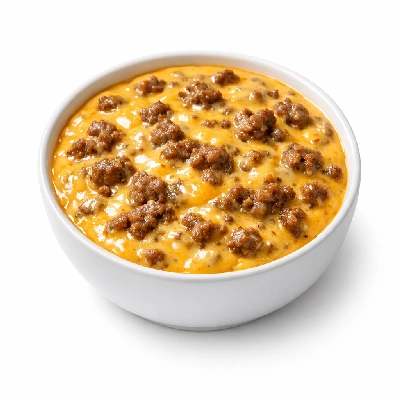
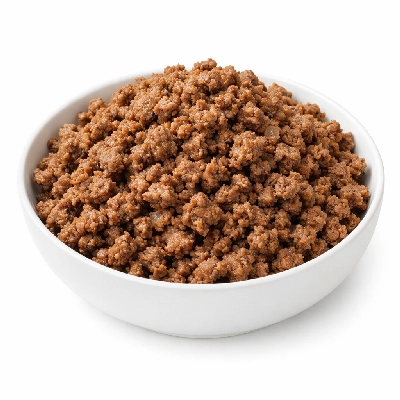
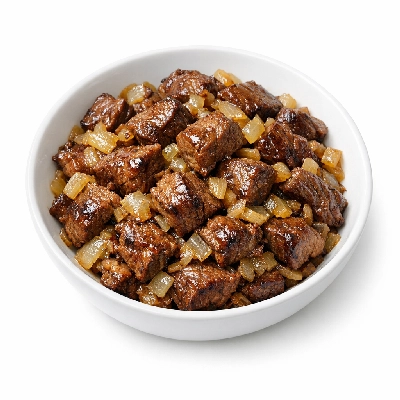
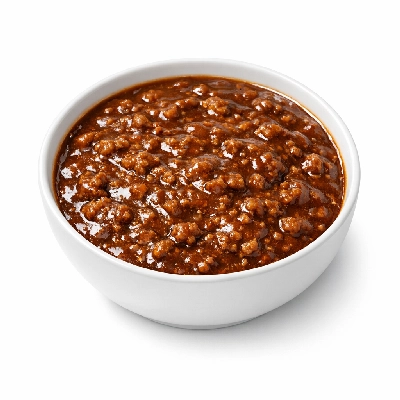
Kebabs can be made with either chunks or minced meat, and the cut changes based on that. For chunk skewers, sirloin, ribeye, striploin, or chuck (chuck is cheaper but benefits from marinading because it is tougher) is commonly used. For minced kebab, like koobideh or kofta, people usually use ground beef with some fat (often around 80 to 90 percent lean) so it stays juicy.
Beef kebab meat is usually moderate to high in calories depending on fat content and whether it is minced or lean chunks (cooked 90 percent lean ground beef is about 196 kcal per 100g)
Yes, beef kebab meat is typically keto friendly because plain beef has near zero carbs, but sauces and fillers can change that. Keto commonly keeps carbs very low, often under 50 g per day, sometimes as low as 20 g, so kebab meat fits best when it is just beef plus spices (no breadcrumbs, sugar, or starchy binders).
Yes, beef kebab meat is usually high in protein, with about 13.5g of protein per 100g of beef kebab meat.
It depends, you can eat it often, but eating it every day is best only if the overall pattern stays balanced. Beef provides protein and micronutrients, but daily kebabs can become an issue if they are high in saturated fat, paired with refined carbs, or heavy on salty sauces, so leaner cuts and varied sides help. A practical rule is to rotate proteins across the week and keep portions consistent, especially if you are watching calories or LDL cholesterol.
📚 Health Research & Evidence About This Food
Beef is a rich source of high-quality protein, containing all nine essential amino acids beneficial for muscle growth and maintenance, including preventing age-related muscle loss, and it provides essential vitamins and minerals like highly bioavailable heme iron, which helps prevent iron deficiency anemia and enhances the absorption of non-heme iron from plant foods, according to Healthline and WebMD. While grilling beef, particularly with certain charcoals like oak wood and hazelnut shell, can lead to higher concentrations of polycyclic aromatic hydrocarbons, research from USDA ARS indicates that treating grilled ground beef with plant compounds can reduce carcinogenic heterocyclic amines such as MeIQx and PhIP.
1. Beef: Nutrients, Health Benefits, Preparation, and More
Source: WebMD
Summary: Beef is a protein-rich food that provides essential nutrients like iron and zinc, with a single serving offering the daily recommended amount of protein to prevent muscle mass loss.
2. Beef: Nutrition, Benefits, and Downsides
Source: Healthline, 2019
Summary: Beef is a rich source of high-quality protein, essential vitamins, and minerals, which are beneficial for muscle growth, maintenance, and the prevention of iron deficiency anemia.
Read More: https://www.healthline.com/nutrition/beef
3. Effects of Plant Compounds on Pathogens and Carcinogens in Grilled Ground Beef
Source: USDA ARS
Summary: Grilled ground beef patties treated with various plant compounds showed reduced levels of Escherichia coli O157:H7 and decreased formation of carcinogenic heterocyclic amines MeIQx and PhIP.
Read More: https://www.ars.usda.gov/research/publications/publication/?seqNo115=278437
4. Assessing the Formation of Polycyclic Aromatic Hydrocarbons in Grilled Beef Steak and Beef Patty With Different Charcoals by the Quick, Easy, Cheap, Effective, Rugged, and Safe (Quechers) Method With Gas Chromatography-Mass Spectrometry.
Source: PubMed
Summary: The total concentration of polycyclic aromatic hydrocarbons (PAHs) was significantly higher in beef steaks grilled with oak wood charcoal and hazelnut shell charcoal compared to Valonia oak wood charcoal and coconut shell charcoal, and consistently higher in beef patty samples across all charcoal groups compared to beef steaks.
Read More: https://pubmed.ncbi.nlm.nih.gov/37701747/