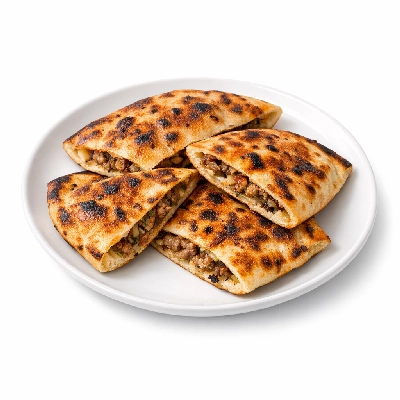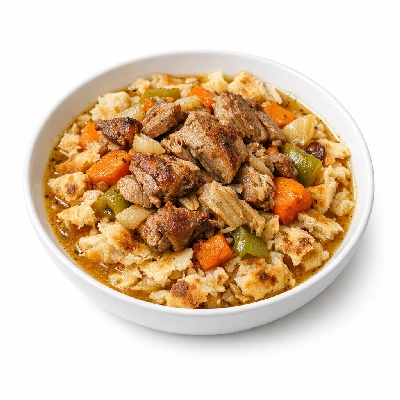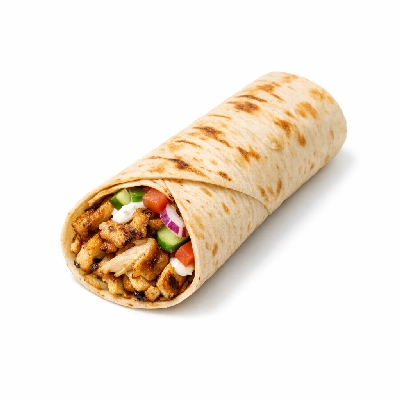
Uae Chicken Shawarma
Source of Calories
Nutrition Facts
| Nutrient | Amount | % Daily Value |
|---|---|---|
| Total Carbohydrates | 27.75 g | 10% |
| Net Carbohydrates | 19.31 g | 8% |
| Sugars | No data | - |
| Added Sugars | No data | - |
| Dietary Fiber | 8.44 g | 30% |
| Protein | 12.26 g | 25% |
| Total Fat | 3.9 g | 5% |
| Saturated Fat | 0.95 g | 5% |
| Monounsaturated Fat | 1.37 g | - |
| Polyunsaturated Fat | 1.29 g | - |
| Trans Fat | No data | - |
| Cholesterol | 21.86 mg | 7% |
| Vitamins | ||
| Vitamin A | No data | - |
| Vitamin C | 0.73 mg | 1% |
| Vitamin D | No data | - |
| Minerals | ||
| Sodium | 680.69 mg | 30% |
| Potassium | 350.27 mg | 7% |
| Calcium | 160.7 mg | 12% |
| Magnesium | 99.6 mg | 24% |
| Iron | 0.17 mg | 1% |
| Zinc | 0.14 mg | 1% |
% DV refers to how much a single serving of an individually packaged food or supplement contributes nutritionally to your daily diet, based on a 2,000-calorie-a-day diet. Generally, having 5% DV or less of a nutrient per serving is considered low, and 20% DV or more of a nutrient per serving is considered high.
Fat Composition
The suggested total fat consumption should be limited to 30% of total energy intake or less. The type of fat consumed should primarily be unsaturated fatty acids, with no more than 10% of total energy intake coming from saturated fatty acids (about 200 calories on a 2000-calorie diet) and no more than 1% of total energy intake coming from trans-fatty acids.
Vitamin Coverage
Vitamin A
-
Vitamin C
0.8%
Vitamin D
-
Vitamin E
-
Vitamin K
-
Vitamin B1
0.2%
Vitamin B2
0.1%
Vitamin B3
4%
Vitamin B5
1%
Vitamin B6
0.2%
Vitamin B7
-
Vitamin B9
-
Vitamin B12
0.3%
There are 13 essential vitamins required for the body to work properly, which are categorised into two categories: fat-soluble and water-soluble vitamins. Vitamins have a Recommended Dietary Allowance (RDA), provided by the Dietary Reference Intakes (DRIs), which vary by age and sex. The %DV indicates how much one serving contributes to the average recommended daily intake.
Mineral Coverage
Calcium
12%
Iron
1%
Magnesium
24%
Phosphorus
68%
Potassium
7%
Sodium
30%
Zinc
1%
Copper
0.2%
Manganese
0.3%
Selenium
16%
Minerals are micronutrients, of which 13 of them are essential to the human body. The Recommended Dietary Allowance includes Calcium (1,300 mg/d), Phosphorus (1,250 mg/d), Potassium (4,700 mg/d), Sodium (2,300 mg/d), Chloride (1,500 mg/d), Magnesium (420 mg/d), Iron (18 mg/d), Zinc (11 mg/d), Copper (0.9 mg/d), Selenium (55 mcg/d), Molybdenum (45 mcg/d), Manganese (2.3 mg/d) and Iodine (150 mcg/d).
The data provided by eato.health is for informational purposes only and should not be considered medical advice. Please consult your physician before beginning any diet or nutrition plan.
About
How Long to Burn Off 195 Calories?
*Based on this person: 25-year-old female, 5'7", 144 lbs

Swimming
29 min

Jogging
25 min

Cycling
26 min

Walking
46 min
The data provided by eato.health is for informational purposes only and should not be considered medical advice. Please consult your physician before beginning any diet or nutrition plan.
FAQ
It depends. One serving is about 195 kcal with 12.26 g protein, 27.75 g carbs, 3.9 g fat, and 8.44 g fiber, so it may be more filling than many snacks because of the protein and fiber, but sauces, wraps, and sides can raise calories quickly.
No. chicken shawarma is not usually very low carb. One serving has 27.75 g total carbs and 19.31 g net carbs, which may be too high for stricter low carb or keto styles, but could still fit more moderate carb plans depending on the rest of the day.
Yes. Although one serving of chicken shawarma has 27.75 g of carbs with 8.44 g fiber, the fiber may help somewhat, but the carbohydrate load can still increase blood glucose, particularly for people with diabetes or insulin resistance. However, consult a healthcare professional if you have been diagnosed with blood sugar before you make any drastic changes to your diet.
It depends. One serving of chicken shawarma has 21.86 mg cholesterol and 0.95 g saturated fat, which may be manageable for many people, but cholesterol impact usually depends more on the full diet pattern, portion size, and how often it is eaten.
📚 Health Research & Evidence About This Food
Chicken, a primary component of chicken shawarma, is recognized as a lean, high-quality protein source that supports muscle health, tissue repair, and satiety, which may aid in weight management, according to Women's Health. Healthline notes that grilled chicken is a beneficial protein for muscle gain and recovery. Additionally, Cleveland Clinic suggests that lean chicken may be a suitable option for managing GERD symptoms compared to fattier meats.
1. The Best Sources of Lean Protein + Why It Matters for Your Goals
Source: Women's Health, 2023
Summary: Chicken Shawarma contains lean chicken breast as a primary ingredient, can be understood in the context of the USDA's definition of lean protein, which specifies less than total fat per serving, with skinless chicken breast containing approximately fat.
Read More: https://www.womenshealthmag.com/uk/food/weight-loss/a707522/lean-protein/
2. What to Eat After a Run: 15 Great Choices
Source: Healthline, 2019
Summary: Chicken Shawarma contains has grilled chicken as a lean protein component, which contributes to muscle gain and repair post-run, with a grilled chicken breast providing high-quality protein.
Read More: https://www.healthline.com/nutrition/what-to-eat-after-running
3. Gerd Diet: Foods to Eat and Avoid
Source: Cleveland Clinic
Summary: Chicken shawarma contains lean chicken as opposed to fatty cuts of meat, is relevant for individuals managing GERD, as fatty foods are harder to digest and can exacerbate acid reflux symptoms.
Read More: https://health.clevelandclinic.org/gerd-diet