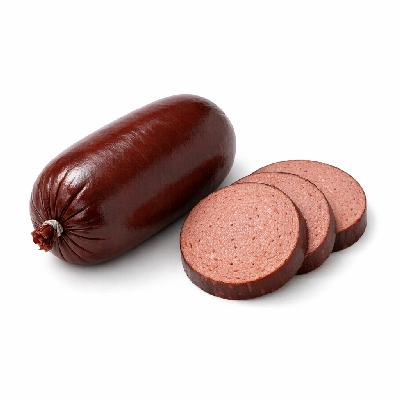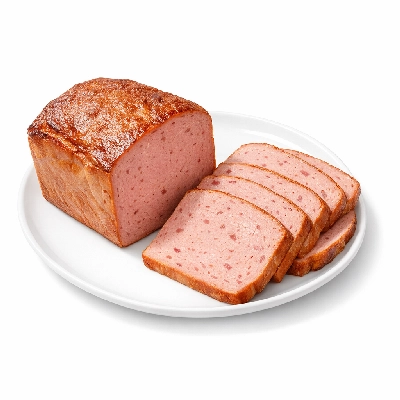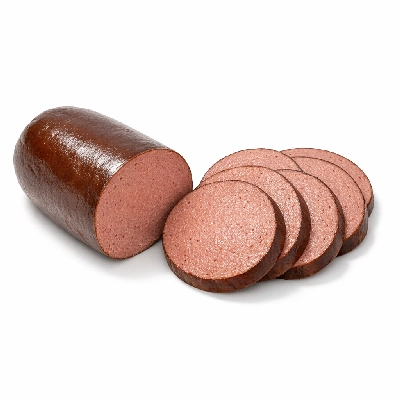
Oscar Mayer, Braunschweiger, Sliced Braunschweiger Liver Sausage
Source of Calories
Nutrition Facts
| Nutrient | Amount | % Daily Value |
|---|---|---|
| Total Carbohydrates | 0.73 g | 0% |
| Net Carbohydrates | 0.67 g | 0% |
| Sugars | 0.34 g | 1% |
| Added Sugars | No data | - |
| Dietary Fiber | 0.06 g | 0% |
| Protein | 3.99 g | 8% |
| Total Fat | 8.22 g | 11% |
| Saturated Fat | 3.06 g | 15% |
| Monounsaturated Fat | 4.33 g | - |
| Polyunsaturated Fat | 1.04 g | - |
| Trans Fat | No data | - |
| Cholesterol | 49.84 mg | 17% |
| Vitamins | ||
| Vitamin A | 1322.5 mcg | 147% |
| Vitamin C | 2.52 mg | 3% |
| Vitamin D | 0.31 mcg | 2% |
| Minerals | ||
| Sodium | 324.52 mg | 14% |
| Potassium | 56.56 mg | 1% |
| Calcium | 2.52 mg | 0% |
| Magnesium | 3.92 mg | 1% |
| Iron | 2.94 mg | 16% |
| Zinc | 0.95 mg | 9% |
% DV refers to how much a single serving of an individually packaged food or supplement contributes nutritionally to your daily diet, based on a 2,000-calorie-a-day diet. Generally, having 5% DV or less of a nutrient per serving is considered low, and 20% DV or more of a nutrient per serving is considered high.
Fat Composition
The suggested total fat consumption should be limited to 30% of total energy intake or less. The type of fat consumed should primarily be unsaturated fatty acids, with no more than 10% of total energy intake coming from saturated fatty acids (about 200 calories on a 2000-calorie diet) and no more than 1% of total energy intake coming from trans-fatty acids.
Vitamin Coverage
Vitamin A
147%
Vitamin C
3%
Vitamin D
2%
Vitamin E
-
Vitamin K
-
Vitamin B1
5%
Vitamin B2
34%
Vitamin B3
16%
Vitamin B5
19%
Vitamin B6
5%
Vitamin B7
-
Vitamin B9
3%
Vitamin B12
219%
There are 13 essential vitamins required for the body to work properly, which are categorised into two categories: fat-soluble and water-soluble vitamins. Vitamins have a Recommended Dietary Allowance (RDA), provided by the Dietary Reference Intakes (DRIs), which vary by age and sex. The %DV indicates how much one serving contributes to the average recommended daily intake.
Mineral Coverage
Calcium
0.2%
Iron
16%
Magnesium
0.9%
Phosphorus
4%
Potassium
1%
Sodium
14%
Zinc
9%
Copper
16%
Manganese
2%
Selenium
-
Minerals are micronutrients, of which 13 of them are essential to the human body. The Recommended Dietary Allowance includes Calcium (1,300 mg/d), Phosphorus (1,250 mg/d), Potassium (4,700 mg/d), Sodium (2,300 mg/d), Chloride (1,500 mg/d), Magnesium (420 mg/d), Iron (18 mg/d), Zinc (11 mg/d), Copper (0.9 mg/d), Selenium (55 mcg/d), Molybdenum (45 mcg/d), Manganese (2.3 mg/d) and Iodine (150 mcg/d).
The data provided by eato.health is for informational purposes only and should not be considered medical advice. Please consult your physician before beginning any diet or nutrition plan.
About
How Long to Burn Off 93 Calories?
*Based on this person: 25-year-old female, 5'7", 144 lbs

Swimming
14 min

Jogging
12 min

Cycling
12 min

Walking
22 min
The data provided by eato.health is for informational purposes only and should not be considered medical advice. Please consult your physician before beginning any diet or nutrition plan.
FAQ
Braunschweiger is a type of liver sausage that is smoked, which does not make it much different compared to liver sausage.
Quite unhealthy. One slice already gives 3.06 g saturated fat, 49.84 mg cholesterol, and 324.52 mg sodium, and processed meat intake has been associated with higher cardiometabolic risk, with one large meta analysis linking processed meat to a 42% higher coronary heart disease risk and a 19% higher diabetes risk per 50 g/day.
Yes, you usually can. In the U.S. and Canada, braunschweiger is commonly sold as a smoked, ready to eat liver sausage, so it is often eaten cold on bread or crackers rather than cooked again.
Yes, it has 3.06 g saturated fat and 49.84 mg cholesterol, and if you are worried about LDL cholesterol, replacing the saturated fat with polyunsaturated fat should be a priority, rather than consuming more saturated fat.
📚 Health Research & Evidence About This Food
Braunschweiger liver sausage is associated with an elevated risk of cardiovascular disease and death, according to UCLA Health, based on a decade-long global study involving numerous individuals. Harvard Health suggests that replacing such processed meats with healthier alternatives can lower the likelihood of these conditions. Despite these risks, Medical News Today identifies pork liver sausage as a significant source of iron, a vital mineral for oxygen transport in red blood cells. While it can contain the hepatitis E virus (HEV), a zoonotic virus that causes acute and chronic hepatitis, the heating process during production significantly reduces its infectivity by achieving a substantial reduction in infectious HEV.
1. The Effects of Processed Meats on Your Heart Health
Source: UCLA Health
Summary: Consuming processed meat per week significantly elevates the risk of cardiovascular disease and the risk of death.
Read More: https://www.uclahealth.org/news/article/the-effects-of-processed-meats-on-your-heart-health
2. Hepatitis E Virus in Pork Liver Sausage, France - Pmc
Source: NCBI
Summary: Pork liver sausages can contain viable and infectious hepatitis E virus (HEV), posing a potential risk factor for human HEV infection.
Read More: https://www.ncbi.nlm.nih.gov/pmc/articles/PMC3563277/
3. Determination of Hepatitis E Virus Inactivation During Manufacturing of Spreadable Pork Liver Sausage and Salami-Like Raw Pork Sausage.
Source: PubMed
Summary: The heating process used in liver sausage production significantly reduces infectious hepatitis E virus (HEV), achieving a four log reduction during a water bath.
Read More: https://pubmed.ncbi.nlm.nih.gov/39700675/
4. Switching Out Just a Serving of Processed Meats May Boost Cardiovascular Health - Harvard Health
Source: Harvard Health, 2024
Summary: Replacing just one daily serving of processed meats, such as braunschweiger liver sausage, with healthier alternatives like whole grains, nuts, or beans is linked to a lower likelihood of developing cardiovascular conditions like heart attack and stroke.
5. High-Iron Foods: The Top Ten
Source: Medical News Today
Summary: Pork liver sausage is identified as a significant source of iron, with a serving providing a notable amount.
Read More: https://www.medicalnewstoday.com/articles/the-top-10-high-iron-foods
6. Dietary Intake and Risk Assessment of Nitrosamine in Processed Meat Products Among Medical Staff During Their Night Shift
Source: Nature, 2025
Summary: Sausages had among the lowest nitrosamine levels compared to other processed meats analyzed in a study of various processed meat products.
Read More: https://www.nature.com/articles/s41598-024-84059-y