• Home
  • Features
  • Food Database
  • Blog
  • About
Get the App

Download and start your free trial to get your custom macro plan and food logging access today.

Download Eato App from App StoreDownload Eato App from Google Play
  • Calorie Tracker
  • Blog
  • Food Database
  • About
  • Support
© 2025 Eato. All rights reserved.
  • Privacy Policy
  • Terms & Conditions
  • Cookie Setting
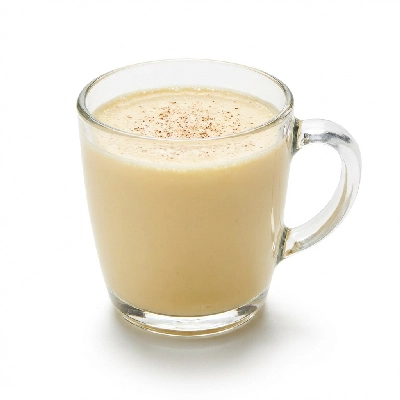
  1. Eggnog
Eggnog

Eggnog

Source of Calories

Amount%

Nutrition Facts

Amount% DV

Total Carbohydrates

20.45 g

7%

Net Carbohydrates

20.45 g

8%

Sugars

20.45 g

58%

Added Sugars

No data

-

Dietary Fiber

0 g

0%

Protein

11.56 g

23%

Total Fat

10.64 g

14%

Saturated Fat

6.58 g

33%

Monounsaturated Fat

3.31 g

-

Polyunsaturated Fat

0.5 g

-

Trans Fat

No data

-

Cholesterol

149.86 mg

50%

Vitamins

Vitamin A

148.8 mcg

17%

Vitamin C

3.81 mg

4%

Vitamin D

3.11 mcg

16%

Minerals

Sodium

137.16 mg

6%

Potassium

419.1 mg

9%

Calcium

330.2 mg

25%

Magnesium

48.26 mg

11%

Iron

0.51 mg

3%

Zinc

1.17 mg

11%

% DV refers to how much a single serving of an individually packaged food or supplement contributes nutritionally to your daily diet, based on a 2,000-calorie-a-day diet. Generally, having 5% DV or less of a nutrient per serving is considered low, and 20% DV or more of a nutrient per serving is considered high.

Fat Composition

Amount%

The suggested total fat consumption should be limited to 30% of total energy intake or less. The type of fat consumed should primarily be unsaturated fatty acids, with no more than 10% of total energy intake coming from saturated fatty acids (about 200 calories on a 2000-calorie diet) and no more than 1% of total energy intake coming from trans-fatty acids.

Vitamin Coverage

% DV

Vitamin A

17%

Vitamin C

4%

Vitamin D

16%

Vitamin E

4%

Vitamin K

0.6%

Vitamin B1

7%

Vitamin B2

37%

Vitamin B3

2%

Vitamin B5

21%

Vitamin B6

7%

Vitamin B7

-

Vitamin B9

0.6%

Vitamin B12

48%

There are 13 essential vitamins required for the body to work properly, which are categorised into two categories: fat-soluble and water-soluble vitamins. Vitamins have a Recommended Dietary Allowance (RDA), provided by the Dietary Reference Intakes (DRIs), which vary by age and sex. The %DV indicates how much one serving contributes to the average recommended daily intake.

Mineral Coverage

% DV

Calcium

25%

Iron

3%

Magnesium

11%

Phosphorus

22%

Potassium

9%

Sodium

6%

Zinc

11%

Copper

4%

Manganese

0.6%

Selenium

19%

Minerals are micronutrients, of which 13 of them are essential to the human body. The Recommended Dietary Allowance includes Calcium (1,300 mg/d), Phosphorus (1,250 mg/d), Potassium (4,700 mg/d), Sodium (2,300 mg/d), Chloride (1,500 mg/d), Magnesium (420 mg/d), Iron (18 mg/d), Zinc (11 mg/d), Copper (0.9 mg/d), Selenium (55 mcg/d), Molybdenum (45 mcg/d), Manganese (2.3 mg/d) and Iodine (150 mcg/d).

Protein Quality

% DV

Leucine

33%

Isoleucine

45%

Valine

44%

Lysine

25%

Tryptophan

62%

Threonine

36%

Phenylalanine

49%

Methionine

46%

Histidine

28%

Guidelines recommend a serving of protein with each meal and 1.2-1.6 g of protein per kg of body weight per day.

The data provided by eato.health is for informational purposes only and should not be considered medical advice. Please consult your physician before beginning any diet or nutrition plan.

About

1 cup of Eggnog contains 224 calories, 20.45g carbs, 10.64g fat, and 11.56g protein.
Low CarbLow Sodium
See how the food you eat fits into your diet with the Eato app

Eato: AI-Powered Food Scanner

With over 1.9m+ food entries, accurately track your calories to build simple meal plans for weight loss.

Download Eato App from App StoreDownload Eato App from Google Play

How Long to Burn Off 224 Calories?

*Based on this person: 25-year-old female, 5'7", 144 lbs

  • Blue swimming icon

    Swimming

    34 min

  • Orange jogging icon

    Jogging

    30 min

  • Green cycling icon

    Cycling

    30 min

  • Yellow walking icon

    Walking

    55 min

The data provided by eato.health is for informational purposes only and should not be considered medical advice. Please consult your physician before beginning any diet or nutrition plan.
Home
Food Database
Dairy & Egg

Food Nutrition Comparison

FoodUnitCaloriesCarbsProteinFat
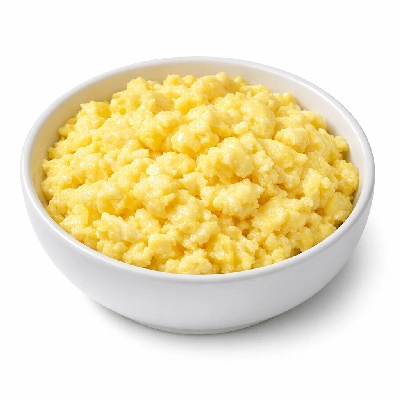
Frozen Scrambled Egg Mixture
100 g131 Cal7.5 g13.1 g5.6 g
Milk Whole, 3.25% Milkfat, without Added Vitamin a and D

Similar Food

  • Frozen Scrambled Egg Mixture

    Frozen Scrambled Egg MixtureB

    100 g131 Cal

  • Milk Whole, 3.25% Milkfat, without Added Vitamin a and D

    Milk Whole, 3.25% Milkfat, without Added Vitamin a and DC

    1 cup149 Cal

  • Milk Filled Fluid with Blend of Hydrogenated Vegetable Oils

    Milk Filled Fluid with Blend of Hydrogenated Vegetable OilsB

    1 cup154 Cal

  • Fluid Milk, Producer, 3.7% Milkfat

    Fluid Milk, Producer, 3.7% MilkfatC

    1 cup156 Cal

  • Fresh, Whole, Raw Goose Egg

    Fresh, Whole, Raw Goose EggA

    1 egg266 Cal

1 cup
149 Cal
11.66 g
7.69 g
7.98 g
Milk Filled Fluid with Blend of Hydrogenated Vegetable OilsMilk Filled Fluid with Blend of Hydrogenated Vegetable Oils
1 cup154 Cal11.57 g8.13 g8.44 g
Frozen Scrambled Egg Mixture
Milk Whole, 3.25% Milkfat, without Added Vitamin a and D

Related Blogs

Sodium is the main extracellular cation in the body and is required for many physiologic processes.

Does Salt Break a Fast? Is Salt the Same as Electrolytes?

May 26, 2026

The daily recommended intake for caffeine is 400 mg, which is approximately 4 cups of brewed coffee.

Does Coffee Break a Fast? Can You Drink Coffee While Fasting?

May 20, 2026

stone fruit antioxidants and potential anti cancer properties in diet

What Is Stone Fruit? Why Should You Eat It Even in Winter?

May 15, 2026