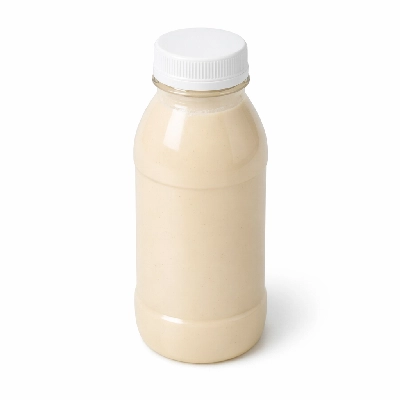
Abbott Ensure, Ready-to-drink Nutritional Shake
Source of Calories
Nutrition Facts
| Nutrient | Amount | % Daily Value |
|---|---|---|
| Total Carbohydrates | 42.88 g | 16% |
| Net Carbohydrates | 42.88 g | 17% |
| Sugars | 24.64 g | 70% |
| Added Sugars | No data | - |
| Dietary Fiber | 0 g | 0% |
| Protein | 9.65 g | 19% |
| Total Fat | 6.43 g | 8% |
| Saturated Fat | 1.07 g | 5% |
| Monounsaturated Fat | 2.14 g | - |
| Polyunsaturated Fat | 3.22 g | - |
| Trans Fat | 0 g | 0% |
| Cholesterol | 5.08 mg | 2% |
| Vitamins | ||
| Vitamin A | 401.57 mcg | 45% |
| Vitamin C | 32.26 mg | 36% |
| Vitamin D | 2.67 mcg | 13% |
| Minerals | ||
| Sodium | 213.36 mg | 9% |
| Potassium | 396.24 mg | 8% |
| Calcium | 322.58 mg | 25% |
| Magnesium | 106.68 mg | 25% |
| Iron | 4.83 mg | 27% |
| Zinc | 4.01 mg | 36% |
% DV refers to how much a single serving of an individually packaged food or supplement contributes nutritionally to your daily diet, based on a 2,000-calorie-a-day diet. Generally, having 5% DV or less of a nutrient per serving is considered low, and 20% DV or more of a nutrient per serving is considered high.
Fat Composition
The suggested total fat consumption should be limited to 30% of total energy intake or less. The type of fat consumed should primarily be unsaturated fatty acids, with no more than 10% of total energy intake coming from saturated fatty acids (about 200 calories on a 2000-calorie diet) and no more than 1% of total energy intake coming from trans-fatty acids.
Vitamin Coverage
Vitamin A
45%
Vitamin C
36%
Vitamin D
13%
Vitamin E
24%
Vitamin K
18%
Vitamin B1
33%
Vitamin B2
35%
Vitamin B3
33%
Vitamin B5
54%
Vitamin B6
32%
Vitamin B7
-
Vitamin B9
46%
Vitamin B12
67%
There are 13 essential vitamins required for the body to work properly, which are categorised into two categories: fat-soluble and water-soluble vitamins. Vitamins have a Recommended Dietary Allowance (RDA), provided by the Dietary Reference Intakes (DRIs), which vary by age and sex. The %DV indicates how much one serving contributes to the average recommended daily intake.
Mineral Coverage
Calcium
25%
Iron
27%
Magnesium
25%
Phosphorus
21%
Potassium
8%
Sodium
9%
Zinc
36%
Copper
60%
Manganese
-
Selenium
34%
Minerals are micronutrients, of which 13 of them are essential to the human body. The Recommended Dietary Allowance includes Calcium (1,300 mg/d), Phosphorus (1,250 mg/d), Potassium (4,700 mg/d), Sodium (2,300 mg/d), Chloride (1,500 mg/d), Magnesium (420 mg/d), Iron (18 mg/d), Zinc (11 mg/d), Copper (0.9 mg/d), Selenium (55 mcg/d), Molybdenum (45 mcg/d), Manganese (2.3 mg/d) and Iodine (150 mcg/d).
The data provided by eato.health is for informational purposes only and should not be considered medical advice. Please consult your physician before beginning any diet or nutrition plan.
About
How Long to Burn Off 267 Calories?
*Based on this person: 25-year-old female, 5'7", 144 lbs

Swimming
40 min

Jogging
34 min

Cycling
35 min

Walking
1 h 3 min
The data provided by eato.health is for informational purposes only and should not be considered medical advice. Please consult your physician before beginning any diet or nutrition plan.
FAQ
The Ensure Nutrition Shake is good for those who are malnourished or experiencing involuntary weight loss. Due to its caloric density, at 267 calories.
People who have galactosemia should not be drinking Ensure Nutrition Shake. Additionally, those who have milk or soy allergy should not be consuming it as well, as those ingredients appear in the beverage. Additionally, one bottle contains 42.88 g carbs, 24.64 g sugar, 396.24 mg potassium, and multiple added minerals, and depending on your health conditions, you may want to consult with a healthcare professional.
Ensure contains a lot of liquid calories and sugar, as each bottle has 267 calories, 42.88 g carbs, and 24.64 g sugar, with 0 g fiber, which may be useful for those trying to gain weight or have a poor appetite.
Ensure may not be suitable for kidney patients, as one bottle has 396.24 mg potassium, 213.36 mg sodium, 9.65 g protein, 322.58 mg calcium, and 106.68 mg magnesium. For those with kidney disease or dialysis, might be better to consult a renal dietitian before consuming Ensure Nutrition Shake.
Yes, it is likely that weight gain can occur if you consume Ensure every day. One bottle of Ensure has 267 calories, which, once a day for a week, amounts to 1859 calories per week, which can result in about 0.24 g of weight gain per week.
📚 Health Research & Evidence About This Food
Nutritional shakes provide supplemental nutrition with balanced macronutrient profiles, offering a convenient option for individuals with appetite loss, difficulty chewing, or during recovery, as Harvard Health notes. Consumers should be mindful of potential added sugars and the risk of excessive vitamin and mineral supplementation when combining these shakes with other fortified foods, according to WebMD. The energy density and viscosity of liquid meals like Ensure can also influence satiety.
1. Substance Use Recovery and Diet: Medlineplus Medical Encyclopedia
Source: MedlinePlus
Summary: Ensure nutritional shake is a nutrition drink. During recovery from substance use, adequate nutrition may support healing by helping meet energy and nutrient needs and support overall health.
2. Supplemental Nutrition Drinks: Help or Hype? - Harvard Health
Source: Harvard Health, 2013
Summary: Nutritional shake, while offering a convenient balance of protein, carbohydrates, and fat, can be beneficial for individuals with appetite loss or difficulty eating, but consumers should be mindful of added sugars and artificial ingredients.
3. Empty Calories and Phantom Fullness: A Randomized Trial Studying the Relative Effects of Energy Density and Viscosity on Gastric Emptying Determined by Mri and Satiety.
Source: PubMed
Summary: Ensure nutritional shake, as a liquid food, would be subject to the principles of energy density and viscosity, which are explored in this study as determinants of gastric emptying and satiety.
Read More: https://pubmed.ncbi.nlm.nih.gov/27281305/
4. Vitamin Pills: Popping Too Many?
Source: WebMD
Summary: Nutritional shake, particularly vitamin-fortified protein shakes, can contribute to an excessive intake of vitamins and minerals when combined with other supplements and fortified foods, potentially exceeding the body's needs.
Read More: https://www.webmd.com/a-to-z-guides/features/vitamin-pills-popping-too-many