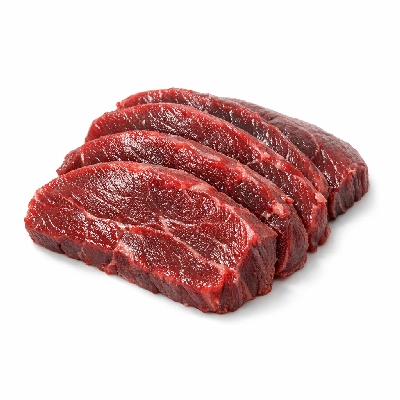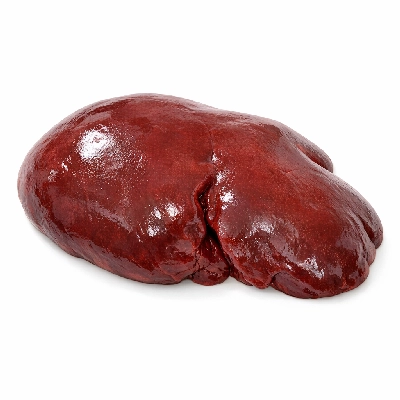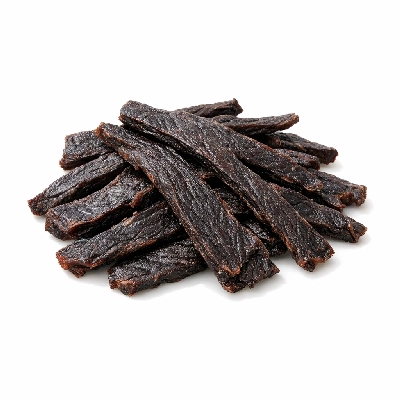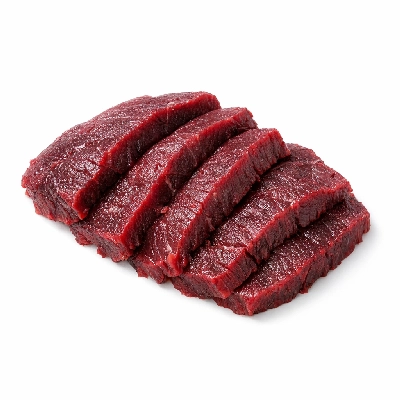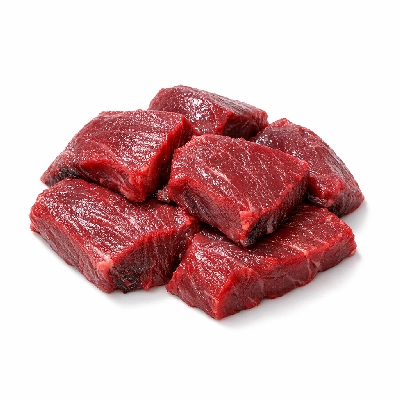
Alaska Native Seal Ringed Meat
Source of Calories
Nutrition Facts
| Nutrient | Amount | % Daily Value |
|---|---|---|
| Total Carbohydrates | 0 g | 0% |
| Net Carbohydrates | 0 g | 0% |
| Sugars | No data | - |
| Added Sugars | No data | - |
| Dietary Fiber | No data | - |
| Protein | 28.4 g | 57% |
| Total Fat | 3.2 g | 4% |
| Saturated Fat | 0.82 g | 4% |
| Monounsaturated Fat | 1.72 g | - |
| Polyunsaturated Fat | 0.06 g | - |
| Trans Fat | No data | - |
| Cholesterol | 90 mg | 30% |
| Vitamins | ||
| Vitamin A | 115.5 mcg | 13% |
| Vitamin C | No data | - |
| Vitamin D | No data | - |
| Minerals | ||
| Sodium | 110 mg | 5% |
| Potassium | No data | - |
| Calcium | 5 mg | 0% |
| Magnesium | No data | - |
| Iron | 19.6 mg | 109% |
| Zinc | No data | - |
% DV refers to how much a single serving of an individually packaged food or supplement contributes nutritionally to your daily diet, based on a 2,000-calorie-a-day diet. Generally, having 5% DV or less of a nutrient per serving is considered low, and 20% DV or more of a nutrient per serving is considered high.
Fat Composition
The suggested total fat consumption should be limited to 30% of total energy intake or less. The type of fat consumed should primarily be unsaturated fatty acids, with no more than 10% of total energy intake coming from saturated fatty acids (about 200 calories on a 2000-calorie diet) and no more than 1% of total energy intake coming from trans-fatty acids.
Vitamin Coverage
Vitamin A
13%
Vitamin C
-
Vitamin D
-
Vitamin E
-
Vitamin K
-
Vitamin B1
12%
Vitamin B2
41%
Vitamin B3
-
Vitamin B5
13%
Vitamin B6
-
Vitamin B7
-
Vitamin B9
-
Vitamin B12
-
There are 13 essential vitamins required for the body to work properly, which are categorised into two categories: fat-soluble and water-soluble vitamins. Vitamins have a Recommended Dietary Allowance (RDA), provided by the Dietary Reference Intakes (DRIs), which vary by age and sex. The %DV indicates how much one serving contributes to the average recommended daily intake.
Mineral Coverage
Calcium
0.4%
Iron
109%
Magnesium
-
Phosphorus
19%
Potassium
-
Sodium
5%
Zinc
-
Copper
-
Manganese
-
Selenium
-
Minerals are micronutrients, of which 13 of them are essential to the human body. The Recommended Dietary Allowance includes Calcium (1,300 mg/d), Phosphorus (1,250 mg/d), Potassium (4,700 mg/d), Sodium (2,300 mg/d), Chloride (1,500 mg/d), Magnesium (420 mg/d), Iron (18 mg/d), Zinc (11 mg/d), Copper (0.9 mg/d), Selenium (55 mcg/d), Molybdenum (45 mcg/d), Manganese (2.3 mg/d) and Iodine (150 mcg/d).
The data provided by eato.health is for informational purposes only and should not be considered medical advice. Please consult your physician before beginning any diet or nutrition plan.
About
How Long to Burn Off 142 Calories?
*Based on this person: 25-year-old female, 5'7", 144 lbs

Swimming
21 min

Jogging
18 min

Cycling
19 min

Walking
34 min
The data provided by eato.health is for informational purposes only and should not be considered medical advice. Please consult your physician before beginning any diet or nutrition plan.
FAQ
Yes, Alaska Native seal ringed meat can be a nutrient-dense food. Per 100 g, it provides 142 calories, 28.4 g protein, 3.2 g fat, and 0 g carbs, so it is very high in protein without being especially fatty. Higher protein meals can help increase fullness and reduce overeating.
Yes, Alaska Native seal ringed meat is high in protein. Per 100g, there is 28.4g of protein, which is higher than many meats for a gram-per-gram basis.
Not really. Per 100g, the seal ringed meat only has about 3.2g fat, which is relatively low. And generally, seal oil and marine mammals meat depends on their fatty acid profile rather than total fat to determine the impacts on LDL cholesterol, so it is unlike that when consumed in moderation, seal ringed meat will increase cholesterol to a drastic level.
Seal ringed meat has a high potential to contain mercury. In fact, there is about 0.73 ppm of mercury in the meat, as found in a review in 2022. If you are pregnant, or a child, this may be something that you might want to consider before eating seal ringed meat.
📚 Health Research & Evidence About This Food
Seal ringed meat consumption contributes to high levels of perfluoroalkyl substances (PFASs) in adults, exceeding immunotoxic thresholds and posing risks for immune system adverse events, particularly in Arctic communities consuming marine mammal muscle. Additionally, ringed seals can be reservoirs for antimicrobial-resistant *E. coli* and *Salmonella*, raising public health concerns for communities consuming seal products, with specific resistance to beta-lactams and quinolones observed in *E. coli* isolates and multi-drug resistance in *Salmonella* isolates. Separately, other seal species like spotted seal, via their blubber, are rich in omega-3 fatty acids, and seal liver is an exceptional source of vitamin A, though raw and fried liver can exceed recommended upper limits; sheefish muscle is also rich in omega-3 fatty acids.
1. Assessment of Exposure to Perfluorinated Industrial Substances and Risk of Immune Suppression in Greenland and Its Global Context: A Mixed-Methods Study.
Source: PubMed, 2015
Summary: Ringed seal meat consumption contributes to high levels of perfluoroalkyl substances (PFASs) in Inuit adults, exceeding immunotoxic thresholds and posing risks for immune system adverse events.
Read More: https://pubmed.ncbi.nlm.nih.gov/37437998/
2. Organic Nutrients and Contaminants in Subsistence Species of Alaska: Concentrations and Relationship to Food Preparation Method - Pmc
Source: NCBI
Summary: Seal meat is a traditional marine mammal food. Related research on spotted seal tissues found that some seal-derived foods can provide substantial nutrients, including omega-3 fatty acids and vitamin A, although these levels vary by tissue type and preparation method.
Read More: https://www.ncbi.nlm.nih.gov/pmc/articles/PMC2782891/
3. Occurrence and Antimicrobial Resistance of Salmonella Species and Potentially Pathogenic Escherichia Coli in Free‐Living Seals of Canadian Atlantic and Eastern Arctic Waters
Source: Wiley Online Library
Summary: Ringed seals can be reservoirs or vectors for antimicrobial-resistant and virulent *E. coli* and *Salmonella* species, posing a potential public health concern for communities consuming seal products.
Read More: https://onlinelibrary.wiley.com/doi/full/10.1111/zph.13064