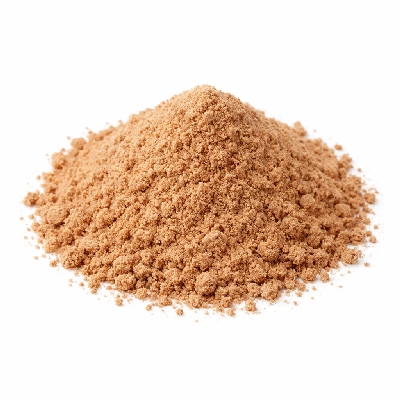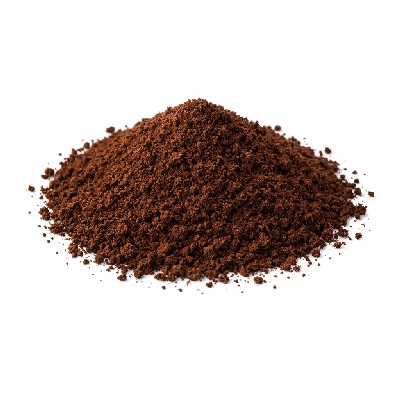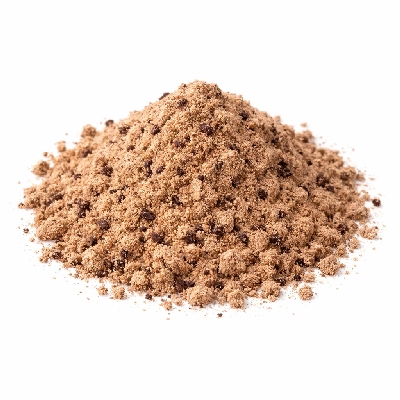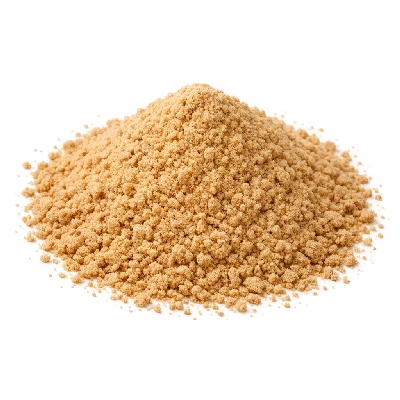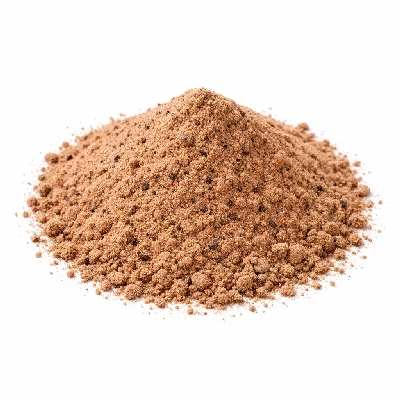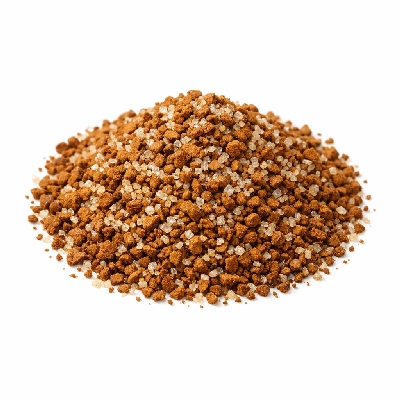
Powder French-flavor Instant Coffee with Sugar
Source of Calories
Nutrition Facts
| Nutrient | Amount | % Daily Value |
|---|---|---|
| Total Carbohydrates | 13.13 g | 5% |
| Net Carbohydrates | 13.13 g | 5% |
| Sugars | 8.35 g | 24% |
| Added Sugars | No data | - |
| Dietary Fiber | 0 g | 0% |
| Protein | 0.9 g | 2% |
| Total Fat | 4.53 g | 6% |
| Saturated Fat | 1 g | 5% |
| Monounsaturated Fat | 2.8 g | - |
| Polyunsaturated Fat | 0.48 g | - |
| Trans Fat | No data | - |
| Cholesterol | 0 mg | 0% |
| Vitamins | ||
| Vitamin A | 0 mcg | 0% |
| Vitamin C | 0 mg | 0% |
| Vitamin D | 0 mcg | 0% |
| Minerals | ||
| Sodium | 111.4 mg | 5% |
| Potassium | 236.8 mg | 5% |
| Calcium | 7.2 mg | 1% |
| Magnesium | 5.2 mg | 1% |
| Iron | 0.07 mg | 0% |
| Zinc | 0.01 mg | 0% |
% DV refers to how much a single serving of an individually packaged food or supplement contributes nutritionally to your daily diet, based on a 2,000-calorie-a-day diet. Generally, having 5% DV or less of a nutrient per serving is considered low, and 20% DV or more of a nutrient per serving is considered high.
Fat Composition
The suggested total fat consumption should be limited to 30% of total energy intake or less. The type of fat consumed should primarily be unsaturated fatty acids, with no more than 10% of total energy intake coming from saturated fatty acids (about 200 calories on a 2000-calorie diet) and no more than 1% of total energy intake coming from trans-fatty acids.
Vitamin Coverage
Vitamin A
0%
Vitamin C
0%
Vitamin D
0%
Vitamin E
2%
Vitamin K
1%
Vitamin B1
0%
Vitamin B2
0.3%
Vitamin B3
7%
Vitamin B5
0%
Vitamin B6
0%
Vitamin B7
-
Vitamin B9
-
Vitamin B12
0%
There are 13 essential vitamins required for the body to work properly, which are categorised into two categories: fat-soluble and water-soluble vitamins. Vitamins have a Recommended Dietary Allowance (RDA), provided by the Dietary Reference Intakes (DRIs), which vary by age and sex. The %DV indicates how much one serving contributes to the average recommended daily intake.
Mineral Coverage
Calcium
0.6%
Iron
0.4%
Magnesium
1%
Phosphorus
6%
Potassium
5%
Sodium
5%
Zinc
0.1%
Copper
0.5%
Manganese
1%
Selenium
0.5%
Minerals are micronutrients, of which 13 of them are essential to the human body. The Recommended Dietary Allowance includes Calcium (1,300 mg/d), Phosphorus (1,250 mg/d), Potassium (4,700 mg/d), Sodium (2,300 mg/d), Chloride (1,500 mg/d), Magnesium (420 mg/d), Iron (18 mg/d), Zinc (11 mg/d), Copper (0.9 mg/d), Selenium (55 mcg/d), Molybdenum (45 mcg/d), Manganese (2.3 mg/d) and Iodine (150 mcg/d).
The data provided by eato.health is for informational purposes only and should not be considered medical advice. Please consult your physician before beginning any diet or nutrition plan.
About
How Long to Burn Off 97 Calories?
*Based on this person: 25-year-old female, 5'7", 144 lbs

Swimming
15 min

Jogging
13 min

Cycling
13 min

Walking
23 min
The data provided by eato.health is for informational purposes only and should not be considered medical advice. Please consult your physician before beginning any diet or nutrition plan.
📚 Health Research & Evidence About This Food
Instant coffee's impact on glucose and non-esterified fatty acid metabolism is significantly modulated by genetic factors, specifically the CYP1A2 rs762551 single nucleotide polymorphism, leading to varying effects on postprandial glucose depending on an individual's metabolic profile, according to the British Journal of Nutrition. Caffeine in coffee can lower insulin sensitivity in individuals with type 2 diabetes by raising stress hormones like epinephrine, as WebMD notes, and may elevate blood pressure by stimulating the nervous system. Additionally, the addition of sugar and non-dairy creamer to instant coffee can influence the rate and peak concentration of beneficial phenolic acids in plasma without changing the total amount absorbed.
1. Type 2 Diabetes and Caffeine: The Truth About Blood Sugar
Source: WebMD
Summary: Caffeine can lower insulin sensitivity in individuals with type 2 diabetes, potentially making blood sugar management more challenging.
Read More: https://www.webmd.com/diabetes/diabetes-and-caffeine
2. Coffee and Your Blood Pressure - Harvard Health
Source: Harvard Health, 2014
Summary: A study involving volunteers found that a triple espresso significantly elevated blood pressure readings.
Read More: https://www.health.harvard.edu/heart-health/coffee_and_your_blood_pressure
3. Postprandial Glycaemic and Lipaemic Responses to Chronic Coffee Consumption May Be Modulated by Cyp1a2 Polymorphisms
Source: Cambridge University Press
Summary: The CYP1A2 rs762551 single nucleotide polymorphism significantly modulates instant coffee's impact on glucose and non-esterified fatty acid metabolism, with 'fast' metabolisers showing an increase in postprandial glucose and enhanced non-esterified fatty acid suppression, while 'slow' metabolisers displayed a decrease in postprandial glucose and impaired non-esterified fatty acid suppression.
4. Nondairy Creamer, but Not Milk, Delays the Appearance of Coffee Phenolic Acid Equivalents in Human Plasma.
Source: PubMed
Summary: The addition of sugar and nondairy creamer to instant coffee significantly lowered the maximum plasma concentration for caffeic acid and isoferulic acid, and prolonged the time to reach maximum concentration for ferulic acid and isoferulic acid, compared to black instant coffee.
Read More: https://pubmed.ncbi.nlm.nih.gov/20007338/
5. Up to Five Cups of Coffee a Day May Benefit Heart Health
Source: Harvard T.H. Chan School of Public Health, 2026
Summary: Moderate coffee intake may have cardiovascular benefits, but added sugar should be limited.
Read More: https://hsph.harvard.edu/news/up-to-five-cups-of-coffee-a-day-may-benefit-heart-health/