Alaska Native
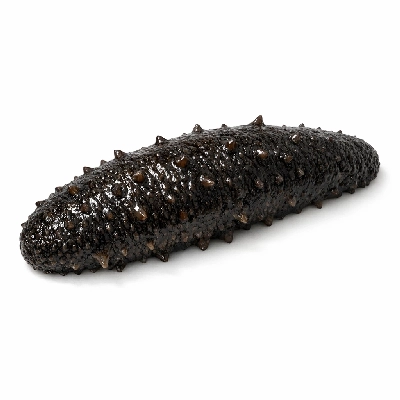
Alaska Native Sea Cucumber Yane
Source of Calories
Nutrition Facts
| Nutrient | Amount | % Daily Value |
|---|---|---|
| Total Carbohydrates | 0 g | 0% |
| Net Carbohydrates | 0 g | 0% |
| Sugars | No data | - |
| Added Sugars | No data | - |
| Dietary Fiber | No data | - |
| Protein | 13 g | 26% |
| Total Fat | 0.4 g | 1% |
| Saturated Fat | No data | - |
| Monounsaturated Fat | No data | - |
| Polyunsaturated Fat | No data | - |
| Trans Fat | No data | - |
| Cholesterol | No data | - |
| Vitamins | ||
| Vitamin A | 93 mcg | 10% |
| Vitamin C | No data | - |
| Vitamin D | No data | - |
| Minerals | ||
| Sodium | No data | - |
| Potassium | No data | - |
| Calcium | 30 mg | 2% |
| Magnesium | No data | - |
| Iron | 0.6 mg | 3% |
| Zinc | No data | - |
% DV refers to how much a single serving of an individually packaged food or supplement contributes nutritionally to your daily diet, based on a 2,000-calorie-a-day diet. Generally, having 5% DV or less of a nutrient per serving is considered low, and 20% DV or more of a nutrient per serving is considered high.
Vitamin Coverage
Vitamin A
10%
Vitamin C
-
Vitamin D
-
Vitamin E
-
Vitamin K
-
Vitamin B1
4%
Vitamin B2
72%
Vitamin B3
20%
Vitamin B5
-
Vitamin B6
-
Vitamin B7
-
Vitamin B9
-
Vitamin B12
-
There are 13 essential vitamins required for the body to work properly, which are categorised into two categories: fat-soluble and water-soluble vitamins. Vitamins have a Recommended Dietary Allowance (RDA), provided by the Dietary Reference Intakes (DRIs), which vary by age and sex. The %DV indicates how much one serving contributes to the average recommended daily intake.
Mineral Coverage
Calcium
2%
Iron
3%
Magnesium
-
Phosphorus
-
Potassium
-
Sodium
-
Zinc
-
Copper
-
Manganese
-
Selenium
-
Minerals are micronutrients, of which 13 of them are essential to the human body. The Recommended Dietary Allowance includes Calcium (1,300 mg/d), Phosphorus (1,250 mg/d), Potassium (4,700 mg/d), Sodium (2,300 mg/d), Chloride (1,500 mg/d), Magnesium (420 mg/d), Iron (18 mg/d), Zinc (11 mg/d), Copper (0.9 mg/d), Selenium (55 mcg/d), Molybdenum (45 mcg/d), Manganese (2.3 mg/d) and Iodine (150 mcg/d).
The data provided by eato.health is for informational purposes only and should not be considered medical advice. Please consult your physician before beginning any diet or nutrition plan.
About
How Long to Burn Off 56 Calories?
*Based on this person: 25-year-old female, 5'7", 144 lbs

Swimming
9 min

Jogging
8 min

Cycling
8 min

Walking
14 min
The data provided by eato.health is for informational purposes only and should not be considered medical advice. Please consult your physician before beginning any diet or nutrition plan.
📚 Health Research & Evidence About This Food
Sea cucumber, as a type of seafood, provides high-quality protein and contains protein hydrolysates that exhibit significant antioxidant activities, including radical scavenging and metal chelation. Its body wall is rich in diverse collagens and other structural proteins, such as fibrillins, laminins, and fibronectins, which contribute to its unique texture. Specific extracts, such as TBL-12, have demonstrated anti-cancer effects by suppressing prostate cancer cell proliferation and metastasis through mechanisms like blocking the p38 MAPK pathway, inducing intrinsic caspase apoptosis, and inhibiting angiogenic factor secretion, according to PubMed.
1. Sea Cucumber Extract Tbl-12 Inhibits the Proliferation, Migration, and Invasion of Human Prostate Cancer Cells Through the P38 Mitogen-Activated Protein Kinase and Intrinsic Caspase Apoptosis Pathway.
Source: PubMed
Summary: Sea cucumber extract TBL-12 significantly suppresses prostate cancer cell proliferation and metastasis by blocking the p38 MAPK pathway, inducing intrinsic caspase apoptosis, and inhibiting angiogenic factor secretion.
Read More: https://pubmed.ncbi.nlm.nih.gov/30889629/
2. Biomaterials and Bioactive Natural Products From Marine Invertebrates: From Basic Research to Innovative Applications.
Source: PubMed
Summary: Marine invertebrates, including sea cucumbers, are significant sources of biomaterials and bioactive natural products with diverse applications in pharmaceuticals, nutraceuticals, cosmetics, and antibiotics.
Read More: https://pubmed.ncbi.nlm.nih.gov/35447892/
3. Exploring the Complexities of Seafood: From Benefits to Contaminants.
Source: PubMed
Summary: Seafood is globally recognized as a crucial dietary component, providing high-quality protein, omega-3 fatty acids, and essential vitamins and minerals that contribute to overall health and disease prevention.
Read More: https://pubmed.ncbi.nlm.nih.gov/40361542/
4. Investigation of Structural Proteins in Sea Cucumber (Apostichopus Japonicus) Body Wall
Source: Nature, 2020
Summary: The body wall of the sea cucumber, *Apostichopus japonicus*, contains many identified structural proteins, including diverse collagens, ECM glycoproteins, muscle proteins, and proteases, which collectively determine its unique texture, quality, and susceptibility to autolysis.
Read More: https://www.nature.com/articles/s41598-020-75580-x
5. Antioxidant Potential and Physicochemical Properties of Protein Hydrolysates From Body Parts of North Atlantic Sea Cucumber (Cucumaria Frondosa)
Source: SpringerLink
Summary: Protein hydrolysates derived from the body wall, processing by-product flower, and internal organs of the North Atlantic sea cucumber (*Cucumaria frondosa*) exhibit significant antioxidant activities and desirable functional properties, such as high solubility and enhanced water holding capacity.
Read More: https://link.springer.com/article/10.1186/s43014-020-00049-3