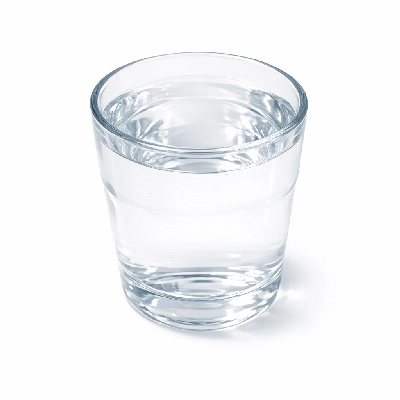
Well Tap Water
Source of Calories
Nutrition Facts
| Nutrient | Amount | % Daily Value |
|---|---|---|
| Total Carbohydrates | 0 g | 0% |
| Net Carbohydrates | 0 g | 0% |
| Sugars | No data | - |
| Added Sugars | No data | - |
| Dietary Fiber | 0 g | 0% |
| Protein | 0 g | 0% |
| Total Fat | 0 g | 0% |
| Saturated Fat | No data | - |
| Monounsaturated Fat | No data | - |
| Polyunsaturated Fat | No data | - |
| Trans Fat | 0 g | 0% |
| Cholesterol | No data | - |
| Vitamins | ||
| Vitamin A | No data | - |
| Vitamin C | No data | - |
| Vitamin D | No data | - |
| Minerals | ||
| Sodium | 1.48 mg | 0% |
| Potassium | 0 mg | 0% |
| Calcium | 0.89 mg | 0% |
| Magnesium | 0.3 mg | 0% |
| Iron | 0 mg | 0% |
| Zinc | 0 mg | 0% |
% DV refers to how much a single serving of an individually packaged food or supplement contributes nutritionally to your daily diet, based on a 2,000-calorie-a-day diet. Generally, having 5% DV or less of a nutrient per serving is considered low, and 20% DV or more of a nutrient per serving is considered high.
Mineral Coverage
Calcium
0.1%
Iron
0%
Magnesium
0.1%
Phosphorus
0%
Potassium
0%
Sodium
0.1%
Zinc
0%
Copper
0.5%
Manganese
0%
Selenium
-
Minerals are micronutrients, of which 13 of them are essential to the human body. The Recommended Dietary Allowance includes Calcium (1,300 mg/d), Phosphorus (1,250 mg/d), Potassium (4,700 mg/d), Sodium (2,300 mg/d), Chloride (1,500 mg/d), Magnesium (420 mg/d), Iron (18 mg/d), Zinc (11 mg/d), Copper (0.9 mg/d), Selenium (55 mcg/d), Molybdenum (45 mcg/d), Manganese (2.3 mg/d) and Iodine (150 mcg/d).
The data provided by eato.health is for informational purposes only and should not be considered medical advice. Please consult your physician before beginning any diet or nutrition plan.
About
How Long to Burn Off 0 Calories?
*Based on this person: 25-year-old female, 5'7", 144 lbs

Swimming
0 min

Jogging
0 min

Cycling
0 min

Walking
0 min
The data provided by eato.health is for informational purposes only and should not be considered medical advice. Please consult your physician before beginning any diet or nutrition plan.
FAQ
Not always. Tap water simply means water that comes out of a tap. It may come from a public water system, a private well, or another treated supply. Well water usually means groundwater drawn from a private or community well.
Yes, tap well water can be okay to drink if it has been tested and confirmed safe. You cannot reliably tell whether well water is safe just by looking, smelling, or tasting it.
Boiling well water can make it safer only if the problem is germs. The EPA says boiling water is sufficient to kill pathogenic bacteria, viruses, and protozoa, and recommends bringing water to a rolling boil for at least 1 minute, or 3 minutes at elevations above 5,000 feet.
Food Health: Research and Evidence
Scientific research and expert reviews suggest that certain components in infant formula, such as specific fats and nutrients, can contribute to better cardiovascular health and improved blood sugar control in infants.
1. Food Health: Research and Evidence
Source: SpringerLink, 2024
Summary: Scientific research and expert reviews suggest that certain components in infant formula, such as specific fats and nutrients, can contribute to better cardiovascular health and improved blood sugar control in infants.
Read More: https://link.springer.com/article/10.1007/s13668-024-00561-9
2. Food Health: Research and Evidence
Source: SpringerLink, 2024
Summary: Scientific research and expert reviews suggest that certain components in infant formula, such as specific fats and nutrients, can contribute to better cardiovascular health and improved blood sugar control in infants.
Read More: https://link.springer.com/article/10.1007/s13668-024-00561-9