Just like other exercise trends that have come and gone, YouTube is full of “7 minutes a day” routines, and practicing Tai Chi walking has become one of those things you cannot scroll past online on TikTok or other forms of social media. However, like many other diet trends or exercise hacks. Tai Chi walking has been marketed as the ultimate weight loss hack. But what does the science really say about Tai Chi walking for weight loss?
What Is Tai Chi?
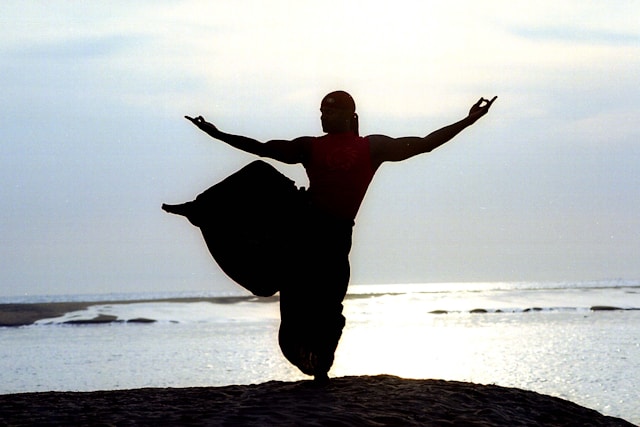
Historically, Tai Chi originated as a martial art in China, developed over centuries as a combat system built on structural alignment, weight transfer, and the ability to redirect force. On the other hand, modern Tai Chi is a flowing sequence of slow movements performed with an emphasis on posture, relaxed muscles, and the mind-body connection. This ancient Chinese practice is said to offer many benefits other than physical, including that of mental health benefits.
What is Tai Chi Walking?
Tai Chi walking incorporates the aspects of slow movements, posture, and mind-body connection into slow, deliberate, mindful walking. In Tai Chi walking, you consciously shift your weight fully onto one leg, empty the other completely, place it with control, and then transfer in a controlled movement.
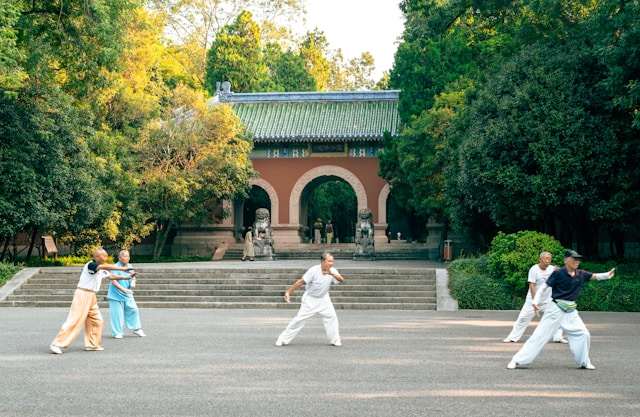
In Tai Chi, word “empty” can be illustrated in this way: before your right foot moves, it should carry no weight at all. Splitting your weight between both feet is called double weighting, and traditional Tai Chi treats it as a fault because it leaves you unable to move freely in any direction. Avoiding it is what makes the practice a balance drill rather than just slow walking. Consequently, Tai Chi can also be described as a form of moving medication, as it drastically slows down your actions into one that is focused on relaxation and controlled steps.
Chi Walking vs Tai Chi Walking
Although mentioned in conjunction with Tai Chi walking, “ChiWalking” is a specific trademarked fitness program originally developed by coaches Danny and Katherine Dreyer, who also developed ChiRunning. It borrows Tai Chi principles of the alignment and mindfulness combination and applies them to normal-speed fitness walking with arm movements and a forward lean.
Tai Chi Walking vs Regular Walking
| Regular walking | Tai Chi walking | |
|---|---|---|
| Attention | Largely automatic, often while thinking about something else | Full attention on each step and posture |
| Speed | 3 to 4 mph typical | Very slow, often under 1 mph |
| Weight transfer | Momentum-driven, both feet loaded during much of the stride | Deliberate, one foot fully empty before it moves |
| Balance demand | Low | High, since you spend long periods on one leg |
| Intensity | Moderate | Light to moderate |
| Best for | Cardiovascular fitness, calorie burn | Balance, joint mobility, body awareness, stress reduction |
How to Do Tai Chi Walking
There are 3 main components in Tai Chi walking: forward walking, backward walking, and a continuous flow. This is meant to be a low-impact exercise, where most people can be able to incorporate in their regular walking routines or exercises, as there is a heavy focus on breathing and rest.
1. Forward Walking
When starting with Tai Chi walking, give yourself about six feet (or roughly 2 meters) of clear floor. Ensure that there is nothing on the floor. You also do not need to wear any shoes, use any equipment, or wear any other special garments.
- Firstly, ensure you have the correct posture. Stand with feet hip-width, knees soft, spine tall, shoulders down, crown of the head lightly lifted. Let your arms hang on your side without any tension.
- Next, shift your weight completely. Move all your weight onto the right leg. The left foot should be empty or feel light, light enough to lift a sheet of paper with your toe.
- Moving on, you should step with the heels. In order to do that, extend the left foot forward and touch the heel to the ground with no weight on it yet.
- After stepping with your heel, you should “roll and transfer” the energy from the heel to your other foot. To do that, slowly roll from heel through the whole foot as you shift weight forward onto the left leg over three or four seconds.
- Finally, “empty” the back foot. Once the left leg carries everything, including the weight and tension, the right foot becomes empty and is free to step.
- Repeat the 5 steps, and ensure that your breath is steady. Breathe naturally, ideally exhaling as you transfer weight.
Aim to take about three to four seconds per step. If you feel like you are wobbling or losing your balance, it means that you are on the right track, as that instability is the balance system getting trained.
2. Backward Walking
Once you have mastered the forward walking Tai Chi moves, add backward walking. Simply put, it is the reverse sequence: shift fully onto one leg, extend the other foot behind you, touch down with the toe first rather than the heel, then roll back through the foot as you transfer.
Backward walking is generally harder for most people because you cannot see where you are going and your body has fewer “automatic” patterns for it. To ensure safety, it is best to do it near a wall or counter you can touch.
3. Building a Continuous Flow
Lastly, the goal over a few weeks is a continuous flow rather than a series of separate steps from your right leg to your left leg. Instead, you want to create an unbroken sequence where your move flows into ont another. Your forward steps should link into a turn, the turn links into backward steps, and the whole practice becomes.
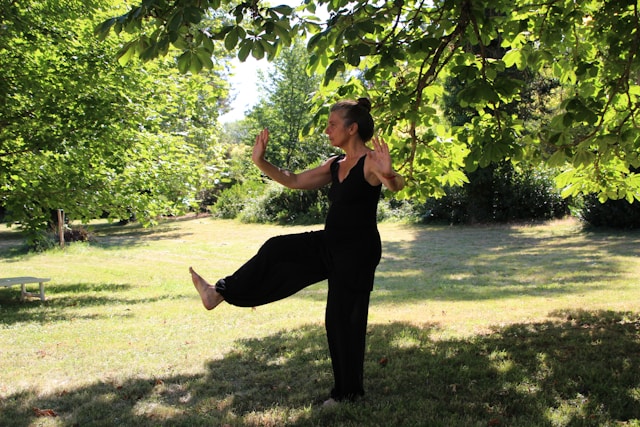
Once you have been accustomed to the continueous flow, you can also add gentle arm movements. Adding gentle arm movements is the last layer, and should not be rushed to it.
Does Tai Chi Walking for Weight Loss Really Work?
Well, unfortunately, although Tai Chi produces very modest weight loss on its own, it is not the most efficient method for weight loss.
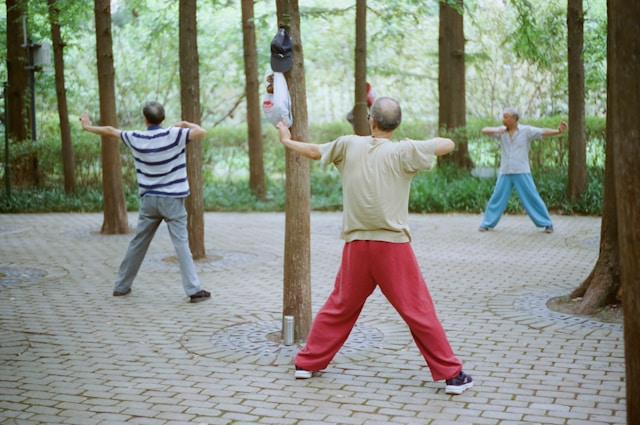
The most relevant trial is a cluster randomized controlled trial from Hong Kong that put 374 middle-aged, physically inactive adults into 12 weeks of Tai Chi, self-paced walking, or no exercise, training 45 minutes a day, five days a week. The Tai Chi group lost an average of 0.50 kg of body weight and 0.47 kg of fat mass. The walking group lost slightly more, at 0.76 kg and 0.59 kg. Both groups showed waist circumference reductions versus control, at 3.7 cm for Tai Chi and 4.1 cm for walking [1].
A larger and more encouraging trial published in the Annals of Internal Medicine randomized 543 adults aged 50 and over with central obesity into Tai Chi, conventional exercise (brisk walking plus strength training), or no intervention for 12 weeks. Both exercise groups reduced waist circumference relative to control, and the authors concluded Tai Chi is an effective approach for reducing waist circumference in this population and can serve as an alternative to conventional exercise [2].
How Many Calories Does Tai Chi Walking Burn?
The Compendium of Physical Activities scores general Tai Chi at roughly 3.0 METs (Metabolic Equivalent of Task), which is moderate intensity, similar to a leisurely walk. Run that through the standard equation and a half hour lands somewhere around 80 to 150 calories depending on your body weight and how deeply you sink into your stances.
Direct metabolic testing of a low-intensity Tai Chi found a mean energy expenditure of about 1.6 kcal per minute. In other words, you will burn closer to 50 calories in half an hour [3]. Alternatively, a study of Tai Chi qigong in older practitioners measured roughly 3 METs per movement with about 60 kcal per set [4].
How to Burn More Calories With Tai Chi Walking for Weight Loss
If drastic weight loss or obvious weight is your actual goal, Tai Chi walking alone will not get you there quickly without any other forms of exercise or diets. Instead, here is how to raise its effectiveness:
- When doing Tai Chi walking, sink lower to the ground, using your quad muscles more. Deeper stances dramatically increase the load on the legs without any change in speed or impact.
- Go slower, not faster, in order to control your descent and increase mind-muscle connection. Controlling a slower descent demands more from the muscles than rushing through it.
- Extend the session of your Tai Chi walking. Instead of doing it for 10 minutes, increase it to 30 or 40 minutes.
- Add metabolic intervals to keep up your heart rate. Alternate five minutes of Tai Chi walking with three minutes of brisk regular walking can increase your heart rate. However, ensure that you still maintain an upper body posture and practice mindfulness.
- Lastly, pair it with clean eating, or a stable diet. No exercise at this intensity outruns a calorie surplus. Additionally, refrain from crash diets like the water fasting, or even dry fasting unless stipulated by a medical professional.
4 Health Benefits of Tai Chi Walking Beyond Weight
There are many benefits assocated to Tai Chi and, in turn, Tai Chi walking. Tai Chi walking reliably lowers perceived stress and cortisol, and lower stress is associated with less emotional eating. Additionally, spending long stretches supported on one leg, with full attention on where your weight sits, is close to a perfect balance drill. It trains the ankle and hip stabilizers, sharpens proprioception, and strengthens the mind-body connection between intention and movement. It is also low impact, so joints tolerate it well.
1. Fall Prevention
Twice-weekly therapeutic tai ji quan classes over 24 weeks reduced falls by 58% compared with a stretching control and by 31 percent compared with a proven multimodal exercise program [5]. A follow-up analysis found the tai ji quan intervention also significantly reduced injurious falls [6].
2. Joint Mobility and Pain

For anyone with joint concerns, doing low impact excerise, or at least having an option for that can be life-changing. A 52-week randomized trial at Tufts compared Tai Chi with standard physical therapy in 204 people with symptomatic knee osteoarthritis and found Tai Chi produced comparable improvement in pain and function [7] for little to no costs.
3. Mental Health and Cognitive Benefits
A systematic review and meta-analysis of 40 studies covering 3,817 participants found regular Tai Chi significantly improved psychological well-being, with reductions in stress, anxiety, and depression, and improved mood in both healthy people and those with chronic conditions [8].
4. Stress Reduction

Slow, coordinated breathing during practice engages the parasympathetic nervous system, which is the physiological side of what people describe as feeling calmer afterward. Cortisol reductions have been observed in several trials, including a randomized trial of 12-week Tai Chi training in young adults with subthreshold depression [10].
Final Words: Is Tai Chi Walking for Weight Loss Effective?
Yes! Tai Chi walking can provide modest weight loss, while also having other benefits like fall prevention and a reduction of stress levels. If you want to lose weight, use Tai Chiwalking as your foundation rather than your entire plan: build the daily habit, then layer in brisk walking intervals, deeper stances, longer sessions, and dietary changes. If you want better balance, more joint mobility, and a calmer head, it may be one of the best returns on 20 minutes a day available, and it costs nothing.
Alternatively, you can use Eato‘s calorie counter to track your nutrition, plan meals, and calculate your daily calorie intake so that you can effectively achieve your health goals safely in conjunction with Tai Chi walking! Try it today for free!

Smarter Nutrition Tracking
Track calories and over 100 other nutrients all in one place.
Download Eato For Free