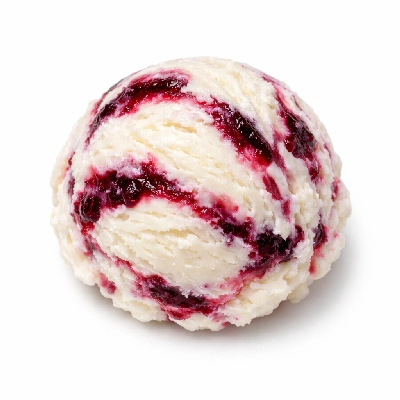
Creamy Soft Serve Ice Cream
Source of Calories
Nutrition Facts
| Nutrient | Amount | % Daily Value |
|---|---|---|
| Total Carbohydrates | 279.82 g | 102% |
| Net Carbohydrates | 279.82 g | 113% |
| Sugars | 279.82 g | 799% |
| Added Sugars | 219.09 g | 438% |
| Dietary Fiber | 0 g | 0% |
| Protein | 35.88 g | 72% |
| Total Fat | 199.47 g | 256% |
| Saturated Fat | 136.88 g | 684% |
| Monounsaturated Fat | 11.01 g | - |
| Polyunsaturated Fat | 1.53 g | - |
| Trans Fat | 0 g | 0% |
| Cholesterol | 794.22 mg | 265% |
| Vitamins | ||
| Vitamin A | 2256.41 mcg | 251% |
| Vitamin C | 11.79 mg | 13% |
| Vitamin D | 0.68 mcg | 3% |
| Minerals | ||
| Sodium | 1318.19 mg | 57% |
| Potassium | 1695.38 mg | 36% |
| Calcium | 1929.49 mg | 148% |
| Magnesium | 118.96 mg | 28% |
| Iron | 0.88 mg | 5% |
| Zinc | 4.27 mg | 39% |
% DV refers to how much a single serving of an individually packaged food or supplement contributes nutritionally to your daily diet, based on a 2,000-calorie-a-day diet. Generally, having 5% DV or less of a nutrient per serving is considered low, and 20% DV or more of a nutrient per serving is considered high.
Fat Composition
The suggested total fat consumption should be limited to 30% of total energy intake or less. The type of fat consumed should primarily be unsaturated fatty acids, with no more than 10% of total energy intake coming from saturated fatty acids (about 200 calories on a 2000-calorie diet) and no more than 1% of total energy intake coming from trans-fatty acids.
Vitamin Coverage
Vitamin A
251%
Vitamin C
13%
Vitamin D
3%
Vitamin E
5%
Vitamin K
2%
Vitamin B1
34%
Vitamin B2
146%
Vitamin B3
6%
Vitamin B5
68%
Vitamin B6
14%
Vitamin B7
-
Vitamin B9
12%
Vitamin B12
83%
There are 13 essential vitamins required for the body to work properly, which are categorised into two categories: fat-soluble and water-soluble vitamins. Vitamins have a Recommended Dietary Allowance (RDA), provided by the Dietary Reference Intakes (DRIs), which vary by age and sex. The %DV indicates how much one serving contributes to the average recommended daily intake.
Mineral Coverage
Calcium
148%
Iron
5%
Magnesium
28%
Phosphorus
92%
Potassium
36%
Sodium
57%
Zinc
39%
Copper
8%
Manganese
2%
Selenium
122%
Minerals are micronutrients, of which 13 of them are essential to the human body. The Recommended Dietary Allowance includes Calcium (1,300 mg/d), Phosphorus (1,250 mg/d), Potassium (4,700 mg/d), Sodium (2,300 mg/d), Chloride (1,500 mg/d), Magnesium (420 mg/d), Iron (18 mg/d), Zinc (11 mg/d), Copper (0.9 mg/d), Selenium (55 mcg/d), Molybdenum (45 mcg/d), Manganese (2.3 mg/d) and Iodine (150 mcg/d).
Protein Quality
Leucine
120%
Isoleucine
163%
Valine
143%
Lysine
107%
Tryptophan
145%
Threonine
116%
Phenylalanine
150%
Methionine
135%
Histidine
99%
Guidelines recommend a serving of protein with each meal and 1.2-1.6 g of protein per kg of body weight per day.
The data provided by eato.health is for informational purposes only and should not be considered medical advice. Please consult your physician before beginning any diet or nutrition plan.
About
How Long to Burn Off 3080 Calories?
*Based on this person: 25-year-old female, 5'7", 144 lbs

Swimming
7 h 31 min

Jogging
6 h 29 min

Cycling
6 h 39 min

Walking
12 h 3 min
The data provided by eato.health is for informational purposes only and should not be considered medical advice. Please consult your physician before beginning any diet or nutrition plan.
📚 Health Research & Evidence About This Food
Ice cream is characterized by its higher fat content and greater air incorporation due to faster churning, while GOV.UK classifies it among 'less healthy' prepacked foods under regulations aimed at restricting promotions of high fat, sugar, and salt products. However, daily consumption of calcium-fortified ice cream has been shown to significantly reduce bone resorption markers like serum CTX and parathyroid hormone in premenopausal women with habitually low calcium intakes without causing weight gain. Furthermore, research published in PubMed demonstrates that ice cream can be formulated with higher oleic acid and less palmitate by modifying milk fat composition, without negatively affecting organoleptic qualities.
1. Functional Properties of Ice Cream From Milk of Dairy Cows Abomasally Infused With Increasing Amounts of High-Oleic Sunflower Fatty Acids.
Source: PubMed
Summary: Ice cream made with milk fat from cows infused with high-oleic sunflower fatty acids (HOSFA) had desirable physical and organoleptic qualities, containing twice the oleic acid and two-thirds less palmitate compared to control ice cream.
Read More: https://pubmed.ncbi.nlm.nih.gov/41230851/
2. Effects of Calcium-Fortified Ice Cream on Markers of Bone Health.
Source: PubMed
Summary: Daily consumption of calcium-fortified ice cream significantly reduced serum CTX levels, a marker of bone resorption, without causing weight gain in premenopausal women with low calcium intakes.
Read More: https://pubmed.ncbi.nlm.nih.gov/21170641/
3. Gelato Vs. Ice Cream: What’S the Difference?
Source: Healthline, 2019
Summary: Ice cream is characterized by a higher fat content, typically at least 10% milkfat in the U.S., and more air due to faster churning, which results in an airier, softer texture and a buttery mouthfeel.
Read More: https://www.healthline.com/nutrition/gelato-vs-ice-cream
4. Restricting Promotions of Products High in Fat, Sugar or Salt by Location and by Volume Price: Implementation Guidance - Gov.Uk
Source: GOV.UK, 2022
Summary: Ice cream is among the prepacked food categories classified as 'less healthy' by the Nutrient Profiling Model, making it subject to promotion and placement restrictions under England's Food (Promotion and Placement) Regulations.